



Shillong, June 17: Hidden within the rain-soaked forests of Cherrapunjee and Mawsynram — two of the wettest places on Earth — grows a tree found nowhere else on the planet. But today, Pyrenaria cherrapunjeana, an evergreen tree species endemic to Meghalaya, stands at the edge of extinction.
A new study, published in Forest Science and Technology, reveals alarming data: only 40 individuals of this species remain, scattered across seven fragmented sites in the Khasi Hills. With fewer than 10 saplings and a mere 25% of the population comprising seedlings, the species’ natural regeneration is critically poor. The study was done by Dr. Nazir Ahmad Bhat, from the University of Science and Technology Meghalaya) along with his team.
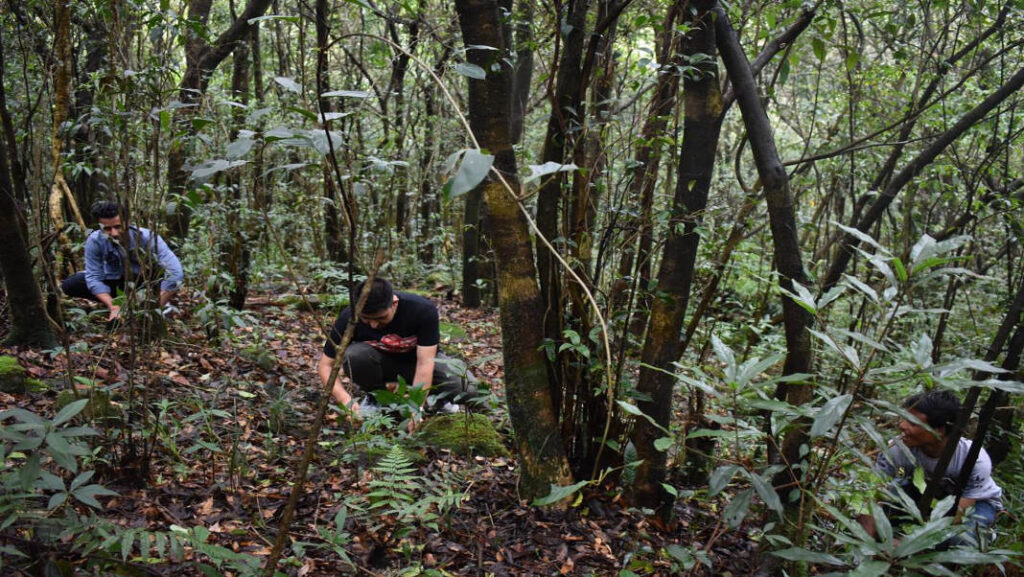
First discovered in the Cherrapunji-Mawsynram area, Pyrenaria cherrapunjeana belongs to the tea family (Theaceae) and is officially classified as “Critically Endangered” by the IUCN. The species is globally recognised as “Very Rare,” and the new field-based evaluation — conducted over five years across Meghalaya — is the first detailed study since its discovery.
“This is a wake-up call for conservation action,” says the paper, led by scientists from the University of Science and Technology, Meghalaya (USTM), and supported by the National Geographic Society. The study not only mapped the species’ current distribution but also assessed its reproductive cycle, population structure, and the human activities threatening its survival.

The tree is confined to disturbed forest patches in Mawmluh, Mawsynram, Mawkasain, Marai Kaphon, Mawrapat, Sohrarim, and Mn — areas increasingly surrounded by roads, limestone mines, agricultural fields, and human settlements.
These patches fall within the Indo-Burma biodiversity hotspot, but instead of thriving, P. cherrapunjeana is shrinking. The study found a strong negative correlation between the level of human disturbance and the number of individuals per site. The worst-hit site, Mawmluh-2, recorded a disturbance index of 50 — the maximum on the scale — and had just two surviving trees.
Logging, grazing, fuelwood and medicinal plant collection, and uncontrolled road-building are some of the main threats. Sites with less disturbance, such as Mawkasain and Mawrapat, were found to support better regeneration.

The study also tracked the species’ phenological cycle over three years. The tree begins flowering from March to May — aligning with the monsoon — and fruits mature between July and August. While this cycle should help with seed dispersal and germination, it is disrupted by forest fires, heavy rains, and predators such as rodents, insects, and caterpillars. Premature fruit drop and seed predation were common.
What’s more, despite producing fleshy fruits that should attract animals to disperse seeds, very few new saplings are taking root. The long dormancy of seeds and competition from invasive species also compound regeneration challenges.
The scientists conclude that the species’ survival now hinges on swift, integrated conservation strategies — both in situ (protecting it in the wild) and ex situ (through nurseries and seed banks). They recommend setting up regulated exclusion zones to limit grazing, incentivizing local communities to shift from forest-based livelihoods, and adopting tissue culture techniques for mass propagation.
“There is no time to lose. “P. cherrapunjeana is not just a tree — it is a symbol of Meghalaya’s unique ecological heritage. Losing it would mean losing a part of what makes these rainforests irreplaceable” the authors say.
Also Read: Leak continues at ONGC rig in Sivasagar; Gaurav Gogoi urges Centre to act swiftly
Also Watch
Find latest news from every corner of Northeast India at hubnetwork.in, your online source for breaking news, video coverage.
Also, Follow us on-
Twitter-twitter.com/nemediahub
Youtube channel- www.youtube.com/@NortheastMediaHub2020
Instagram- www.instagram.com/ne_media_hub
Download our app from playstore – Northeast Media Hub