

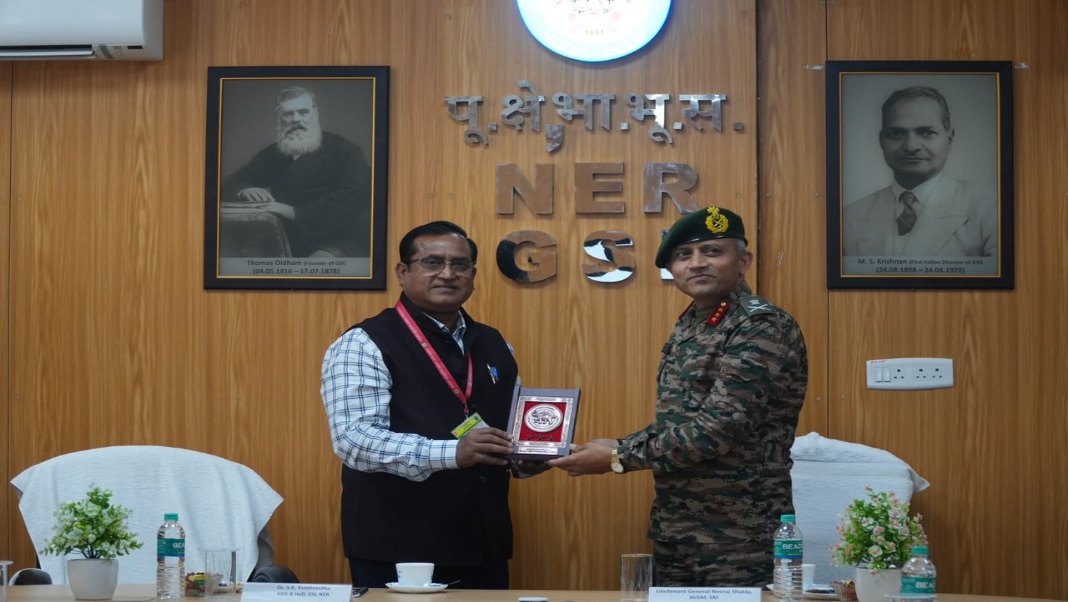

Shillong, June 13: The Indian Army and the Geological Survey of India (GSI) are exploring closer collaboration to strengthen geoscientific support for the planning and development of military infrastructure in the geologically sensitive Northeast region.
Lieutenant General Neeraj Shukla, AVSM, SM, General Officer Commanding (GOC), 4 Corps, accompanied by Major General Rohin Bawa, YSM, SM, GOC, 21 Mountain Division, visited the Geological Survey of India’s North Eastern Region Headquarters in Shillong on June 12 to discuss potential cooperation in site selection and infrastructure planning for Army establishments across the region.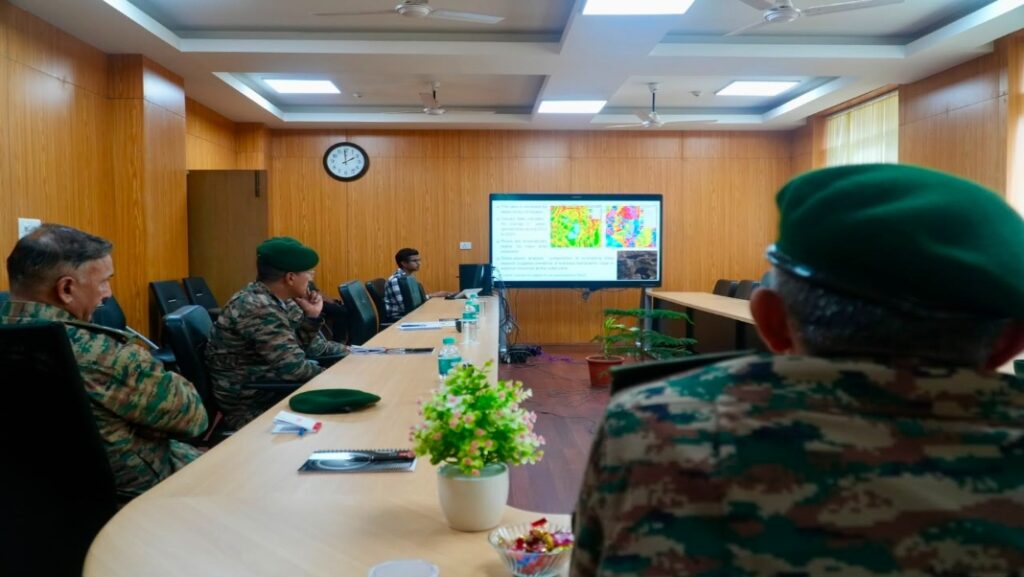
During the visit, GSI scientists presented findings from geotechnical investigations conducted at Dungpin Tso, Bhumja and Baisakhi sites at the request of the Army. The studies examined critical factors including the risk of Glacial Lake Outburst Floods (GLOFs), land suitability and geotechnical stability—key considerations for infrastructure development in the Himalayan terrain.
Officials said the collaboration is aimed at ensuring that strategic military installations are planned using scientific assessments of geological hazards and terrain stability, reducing risks in one of India’s most ecologically and geologically complex regions.
The meeting was attended by Dr. S.K. Kulshrestha, Deputy Director General and Head of Department, GSI North Eastern Region, Dr. Pankaj Jaiswal, Deputy Director General and Regional Mission Head-IV, along with other senior GSI officials.
The discussions highlighted the growing role of geoscience in supporting infrastructure resilience and disaster-risk assessment in the Northeast, where landslides, seismic activity and glacial hazards pose significant challenges to development projects.
Officials described the interaction as an important step towards strengthening cooperation between the Army and GSI, enabling more informed decision-making for strategic infrastructure and improving preparedness in the region’s fragile Himalayan landscape.