


Urmi Bhattacharjee
As Assam heads into a politically charged election season, one issue is being told in two very different ways. It is fast becoming the central faultline of this campaign.
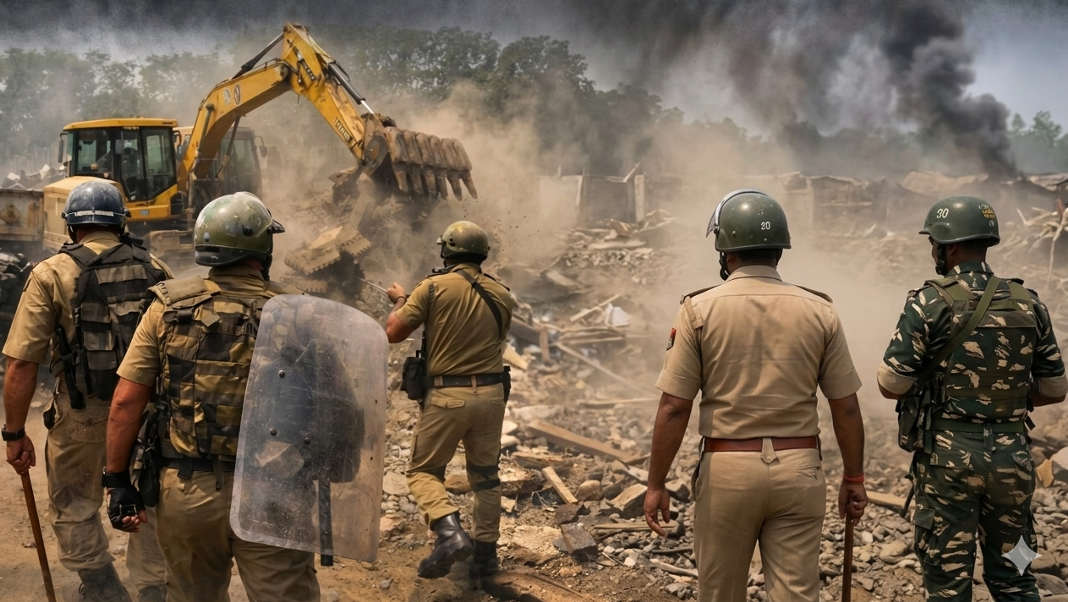
On one side, Chief Minister Himanta Biswa Sarma has positioned the state’s eviction drives as a firm crackdown on illegal encroachment. The government says reclaiming land, especially forest and government land, is necessary to uphold law and order. It has also made it clear that these drives will continue with greater intensity.
On the other hand, AIMIM chief Asaduddin Owaisi, speaking recently in a national television interview, has raised a very different concern. Campaigning in Assam, he said the impact of these drives is being felt largely by poor and marginalised Muslims. According to him, this raises serious questions around dignity, due process and equal protection under the law.
“If this is about encroachment, where is the rehabilitation?” Owaisi asked, pointing to what he described as a lack of procedural fairness. He also said that when affected communities are not even heard, the issue goes beyond administration and begins to look like discrimination.
The state government, however, has consistently rejected these allegations. Its position remains that action is being taken only against illegal settlers, regardless of identity. It sees this as part of a broader effort to protect land rights and maintain balance on the ground.

This is where the political narrative splits.
For the government, these evictions reflect decisive governance and an assertion of state authority. For Owaisi and others trying to consolidate minority voices, the same actions raise concerns about exclusion and selective impact.
It also brings up a larger question. Can strong enforcement by the state avoid raising concerns about constitutional fairness? And if one community feels more affected than others, does that perception itself become politically significant?
With elections approaching, these questions are now playing out on the ground, especially in areas where land and identity are closely linked.
As both sides sharpen their messaging, the contest in Assam is no longer just about who will govern, but also about how governance itself is being understood.