

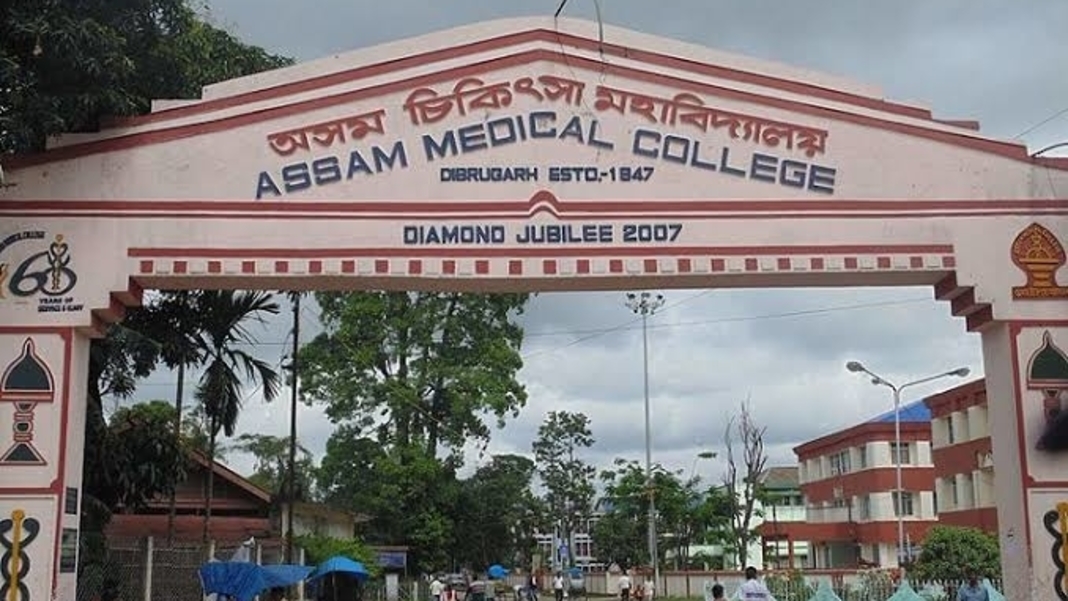

Dibrugarh, June 18: A high-level inquiry ordered by Assam Medical College and Hospital (AMCH) into allegations of denial of Ayushman Bharat benefits has triggered uncomfortable questions about the ground-level implementation of India’s flagship health insurance programme.
The controversy centres around allegations that a patient admitted to the state’s premier medical institution was initially denied treatment under the Ayushman Bharat scheme and asked to arrange medicines independently despite being eligible for cashless healthcare benefits.
The allegations surfaced after local BJP leader Ujjal Kashyap raised the issue on social media, claiming that the patient’s family was provided with an operation theatre medicine list and told to procure medicines from outside. The surgery was reportedly carried out only after higher authorities were informed and intervention followed.
Family members have also alleged that the treating surgeon did not personally visit the patient during the post-operative recovery period and later advised the guardian to approach the Ayushman office regarding the matter.
While the allegations remain under investigation, the incident has reignited a larger debate over whether beneficiaries are receiving the full benefits promised under Ayushman Bharat.
The issue is significant because Ayushman Bharat-Pradhan Mantri Jan Arogya Yojana (AB-PMJAY) was designed to provide cashless treatment of up to Rs 5 lakh per family annually for eligible beneficiaries at empanelled hospitals. Under scheme guidelines, hospitals empanelled under PM-JAY are not permitted to deny treatment to eligible beneficiaries. The National Health Authority has repeatedly stated that beneficiaries can seek redressal if treatment is refused.
Yet reports of beneficiaries facing hurdles despite holding valid Ayushman cards have emerged from different parts of the country. Investigations and media reports in recent years have highlighted instances of hospitals refusing treatment, asking patients to purchase medicines separately, or citing administrative difficulties and reimbursement concerns.
Health policy experts note that the success of any public health insurance scheme ultimately depends not only on enrolment numbers but also on whether patients can actually access cashless treatment when they need it most.
The controversy is particularly sensitive because it involves AMCH, one of Assam’s most important referral hospitals that caters to patients from across Upper Assam and neighbouring states.
Following a meeting on Thursday, AMCH Superintendent Dr Dhrubajyoti Bhuyan announced the formation of a high-level inquiry committee.
“The inquiry is underway. If any doctor is found guilty, appropriate action will be taken as per rules,” he said.
The findings of the inquiry could have implications beyond one hospital ward. If the allegations are substantiated, the case may raise broader concerns about compliance with Ayushman Bharat guidelines, accountability mechanisms and the actual experience of patients navigating India’s largest publicly funded health insurance programme.
For now, the investigation continues. But the controversy has already revived a question that resonates far beyond Dibrugarh: What happens when a patient carrying an Ayushman card still struggles to access cashless healthcare?