

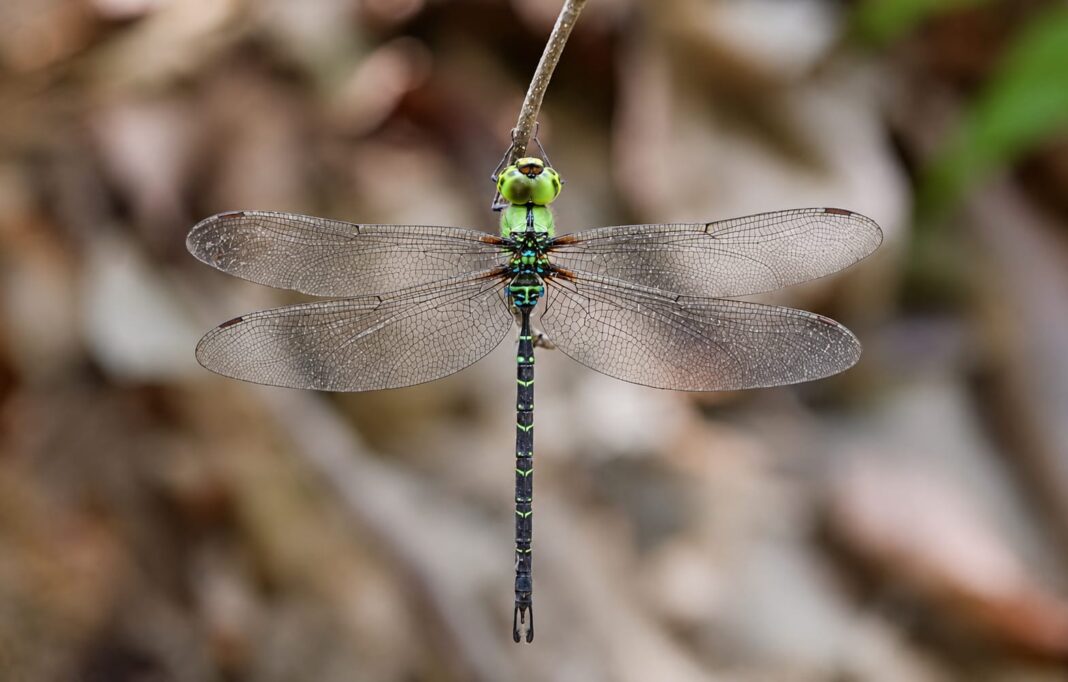

Rediscovery of elusive Long-tailed Duskhawker in eastern Himalayan rainforest highlights hidden biodiversity of Northeast India
ROOPAK GOSWAMI
Guwahati, May 26: More than a century after it was last recorded in Arunachal Pradesh during the historic Abor Expedition of 1914, a rare dragonfly species has resurfaced in the dense rainforests of Namdapha National Park and Tiger Reserve.
The species, Gynacantha khasiaca — commonly known as the Long-tailed Duskhawker — was sighted during a biodiversity survey conducted in October 2024, making it the first confirmed record of the dragonfly from Arunachal Pradesh in 110 years.
The rediscovery has been documented in the latest issue of the Journal of Threatened Taxa.
The dragonfly was photographed along the remote Miao–Vijaynagar road inside Namdapha during an eight-day field survey by researchers R. Mahesh, Rajesh Gopinath, Gaurav Joshi and Roshan Upadhaya.

According to the researchers, the male dragonfly was first spotted rapidly patrolling the forest edge on a cloudy morning before settling into a vertical hanging posture beneath dense vegetation — behaviour typical of elusive duskhawker species.
The insect itself is visually striking, with pale blue-green eyes, a bright green thorax marked by dark stripes, transparent amber-tinted wings and a long black-tipped abdomen stretching nearly five centimetres.
The sighting is another reminder of how much of the eastern Himalaya’s insect life remains undocumented, especially in remote rainforest landscapes like Namdapha.
Spread across nearly 2,000 sq km in Changlang district, Namdapha National Park is one of India’s richest but least explored protected forests. Situated within the Indo-Burma biodiversity hotspot, the landscape ranges from tropical rainforest valleys to alpine meadows above 4,500 metres and shelters species such as Snow Leopards, Clouded Leopards and Asian Elephants.
Researchers said earlier odonate surveys in Arunachal Pradesh had failed to detect Gynacantha khasiaca, adding to the significance of the rediscovery.
Globally, the species is classified as “Data Deficient” by the IUCN Red List because scientists still know very little about its range, breeding ecology and population trends.
Outside India, the dragonfly has only been reported from scattered locations in Nepal, Myanmar and Bangladesh. Within India, confirmed records remain sparse, with occasional sightings from Assam, Meghalaya, Uttarakhand, West Bengal and Maharashtra.
Researchers suspect the dragonfly may have escaped notice for decades because of the region’s rugged terrain, sparse biodiversity surveys and the species’ elusive habits. The study also points to habitat degradation and climate shifts as possible factors affecting its distribution.
Also Read: NPP’s Dr Nonglait calls for end to bitterness, seeks mandate for development
Also Watch
Find latest news from every corner of Northeast India at hubnetwork.in, your online source for breaking news, video coverage.
Also, Follow us on
Twitter-twitter.com/nemediahub
Youtube channel- www.youtube.com/@NortheastMediaHub2020
Instagram- www.instagram.com/ne_media_hub
Download our app from playstore – Northeast Media Hub