

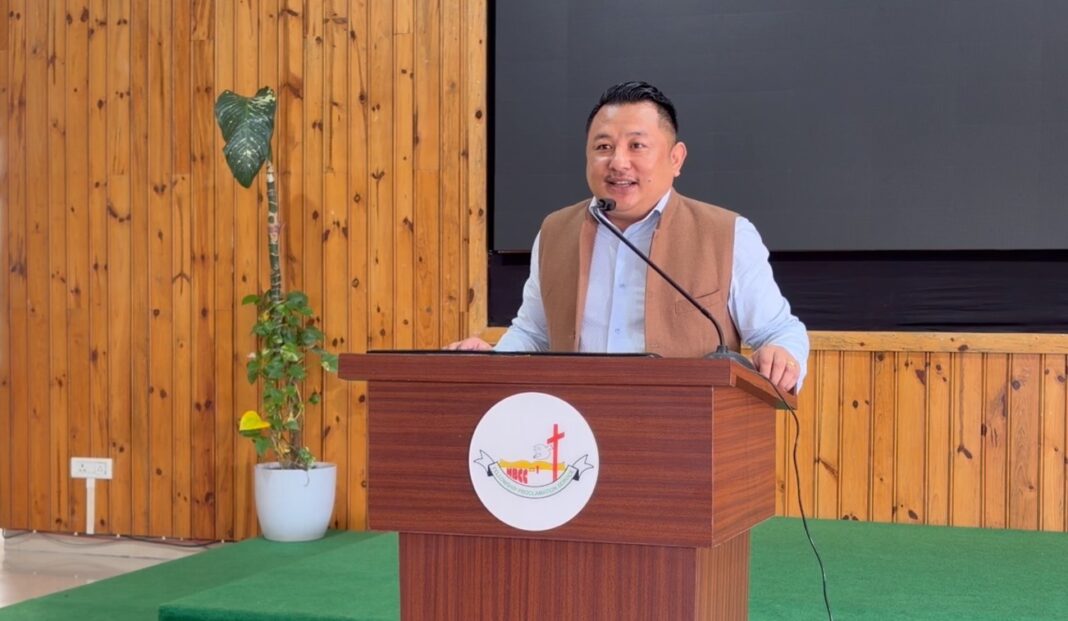

Kohima, July 16: In a first-of-its-kind initiative to promote inclusion and dignity for persons with disabilities, Nagaland has launched a mission to develop respectful and culturally appropriate disability terminology across the state’s tribal languages.
Speaking at a consultation workshop in Kohima on Thursday, State Commissioner for Persons with Disabilities Tongpang L. Jamir urged Naga and non-Naga tribal literature boards to replace outdated and stigmatizing expressions with inclusive language that respects the rights and identity of persons with disabilities.
“Language has the power to shape attitudes and determine how persons with disabilities are treated in society,” Jamir said, stressing that the use of person-first and respectful terminology is essential to promote equality, inclusion and public awareness.
The workshop, titled “Documenting Terminologies Used by Various Nagaland and Non-Naga Tribes/Communities in Nagaland Regarding Disabilities and Its Implications,” was jointly organised by the Office of the State Commissioner for Persons with Disabilities and Prodigals’ Home, Dimapur, at the NBCC Platinum Hall in Kohima.
Jamir called on representatives of tribal literature boards to research, translate and document appropriate terms for all 21 recognised categories of disabilities in their respective dialects. He said the initiative could eventually result in a comprehensive reference book on disability terminology covering all Naga and non-Naga communities in the state.
He also acknowledged the contributions of former State Commissioner for Persons with Disabilities Diethono Nakhro and K. Ela, Director of Prodigals’ Home, for spearheading the initiative, and thanked the Nagaland Baptist Church Council (NBCC) for supporting efforts to build a more inclusive society.
Addressing the gathering, Nakhro said the project, launched in 2023, goes beyond language and seeks to transform societal attitudes towards disability.
“Many traditional terms reflect cultural contexts, but some also carry connotations of shame, helplessness or exclusion,” she said, adding that future terminology should be rooted in dignity, equality and the lived experiences of persons with disabilities rather than charity or sympathy.
She noted that attitudinal barriers remain among the biggest challenges faced by persons with disabilities and said inclusive language could play a key role in changing public perceptions.
Adding a personal perspective, Nagaland State Disability Forum President Fatima Kera recounted the discrimination she faced as a child, recalling how people mocked her with offensive names and even threw stones at her to see whether she could run despite her disability.
The consultation concluded with a business session involving representatives of Naga and non-Naga literature boards, who began discussions on developing inclusive disability terminology in their respective languages.
Also read: GSU raises questions over police findings in Williamnagar murder case
Also Watch
Find latest news from every corner of Northeast India at hubnetwork.in, your online source for breaking news, video coverage.
Also, Follow us on
Twitter-twitter.com/nemediahub
Youtube channel- www.youtube.com/@NortheastMediaHub2020
Instagram- www.instagram.com/ne_media_hub
Download our app from playstore – Northeast Media Hub