


By Bijoy A. Sangma
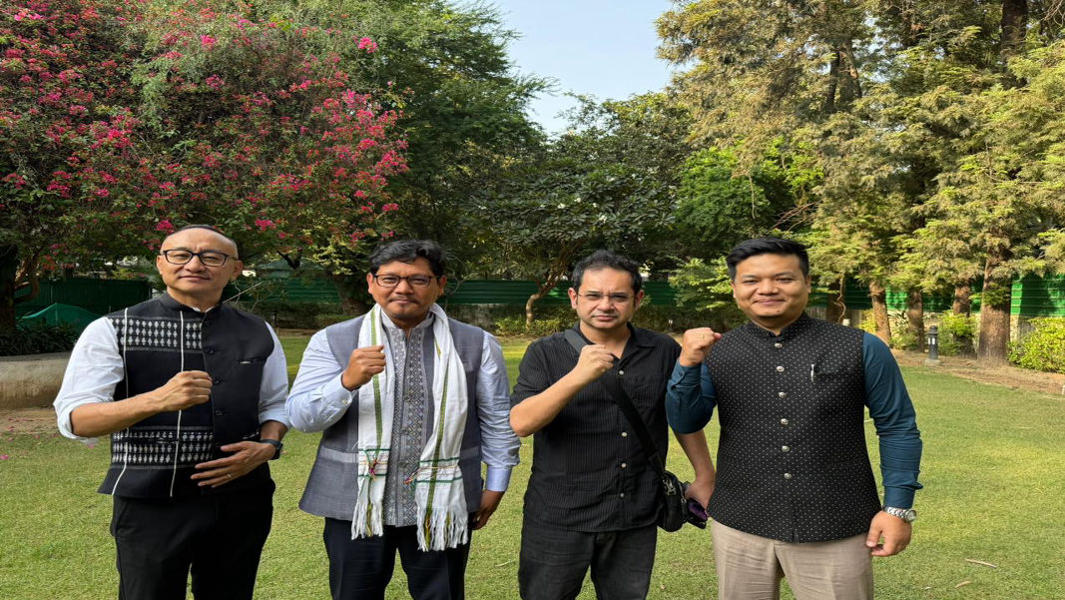
On 4 November 2025, leaders from four northeastern states gathered in New Delhi under the banner of One North East to announce the creation of a new political platform. The joint statement they released described the effort as an attempt “to form a united singular political entity that truly represents the aspirations of our people.” This phrase is not merely ornamental; it reflects more than a symbolic gesture. It draws attention to a long-standing problem in the region – a mismatch between its political complexity and the limited space it occupies in national decision-making.
The Northeast consists of eight states with a population exceeding 45 million, according to the 2011 census; yet, the region elects only 25 Members of Parliament to the Lok Sabha. This is less than five per cent of the total strength of the House’s 543 seats. By comparison, a single large state such as Uttar Pradesh holds 80 seats. In theory, federalism promises representation, but in practice, political influence tends to follow numbers. This structural imbalance shapes the region’s experience within India. Many national parties consider the region to be electorally small, administratively dependent, and politically manageable through shifting alliances. By contrast, people in the region often say they are spoken about rather than included in the decision-making process.
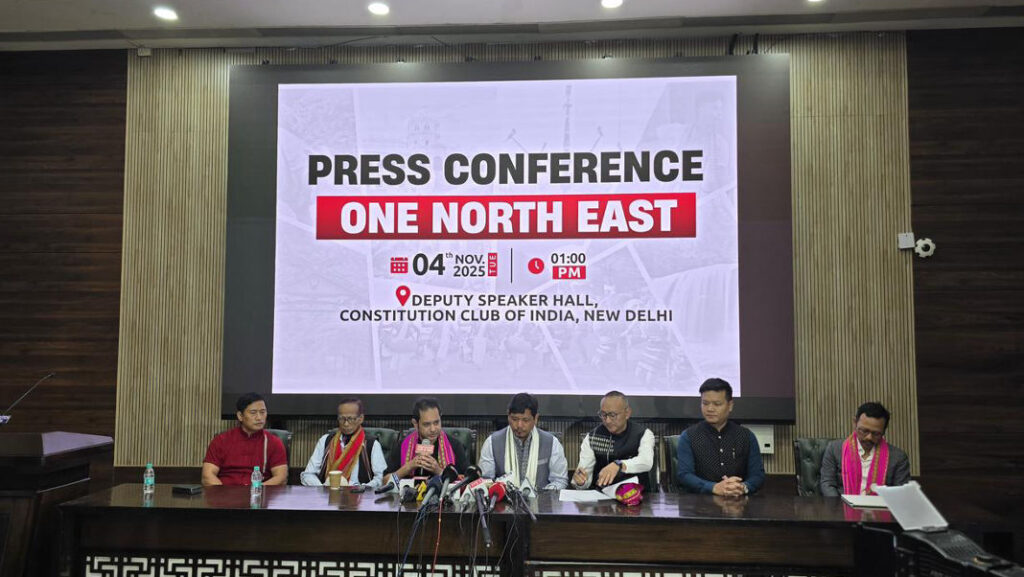
It is within this context that the One North East initiative gains its significance. The leaders behind it – Conrad K. Sangma of the National People’s Party, Pradyot Bikram Manikya Debbarma of TIPRA Motha, former Nagaland minister Mmhonlumo Kikon, and Daniel Langthasa of the People’s Party are not announcing a pre-election alliance. Instead, they discuss creating “a united, singular political entity,” with a committee dedicated to developing its constitution, structure, and electoral strategy. Their joint statement is carefully worded but purposeful, referencing the legacy of “great leaders who fought selflessly for our land’s identity and development” without falling into nostalgia. It presents the initiative as a necessary, cross-generational decision by younger Northeastern leaders, who, after years of raising the same concerns on different political platforms, now see separation as the root issue.
The initiative seeks to address a democratic gap rather than stage a symbolic show of unity. In national debate, the Northeast is often reduced to a cluster of border states with distinct histories. However, each state faces similar issues – indigenous land rights, Sixth Schedule autonomy, ethnic assertion and accommodation, migration concerns, and negotiating with the central government. These concerns may differ in detail across states, but they share a structural origin in the region’s limited influence on national politics. One North East seeks to shift the perspective, moving from seeing these as isolated state issues to framing them as federal questions.
Currently, the move’s strength is rooted in its clear purpose rather than its completeness. Several critical regional parties, including the Zoram People’s Movement in Mizoram, the Naga People’s Front (NPF) in Nagaland, and the Asom Gana Parishad in Assam, have not joined. Their decision to participate or remain outside will determine whether the platform becomes a genuine regional force or a partial alliance. Even so, this is the first organised attempt in several decades to move from short-term political understanding toward long-term institutional unity.
Electoral logic strengthens the argument for consolidation. When regional parties negotiate separately with Delhi, each has limited leverage. Even the most dominant party in one northeastern state becomes a minor player in the national capital. When these parties compete against each other, especially in border districts or tribal belts with shared demographics, they split votes and weaken their bargaining position. A common platform could reduce that fragmentation, coordinate candidates, and influence outcomes in 15 to 18 Lok Sabha constituencies where national parties are not naturally dominant. The leaders have used careful language in presenting the initiative. The joint statement avoids criticising national parties and instead stresses the right of Northeastern citizens “to be heard, respected, and represented through a strong, unified, and indigenous political voice at the national level.” This positioning signals that the platform seeks a stronger voice within the Union, not a break from it. It also allows space for negotiation, alliances, or issue-based cooperation later, which is practical in a region where party alignments with the centre often change.
Still, the transition from idea to functioning entity will define whether the initiative succeeds. A single political body requires a constitution, a membership structure, a shared symbol, and a fair process for resolving disagreements among its constituent state units. It also requires agreement on core policy positions regarding development, resource use, and cultural rights, while allowing for state-specific priorities. If authority is concentrated in a few hands, the project may fracture. If it becomes a loose grouping without coherence, it risks losing purpose. Achieving this balance is challenging, but it is possible. Regional blocs in Europe and coalition-based parties in India have managed similar negotiations, although rarely across as many states with distinct ethnic and political identities.
To gain public trust, One North East will need to present clear policy intentions rather than broad declarations. It can begin by outlining positions on land rights, inter-state boundary disputes, transport and trade links, employment for young people, and the protection of Sixth Schedule areas. It should also address the concerns of Northeastern citizens living outside the region, including racial discrimination and inadequate law enforcement responses in metropolitan cities. A regional formation that speaks only to voters inside the Northeast will limit its influence. At the same time, a party that engages both the residents of the region and its broader community will have a stronger claim to represent the Northeast.
The committee established by the leaders now bears the responsibility of converting intent into structure. Its work must be transparent and inclusive. If the platform allows internal debate, brings in new political actors, and balances influence among states, it will gain strength. If it becomes a vehicle for a small group of established figures, it will quickly lose relevance.
For now, the initiative deserves attention because it introduces a form of political thinking the region has rarely attempted, a shift from individual party survival to shared representation. The Northeast has spent years listing its concerns before Delhi. It is now trying to turn those concerns into organised power. If it succeeds, it could change how the region negotiates with the centre, how tribal institutions protect their rights, and how Indian federalism accommodates its smaller but distinct regions.
One North East is still in formation; however, it is an experiment motivated by necessity. The region has endured prolonged under-representation, fragmented political parties, and a political landscape driven by reactive measures rather than strategic planning. This endeavour to establish a collective platform does not guarantee imminent change. Still, it represents a rare opportunity for the region to craft its own narrative rather than merely follow an existing one. The success of this initiative will depend on the contributions of the committee, the public’s acceptance, and the speed at which the platform can convert unity into structure and structure into influence.
Whether it becomes a lasting institution will depend on the structure it builds, the trust it earns, and the way it converts unity into electoral and legislative presence. For the first time in many years, the region has chosen a political language Delhi understands – representation backed by numbers.
If this effort holds, it could redefine the region’s role within the Republic.
Also Read: Meghalaya Govt sanctions Rs 45 Cr for city road resurfacing
Also Watch
Find latest news from every corner of Northeast India at hubnetwork.in, your online source for breaking news, video coverage.
Also, Follow us on-
Twitter-twitter.com/nemediahub
Youtube channel- www.youtube.com/@NortheastMediaHub2020
Instagram- www.instagram.com/ne_media_hub
Download our app from playstore – Northeast Media Hub