


Urmi Bhattacharjee
Guwahati: Diplomatic visits are hardly ever mere photo-ops. They are, in reality, carefully negotiated opportunities that can influence investment flows, strengthen strategic partnerships, enhance global standing and reshape perceptions about a region’s readiness for business.
It is why the reported cancellation of Japanese Prime Minister Shigeru Ishiba’s proposed trip to Assam has triggered disappointment across sections of the state.
For many, it isn’t simply about a missed photo opportunity; it is about a lost chance to place Assam firmly at the centre of one of India’s most important international relationships.
The visit, when originally mooted, was seen as far more than a routine diplomatic engagement. It would have brought one of the world’s most influential leaders to Guwahati and placed Assam at the heart of high-level India-Japan engagement, commanding global media attention and underscoring the state’s growing strategic significance.
This is not the first time Assam has found itself on the verge of a moment of global consequence only to watch it slip away.
Back in 2019, then Japanese Prime Minister Shinzo Abe was scheduled to visit Guwahati for the India-Japan Annual Summit. The visit eventually had to be cancelled amid political unrest surrounding the Citizenship Amendment Act (CAA) protests. Years of preparation and anticipation ended in disappointment.
Seven years later, another Japanese Prime Minister’s proposed visit to Assam has fallen through.
For many observers, the recurring pattern is difficult to ignore.
Japan has been one of the most significant development partners of the North East for decades. From roads, bridges and connectivity projects to water supply systems, urban development initiatives and skill-building programmes, Japanese agencies have invested heavily in the region. With a growing interest in the Northeast as a gateway to Southeast Asia, Japan has become a key partner in India’s Act East policy.
A visit by the Japanese Prime Minister to Assam would have sent a powerful message to the global business community, investors and diplomats that the state is increasingly ready to engage with the world.
Such visits often generate benefits that extend far beyond a single day or event. They create visibility, spark investor interest, attract tourism attention, reinvigorate diplomacy and have the ability to transform perceptions. In today’s fiercely competitive world, where regions compete for investment, capital and attention, perception is often everything. The perception may well be the biggest casualty here.
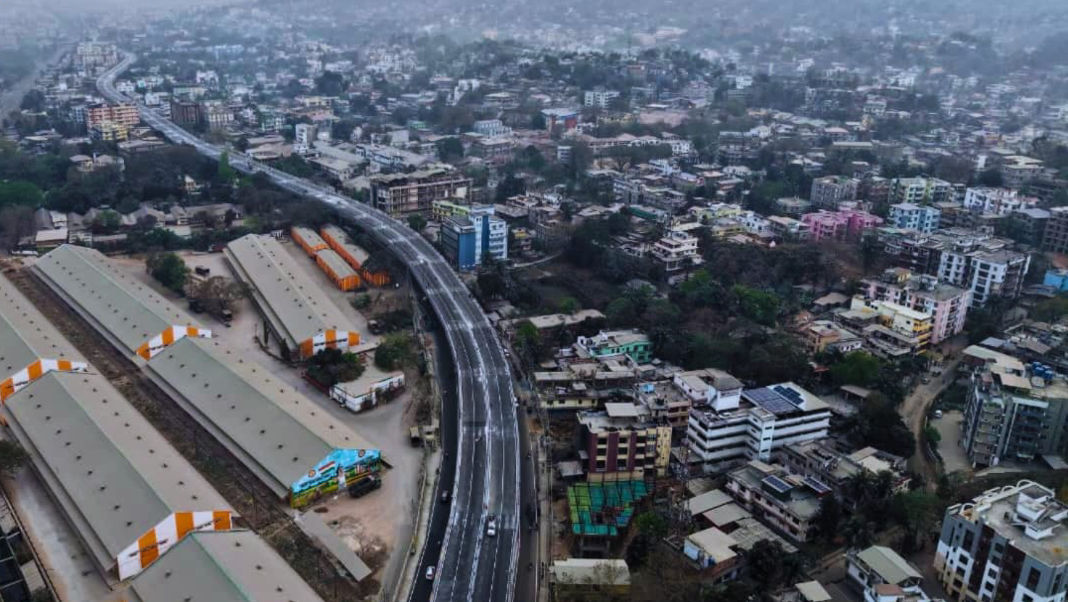
Over the past several years, Assam invested considerable effort in preparing for such a visit. City beautification drives were undertaken, infrastructure was upgraded and extensive administrative preparations were reportedly put in place. Few would dispute that significant time, resources and political will were invested in creating an environment capable of hosting the leader of one of the world’s most important nations.
The frustration many citizens feel stems from a simple question: if opportunities of this scale arrive at our doorstep, can we afford to let them slip away?
Many believe the episode has also revived an important conversation about the role and responsibility of citizens, not just governments, in shaping the state’s future.
Most people sympathise with the emotions that drive public protests. Dissent remains an essential part of democracy. Yet there is a growing view that democratic expression must also be balanced with an awareness of the larger public interest.
“Today, anyone who speaks about development or acknowledges work done by the government is immediately labelled a government supporter. But facts remain facts. An enormous amount of work went into preparing for this visit. At some point, society must ask itself whether it wants to protect opportunities that can benefit future generations rather than allow them to be lost,” an observer remarked.
It is a view that is increasingly finding resonance among entrepreneurs, professionals and young people who see global engagement as critical to Assam’s future.
The concern is what message such incidents send.The ability of a state to host major international engagements signals to global businesses and foreign governments that it is stable, predictable and ready for investment. Any disruption to high-profile events inevitably raises questions about preparedness, reliability and the ability to manage globally significant engagements.
While the immediate financial cost of a cancelled visit may be impossible to calculate, the larger loss lies in opportunities that never materialise — investment conversations that never happen, partnerships that are never explored, tourism potential that remains untapped and trust that is never built.
For Assam, the lesson may be a simple but important one: development is not the responsibility of governments alone.
Governments can build infrastructure, beautify cities and create opportunities. But the long-term success of that progress depends on whether institutions, communities and citizens can come together to protect those opportunities when they arise.
The loss, in any case, is not merely diplomatic.
It is a reminder that in an increasingly interconnected world, opportunities are hard won, closely watched and never guaranteed.
For years, Assam has worked to raise its profile nationally and internationally. Twice, it prepared to host a Japanese Prime Minister. Twice, that moment slipped away.
The challenge now is not merely to attract global opportunities, but to ensure that when they arrive, Assam is able to hold on to them.