


Urmi Bhattacharjee
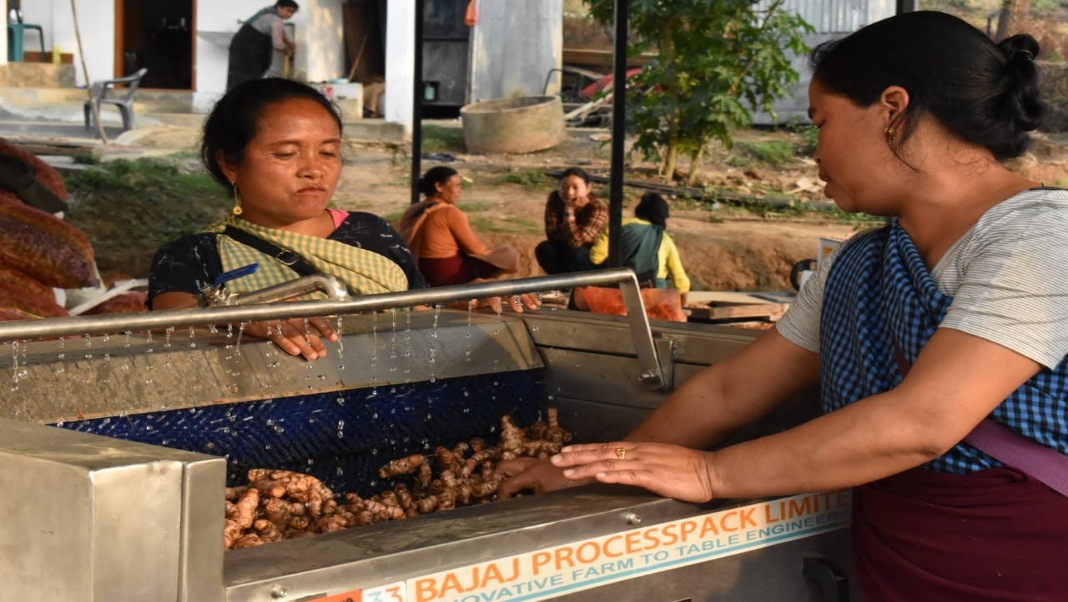
Guwahati: A decade ago, few outside Meghalaya had heard of Lakadong turmeric. Today, the state’s famed golden spice is being showcased to world leaders at the G7 Summit by Prime Minister Narendra Modi himself, underscoring how a crop once grown quietly in the hills of West Jaintia Hills has emerged as one of India’s most remarkable agricultural success stories.
Meghalaya Chief Minister Conrad K Sangma on Tuesday highlighted that the state’s GI-tagged Lakadong turmeric was presented by the Prime Minister at the G7 Summit, bringing international attention once again to a crop that has become synonymous with quality, authenticity and premium value.
Meghalaya’s globally renowned GI-tagged Lakadong turmeric takes center stage yet again at the #G7 Summit, presented to world leaders by Hon’ble Prime Minister @narendramodi ji.
Thank you, Hon’ble Prime Minister, for showcasing Meghalaya’s golden spice to the world and…
— Conrad K Sangma (@SangmaConrad) June 24, 2026
The growing global interest in Lakadong begins with a molecule.
Curcumin, the active compound responsible for turmeric’s colour, flavour and medicinal properties, occurs in most commercial turmeric varieties at levels of around 2 to 3 per cent. Lakadong turmeric, however, consistently records curcumin levels between 7 and 12 per cent, making it one of the highest-curcumin turmeric varieties in the world.
That distinction has attracted the attention of nutrition companies, wellness brands, researchers and nutraceutical manufacturers looking for high-quality natural ingredients.
Yet Lakadong’s rise is not merely a story of science.
It is also the story of thousands of farmers in Meghalaya and the woman widely credited with helping transform the crop into a recognised brand – Padma Shri awardee Trinity Saioo.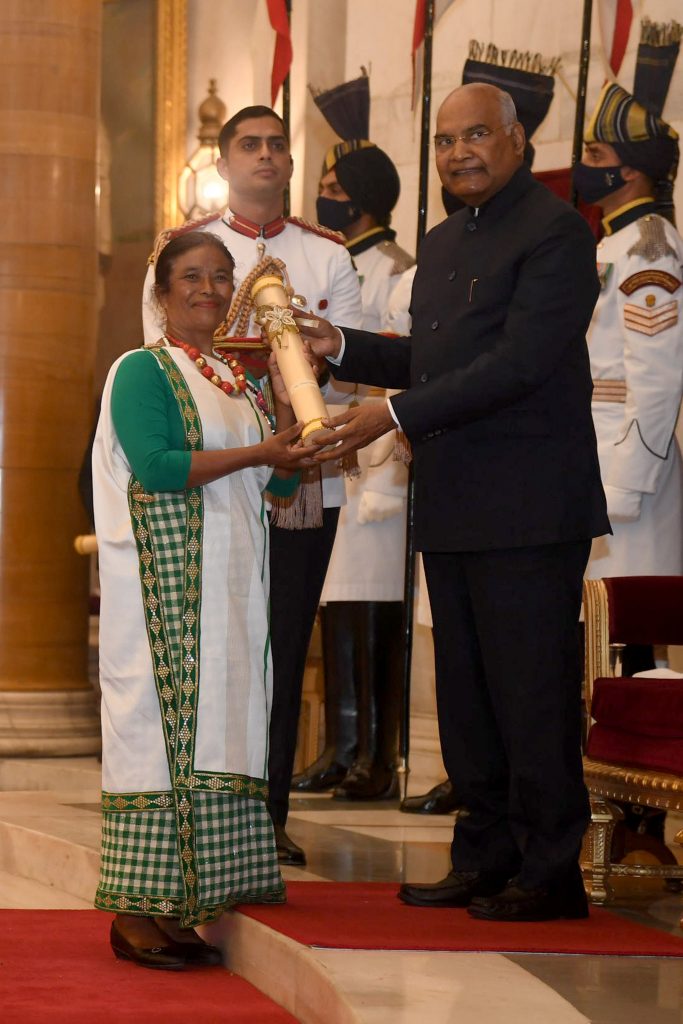
Working from her village nearly 80 kilometres from Shillong, Saioo spent years organising farmers, promoting better cultivation practices and helping communities recognise the commercial potential of a crop they had grown for generations.
According to Saioo, one of the biggest transformations has been the shift towards organic and scientific farming practices.
“There is a huge difference from the way we cultivated earlier,” she said. “Farmers previously relied on chemical fertilisers and pesticides. Today we encourage organic cultivation using cow dung, goat manure, biofertilisers and biopesticides.”
She added that farmers have also moved away from traditional flat cultivation methods to raised-bed systems that improve drainage, plant health and productivity.
Equally important has been the strengthening of the value chain.
“Today we have collection centres, washing units, slicing machines and drying facilities. Farmers can easily sell their produce through organised collection systems,” Saioo said.
The transformation is visible in the numbers.
Lakadong turmeric is currently cultivated across more than 2,500 hectares by over 13,000 farmers spread across 124 villages, producing nearly 10,000 to 12,000 metric tonnes annually.
The Meghalaya government has now proposed an ambitious Integrated Lakadong Turmeric Value Chain Enhancement Project worth ₹175.45 crore aimed at strengthening production, processing, certification, branding and market access.
The project seeks to expand cultivation from around 2,581 hectares to nearly 7,000 hectares by 2030 while increasing overall value-chain revenues from approximately ₹31.6 crore to nearly ₹100 crore.
The renewed spotlight on Lakadong comes days after Union Finance Minister Nirmala Sitharaman repeatedly highlighted Meghalaya’s premium agricultural products, including Lakadong turmeric and organic ginger, during her visit to the state. She emphasised the importance of value addition, entrepreneurship and market access in building globally competitive agricultural brands from the Northeast.
Another milestone came in 2024 when Lakadong turmeric received its Geographical Indication (GI) tag, legally protecting the name and helping safeguard farmers against imitation products entering the market.
The GI tag is becoming increasingly important as demand grows.
Farmers and experts have repeatedly warned that ordinary turmeric being marketed as Lakadong could damage consumer trust and undermine the premium reputation painstakingly built over the years.
For Meghalaya, the ambition extends beyond turmeric.
Officials believe Lakadong’s success could become a template for other premium products from the state, including ginger, black pepper, honey and indigenous fruits.
As world leaders receive Lakadong turmeric at the G7 Summit, the crop’s journey from remote Jaintia Hills farms to the global stage reflects a larger story – one of how geography, traditional knowledge, farmer-led innovation and strategic branding can transform a local crop into an international brand.
For Meghalaya’s farmers, the recognition at the G7 is not the culmination of that journey, but another milestone in a story that is still unfolding.
Also Read: MLCU tops private university rankings in Meghalaya, ranked 60th nationally in IIRF 2026
Also Watch
Find latest news from every corner of Northeast India at hubnetwork.in, your online source for breaking news, video coverage.
Also, Follow us on
Twitter-twitter.com/nemediahub
Youtube channel- www.youtube.com/@NortheastMediaHub2020
Instagram- www.instagram.com/ne_media_hub
Download our app from playstore – Northeast Media Hub