

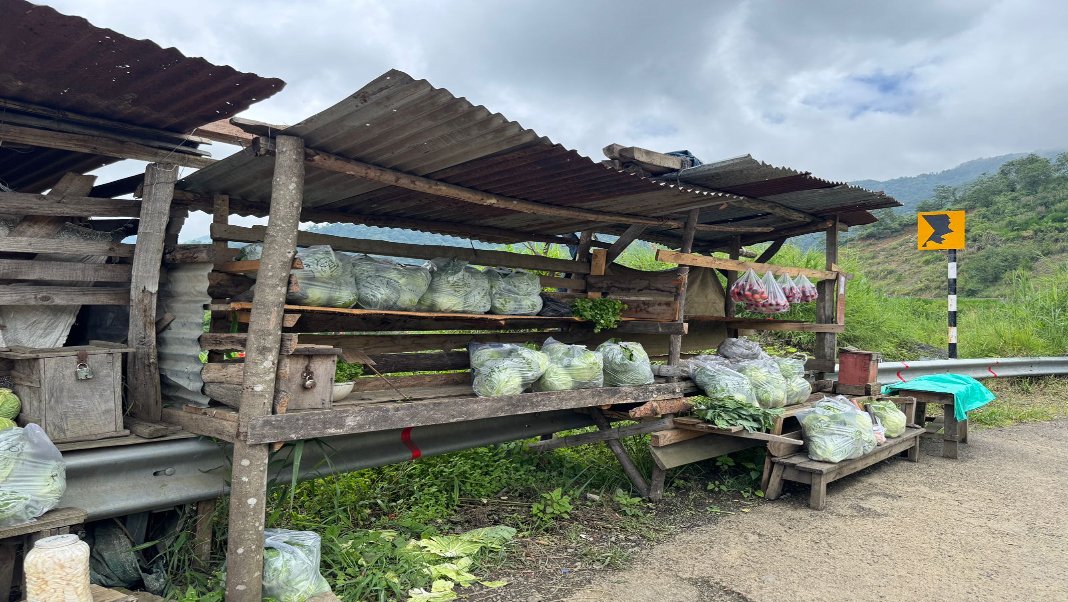

Phek, June 27: Imagine driving through the mist-covered hills of Nagaland’s Phek district and stopping at a small bamboo stall by the roadside. Fresh vegetables and fruits are neatly arranged in baskets.
There is no shopkeeper waiting to serve you, no cashier to collect your money and no surveillance camera keeping watch. Beside the produce sits a handwritten price list, a small tin box for cash and, increasingly, a QR code for digital payment.
The instruction is as simple as the market itself: “Take what you need. Pay what is written.”For most people, it sounds almost unbelievable. In Phek district, it is simply the way business has been done for years.

Stretching along the picturesque road from Pfutsero to Phek, through Porba, Sakraba, Pholami, Khomi and Losami villages, these modest bamboo stalls have quietly become one of Nagaland’s most remarkable examples of community trust. Every morning, local farmers leave behind baskets of freshly harvested produce before heading to work in their fields.
Throughout the day, local residents, travellers and tourists stop to buy what they need, leaving the exact amount in the collection box or paying through the QR code. By evening, the farmers return to collect the day’s earnings.
The absence of a shopkeeper is only one part of the story.The bamboo stalls are filled with the richness of the region’s farms—fresh leafy greens, potatoes, cucumbers, cherry tomatoes, king chillies, Naga garlic and the famous Pfutsero cabbage, alongside seasonal fruits such as kiwi, persimmon, nectarine, bananas, papayas, oranges, plums and wild berries.
Every basket carries a clearly marked price, reflecting not just the value of the produce but also the effort behind every harvest.Behind these roadside markets lies the agricultural heritage of the Chakhesang Naga community.
For the Chakhesangs, and for much of rural Nagaland, farming is not merely a livelihood but a way of life. More than 70 per cent of the state’s population depends on agriculture, with rice, millet, maize, ginger, king chilli, Naga garlic and seasonal fruits and vegetables forming the backbone of household economies.
Much of the produce comes from the terraced farms and traditional jhum fields of the district. Long before organic farming became a global movement, Chakhesang farmers were enriching their fields with compost and wood ash, practising crop rotation and relying on natural methods instead of chemical fertilisers and pesticides. Those practices continue today, giving the produce a reputation for freshness, purity and flavour.

Many travellers deliberately stop at these roadside stalls, not merely because they are unattended but because they know the vegetables and fruits are genuinely organic and carefully grown. In many ways, the produce is the real attraction. The honesty-based system simply reflects the confidence that both farmers and buyers have built over generations—a quiet guarantee of quality from soil to shelf.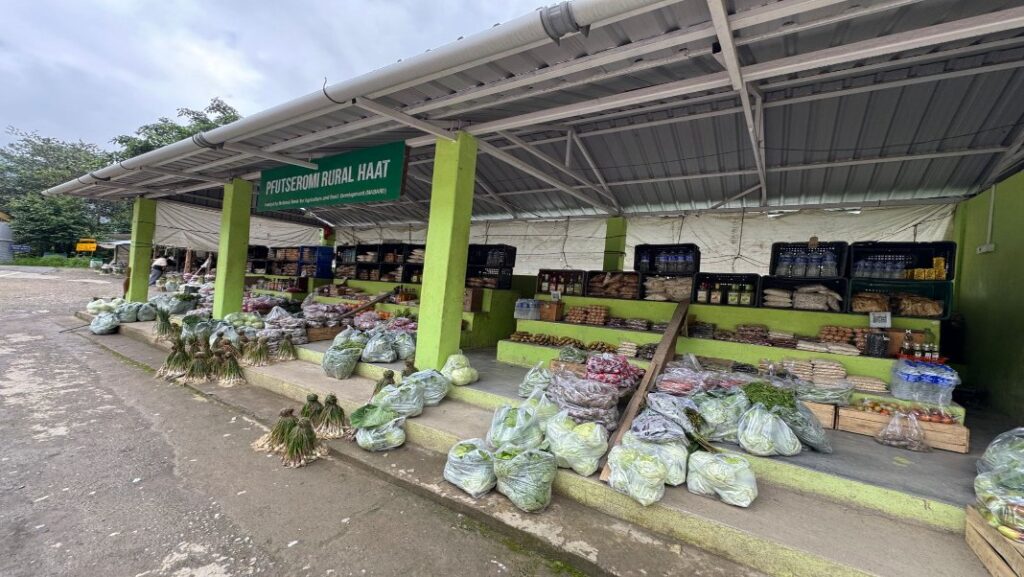
The markets have also transformed the lives of many small farmers, particularly women. Without middlemen or transport costs, they receive the full value of what they grow. A basket of tomatoes, cucumbers or wild berries can be left by the roadside before a farmer heads back to work in the fields. By evening, the earnings help pay school fees, buy medicines, purchase seeds for the next crop and meet everyday household expenses.
Equally remarkable is the way the community safeguards these markets. Locks, guards and surveillance cameras have never been the defining feature here. Reputation, mutual respect and a shared sense of responsibility continue to protect what has become a tradition in itself. Theft is virtually unheard of.
Digital technology has found its place here without replacing tradition. The familiar tin cash box now often shares space with a QR code, allowing customers to pay digitally while preserving a system that has always relied on trust.
Perhaps that is what makes these bamboo stalls so memorable. Visitors may arrive expecting to discover a market without shopkeepers, but they leave with a glimpse of something far less common—a community where honesty still finds a place in everyday life, and where age-old traditions continue to thrive alongside the conveniences of the modern world.
Also Read: Assam’s anti-quack drive nets 62 fake doctors, 59 cases in year-long crackdown
Also Watch
Find latest news from every corner of Northeast India at hubnetwork.in, your online source for breaking news, video coverage.
Also, Follow us on
Twitter-twitter.com/nemediahub
Youtube channel- www.youtube.com/@NortheastMediaHub2020
Instagram- www.instagram.com/ne_media_hub
Download our app from playstore – Northeast Media Hub