

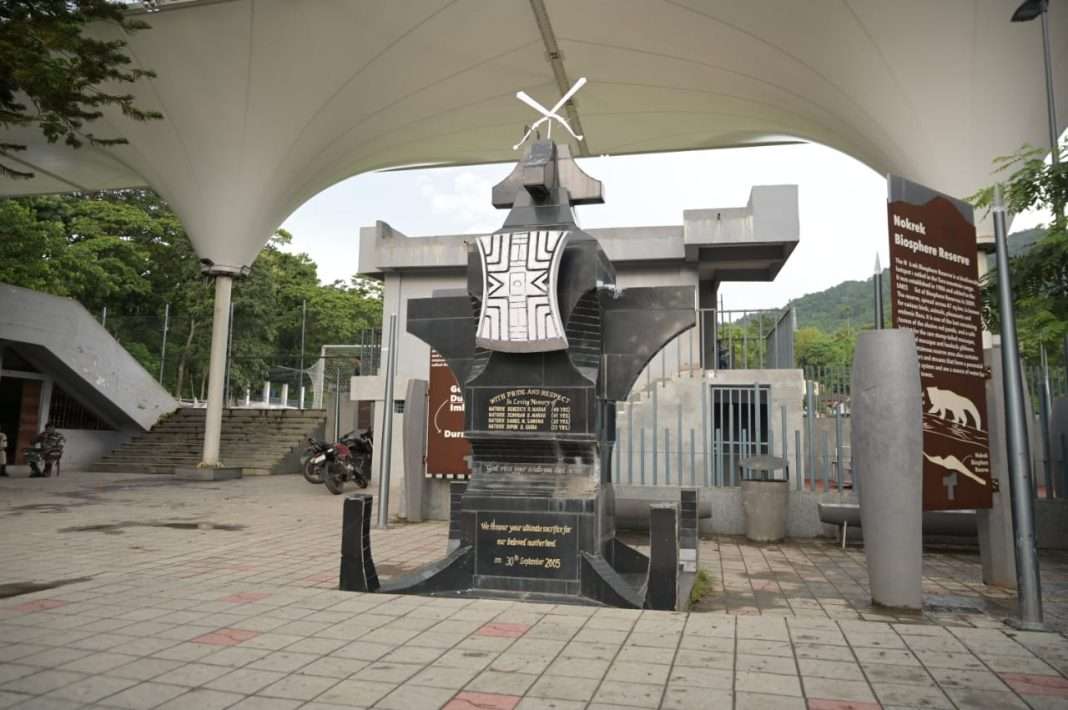

Tura, Sept 30: Two decades have passed since the September 30, 2005 firing in Tura and Williamnagar, yet the memories of that dark day remain fresh in Meghalaya’s collective conscience. At least nine students and youth were killed when police opened fire on demonstrators protesting changes to the Meghalaya Board of School Education (MBoSE), leaving families and survivors scarred with grief and unanswered questions.
The protests that day were not born out of violence but out of fear..the fear that Garo Hills was being sidelined. The Meghalaya government’s decision to restructure the Meghalaya Board of School Education (MBoSE) was seen by many as an attempt to strip the board away from its home in Tura and with it, the educational future of the region.

Student bodies, led by the Garo Students’ Union (GSU), mobilized. Young people poured onto the streets of Tura and Williamnagar, their voices united in a single demand: that MBoSE remain rooted in Garo Hills.
What followed was a descent into chaos. Despite prohibitory orders under Section 144, thousands gathered, determined to be heard. Security forces moved in, first with tear gas and batons, but when tension spiraled, bullets followed.
In Tura, four fell. In Williamnagar, five more. Most were teenagers, college students.
Survivors still recall the panic of that day, the crack of gunfire, the stampede of fleeing crowds and the silence that came after.
The outrage was immediate and widespread. Then-Tura MP Purno A. Sangma resigned from Parliament, calling the firing unjustifiable, while Deputy Chief Minister Dr. Mukul Sangma stepped down from his post on moral grounds.
Two judicial inquiries followed, but their findings only deepened the wounds. The Tura report condemned the police for excessive force, while the Williamnagar inquiry exonerated the administration, a contradiction that families of the victims called a betrayal. Even after the case was handed to the CBI in 2008, justice has remained elusive. Not a single official has been held criminally accountable.
The National Human Rights Commission later stepped in, recommending compensation for the bereaved families. Cheques of ₹6 lakh were handed out and medical expenses for the injured reimbursed.
But for parents who buried their children, money was never the answer. “Compensation cannot replace lives lost. What we want is truth, justice, and accountability,” one father said at a remembrance ceremony, his voice breaking even years after the tragedy.
Today, the infamous “September 30 Firing” is not just a date in Meghalaya’s history books it is a wound that refuses to close.
For Garo Hills, it is a story of voices silenced, of justice denied and of a community still waiting for answers. Two decades on, the tragedy continues to cast a long shadow, reminding us of the heavy price paid when dissent is met with the barrel of a gun.
Also Read: Meghalaya sets up Anti-Terror squad; Flags off mobile forensic units across 12 districts
Also Watch
Find latest news from every corner of Northeast India at hubnetwork.in, your online source for breaking news, video coverage.
Also, Follow us on-
Twitter-twitter.com/nemediahub
Youtube channel- www.youtube.com/@NortheastMediaHub2020
Instagram- www.instagram.com/ne_media_hub
Download our app from playstore – Northeast Media Hub