

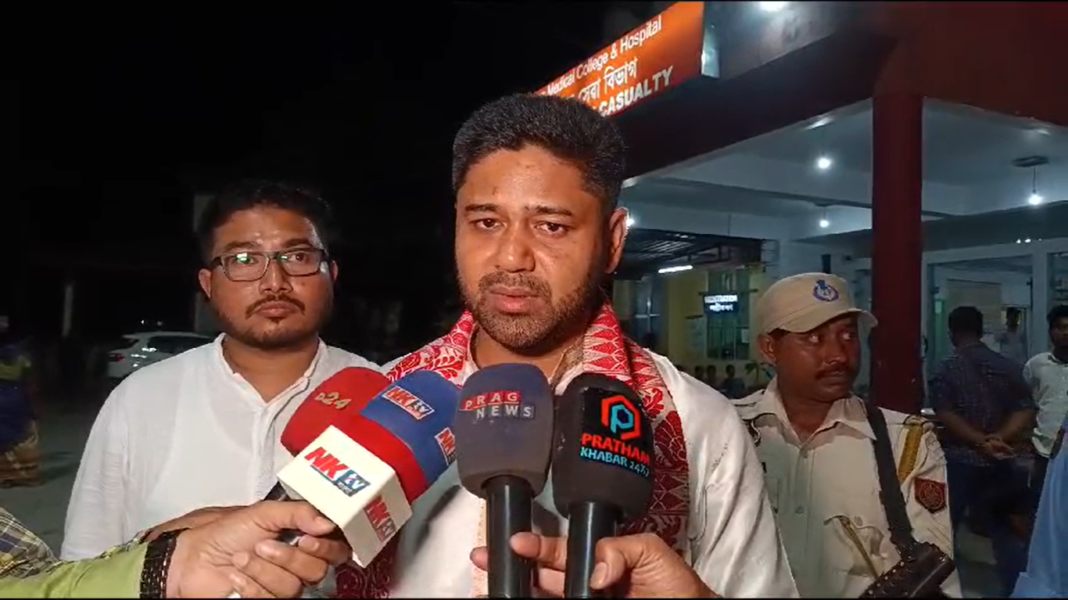

Dibrugarh, May 5: In a significant setback for the Asom Jatiya Parishad (AJP), its president Lurinjyoti Gogoi has suffered a third consecutive electoral defeat, losing the high-stakes Khowang Assembly constituency to BJP candidate Chakradhar Gogoi.
According to final election figures, Lurinjyoti Gogoi secured 57,054 votes, while Chakradhar Gogoi polled 67,038 votes to register a decisive victory, reinforcing the Bharatiya Janata Party’s (BJP) continued dominance in Upper Assam.
The Khowang result marks a hat-trick of defeats for the AJP leader across major elections. In the 2021 Assam Assembly polls, he contested two constituencies but lost both. He was again unsuccessful in the 2024 Lok Sabha elections, and his latest defeat in the 2026 Assembly polls underscores a continuing struggle to translate political visibility into electoral success.
The constituency also witnessed episodes of tension during the campaign period. Clashes were reported between BJP and AJP supporters in several areas, with both sides trading allegations.
Lurinjyoti Gogoi had earlier claimed that his vehicle was attacked, while a police raid at his residence ahead of polling further escalated the political confrontation.
Political observers attribute the defeat to multiple factors. The BJP’s strong organisational network and booth-level presence appear to have given Chakradhar Gogoi a clear advantage. At the same time, repeated electoral setbacks have dented AJP’s credibility among sections of voters, particularly in rural areas like Khowang.
The party also struggled to consolidate anti-BJP votes despite broader opposition alignments. Reports of clashes and a charged campaign atmosphere may have influenced undecided voters, while AJP’s ideological appeal has yet to translate into a robust grassroots structure capable of matching the BJP’s election machinery.
The loss is seen not just as a personal setback for Lurinjyoti Gogoi but as a critical moment for AJP as a regional political force.
Once projected as a fresh alternative rooted in Assamese nationalism, the party now faces growing pressure to reassess its leadership, strategy, and organisational strength.
As the BJP continues to consolidate its position in Assam, the road ahead for AJP appears increasingly challenging without significant structural and strategic recalibration.