


ROOPAK GOSWAMI
Shillong, May 12: In a remarkable botanical rediscovery from Meghalaya, scientists have traced a rare flowering plant believed to have disappeared from India for over a century, finding it again in the mist-laden Khasi Hills after a gap of 138 years.
The species, Didymocarpus acuminatus, was rediscovered by researchers from the Botanical Survey of India (BSI) during a botanical exploration conducted in August 2024 in the Khasi Hills region of Meghalaya. The findings have now been published in the journal Phytotaxa.

The work was carried out under the leadership of Dr. Nripemo Odyuo of the BSI’s Eastern Regional Centre, Shillong. The research team also included Yalatoor Mahesh, Ramalingam Kottaimuthu and Bladimir Bajur Theodore Tham.
As part of efforts to safeguard the rare species, the researchers are now conserving the plant at the BSI’s Woodland campus in Shillong under an ex-situ conservation programme.
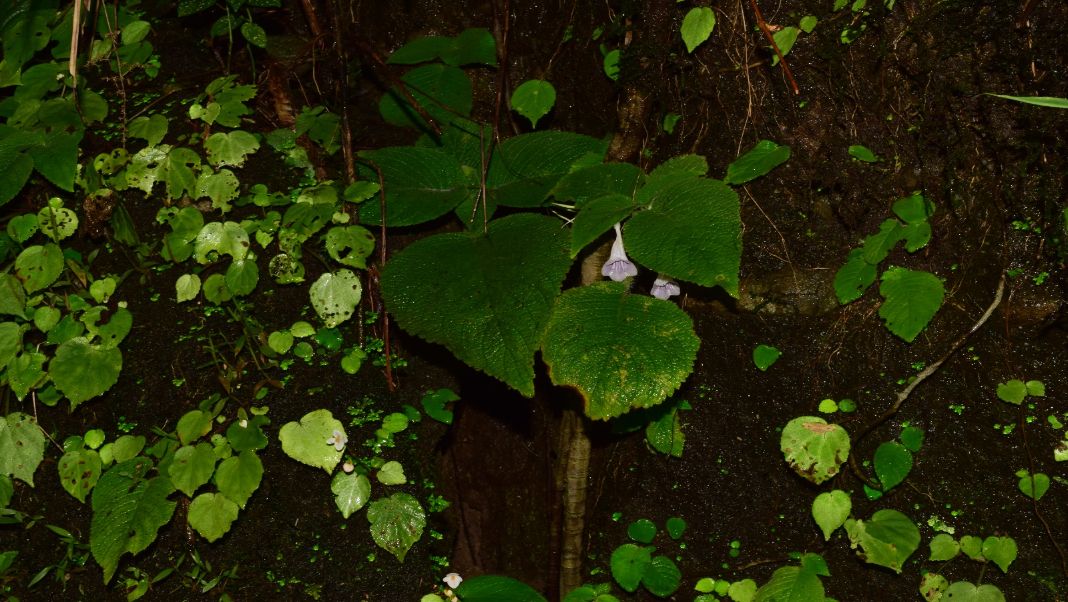
The scientists located the species growing on moist rocky surfaces in forested areas near its historic range in the Khasi Hills. What makes the discovery extraordinary is that the plant had not been recorded anywhere in India since 1886. Over the decades, the absence of any confirmed specimen had led botanists to fear that the species might have gone extinct.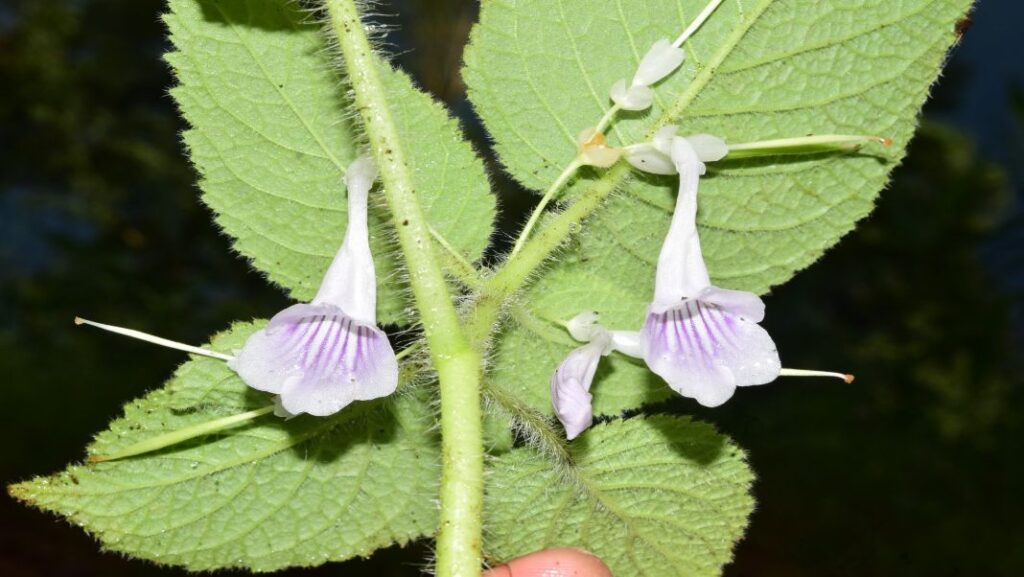
The delicate herb, known for its white flowers streaked with purple and violet lines, is endemic to Meghalaya, meaning it is found nowhere else in the world. Historical records show that it was first described in 1839 from specimens collected in Cherrapunji by Francis De Silva. Later collections were made by noted botanists including J.D. Hooker and C.B. Clarke during the 19th century, but no trace of the species emerged after that.
According to the study, the rediscovered population is alarmingly small.
Researchers documented fewer than 20 mature individuals surviving in fragmented habitats spread across roughly 16 square kilometres in the Khasi Hills, including areas such as Cherrapunji, Lawbah and Wahlong.
The scientists have provisionally classified the species as “Critically Endangered” under the International Union for Conservation of Nature (IUCN) criteria due to its tiny population size and the continuing degradation of its habitat.
The plant grows at elevations between 1,450 and 1,520 metres, usually on damp rocky surfaces surrounded by cloud forest vegetation. Researchers say the rediscovery highlights the ecological importance of Meghalaya’s montane habitats, many of which continue to shelter rare and poorly understood species despite increasing environmental pressures.
“The rediscovery of Didymocarpus acuminatus after 138 years is a significant reminder that Meghalaya’s cloud forests still hold many botanical treasures awaiting documentation and protection. At the same time, the extremely small surviving population underlines the urgent need for habitat conservation and long-term monitoring to ensure that this unique endemic species does not disappear again,” the researchers noted.
The authors added that the finding is important not only for conservation but also for understanding the evolutionary and biogeographic history of the Indo-Burmese region, one of the world’s major biodiversity hotspots. The rediscovery, they said, will serve as a valuable reference for future taxonomic and conservation studies involving the genus Didymocarpus in Northeast India.
Also Read: Draw from local culture to build global ventures: NEHU Pro-VC at IDE bootcamp
Also Watch
Find latest news from every corner of Northeast India at hubnetwork.in, your online source for breaking news, video coverage.
Also, Follow us on
Twitter-twitter.com/nemediahub
Youtube channel- www.youtube.com/@NortheastMediaHub2020
Instagram- www.instagram.com/ne_media_hub
Download our app from playstore – Northeast Media Hub