

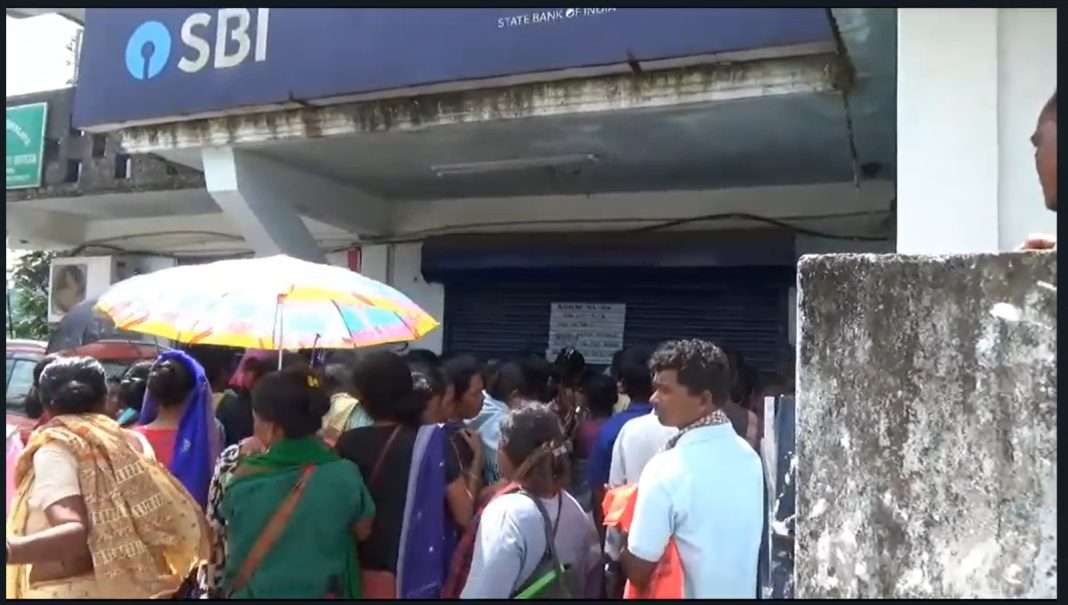

Shillong, April 30: Meghalaya has emerged as India’s leading state in women’s financial inclusion, with 50% of individual bank accounts held by women, according to the Women and Men in India 2025 report by the Ministry of Statistics and Programme Implementation (MoSPI).
The report provides a comprehensive snapshot of gender trends across India, covering population, education, health, economic participation, and financial inclusion. Drawing on official data from multiple ministries, it tracks gender disparities across states and rural–urban categories.
“The economic empowerment of women is a key requirement for reducing gender inequality and ensuring that economic growth benefits all sections of society,” the report notes, linking empowerment to access to employment, education, social security, and financial resources.
The trend in Meghalaya has been reinforced by targeted interventions, particularly “top-up” transfers into women’s bank accounts, ensuring a steady flow of funds through welfare schemes and direct benefit transfers.
The impact is visible in banking data. As of March 2025, the state has over 17.77 lakh women-owned bank accounts, holding deposits worth ₹10,136 crore. These form a substantial share of Meghalaya’s 37.89 lakh total accounts, which together account for deposits of ₹37,779 crore.
Officials say regular inflows have helped reduce account dormancy—a persistent issue in rural banking—and encouraged women to actively use formal financial systems. This is increasingly translating into greater financial agency, with women using accounts for savings, self-help group activities, and small livelihood investments.
However, strong financial inclusion has not fully translated into broader economic gains.
Meghalaya’s Labour Force Participation Rate (LFPR) stands at 44.6%, with female LFPR at 40.0%, compared to 49.4% for men, pointing to a continuing gender gap in workforce participation.
Even where women are working, disparities remain. Wage data show that women earn less than men in both rural and urban areas, and employment is largely concentrated in informal sectors.
A significant share of women—especially in rural areas—are self-employed (around 52%), while only a small proportion are in regular salaried jobs (about 11.5%), with others engaged in casual labour (around 35%).
The gap is also evident in financial markets. Women account for just 26.3% of individual investors in FY25, rising marginally to 26.7% in FY26, while men continue to dominate with over 73% share.
The report also highlights structural constraints. Nationally, women spend 289 minutes daily on unpaid domestic work, compared to 88 minutes by men, limiting their ability to participate in paid employment.