


ROOPAK GOSWAMI
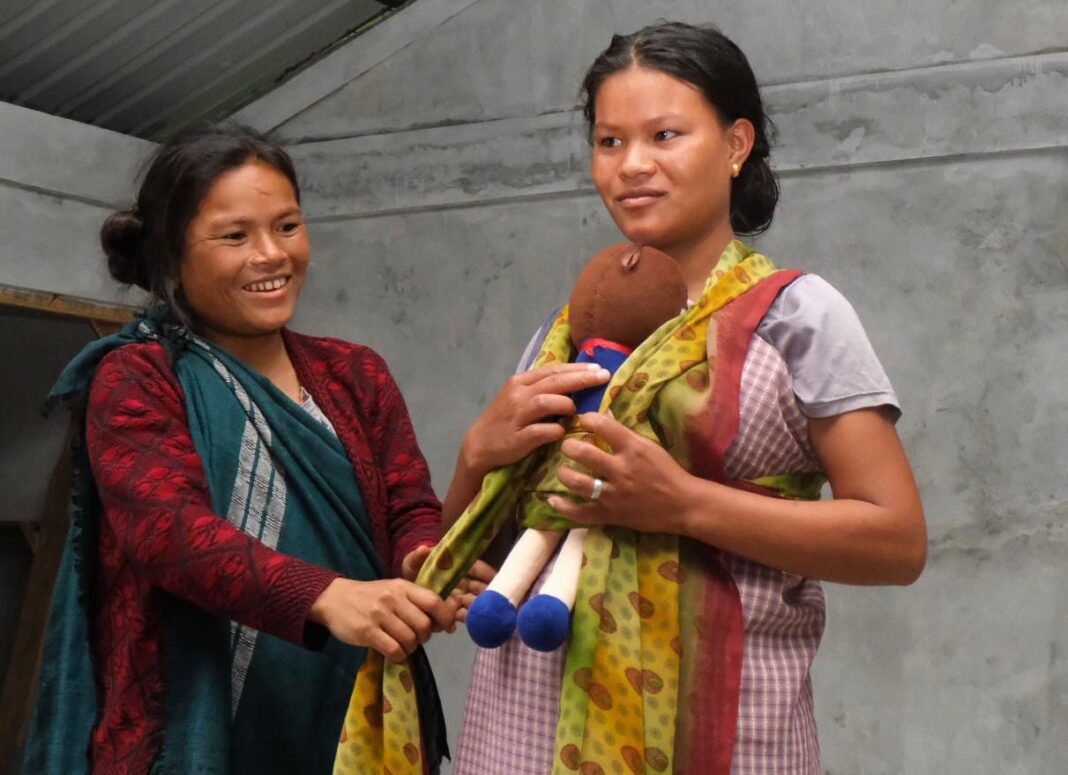
Shillong, May 15: A remote village in Meghalaya’s West Jaintia Hills has emerged as a compelling example of how community participation can strengthen public healthcare delivery, particularly in maternal and child health, immunisation, and newborn care.
The interaction took place on May 13 in the village of Shkentalang in the Amlarem Block during the visit of Soledad Herrero, Chief of Field Services at UNICEF India.
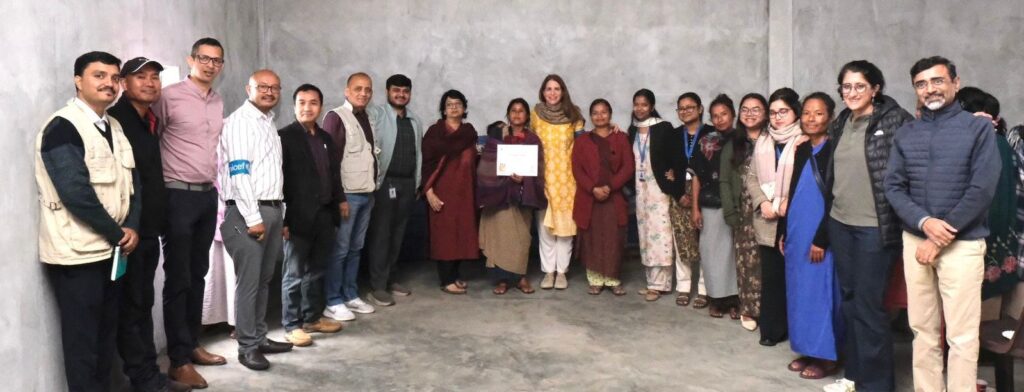
The visit brought together Routine Immunisation initiatives under GAVI HSS-3 and the Maternal, Newborn and Child Health–Human Centred Design (MNCH-HCD) programme on a single village platform, showcasing how grassroots participation is helping shape public health outcomes in Meghalaya.
The field visit was a day before the high-level UNICEF delegation called on Meghalaya Chief Minister Conrad K. Sangma in Shillong to review ongoing collaborations in child health, nutrition, maternal care, immunisation, adolescent development, and community-led social interventions in the state.
During the meeting, the delegation shared observations from its two-day visit across Meghalaya, including interactions with frontline health workers, mothers’ groups, village health councils, district officials, and youth leaders. UNICEF officials appreciated the state government’s grassroots and community-driven interventions aimed at improving immunisation coverage, reducing maternal mortality, strengthening nutrition outcomes, and promoting youth participation.
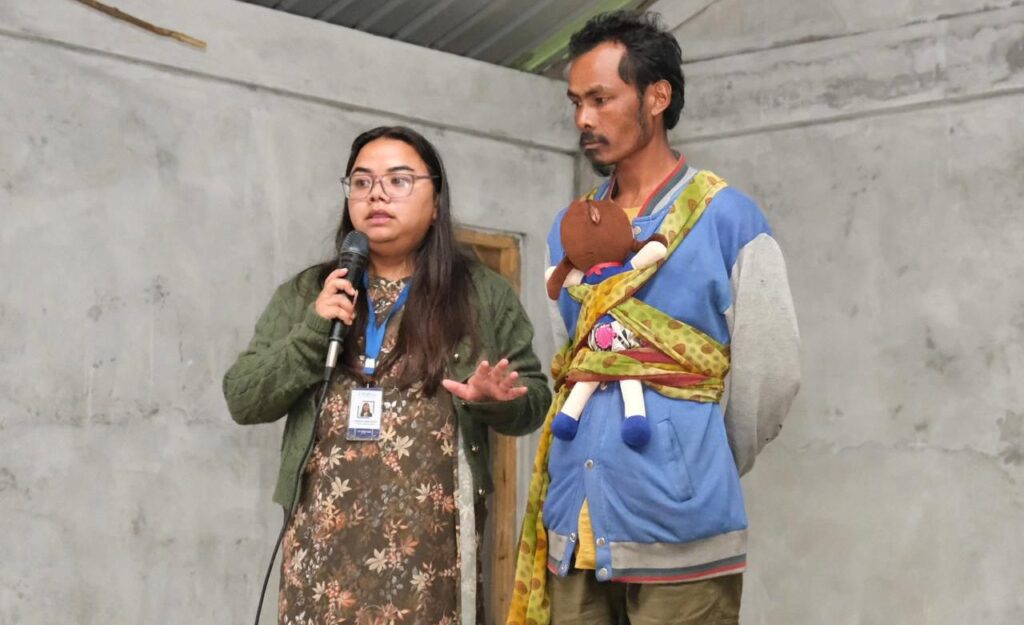
One of the most striking moments during the Shkentalang visit came when a local “Buddy Mother” explained how peer support among women helped overcome vaccine hesitancy within the community, demonstrating how trust and awareness can spread effectively through local social networks.
In another significant moment, a father publicly demonstrated Kangaroo Father Care, challenging traditional caregiving norms and reinforcing the idea that newborn care is a shared family responsibility.
Women’s groups also led Kangaroo Mother Care Buddy Circles, while ASHA workers guided families through newborn follow-up calendars and highlighted the importance of timely immunisation and postnatal care.
Frontline health workers spoke about the difficulties of reaching zero-dose and dropout children in Meghalaya’s remote and difficult terrain, especially in far-flung habitations.
The UNICEF delegation also highlighted the State’s integrated approach to maternal and child health, nutrition, and early childhood development, noting that Meghalaya is moving towards a “003 Agenda”—zero maternal deaths, zero unimmunized children, and ensuring that every child achieves healthy physical growth during the first 1,000 days of life, thereby preventing stunting and enabling children to reach their full developmental potential.
Officials said the Shkentalang experience reflected the state’s “003 Agenda,” which focuses on reducing maternal deaths, ensuring full immunisation coverage, and improving care during the first 1,000 days of a child’s life.
The initiative is being implemented through collaboration between the National Health Mission Meghalaya, State Health Systems Resource Centre Meghalaya, UNICEF India, and Tattva Foundation, with academic support from Assam Don Bosco University and Indian Institute of Technology Bombay.
Health officials and development partners said the visit highlighted how lasting public health improvements are often driven not only by government programmes, but by communities themselves taking ownership of care, awareness, and behavioural change.
Also Read: BJP to announce Shillong LS by-poll candidate after EC declared dates: Kharkrang
Also Watch
Find latest news from every corner of Northeast India at hubnetwork.in, your online source for breaking news, video coverage.
Also, Follow us on
Twitter-twitter.com/nemediahub
Youtube channel- www.youtube.com/@NortheastMediaHub2020
Instagram- www.instagram.com/ne_media_hub
Download our app from playstore – Northeast Media Hub