


ROOPAK GOSWAMI
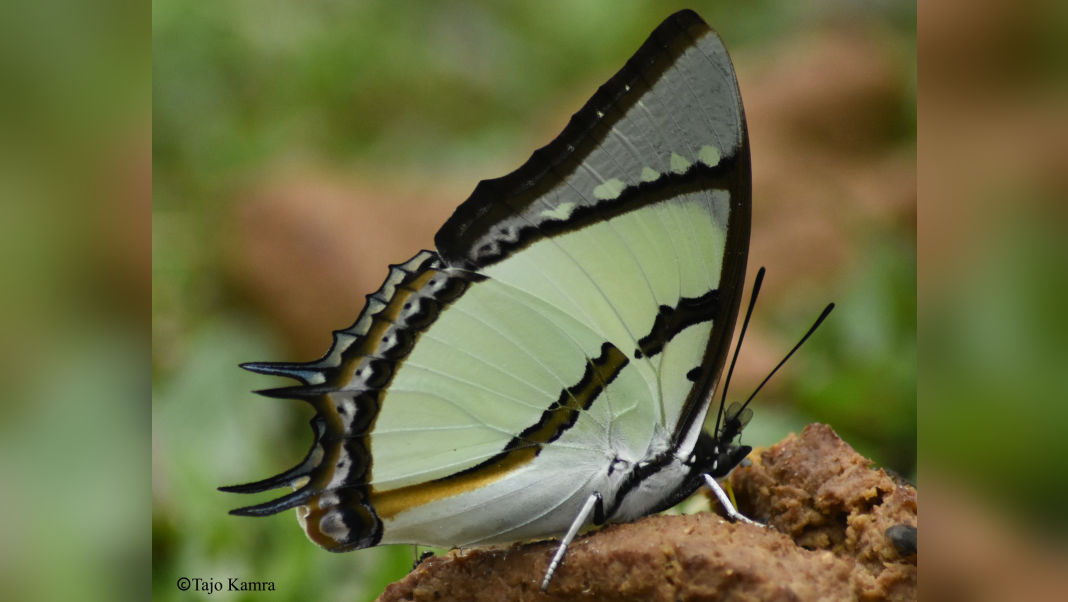
Shillong, May 8: Butterflies may appear delicate and carefree, but new research by NEHU scientists has revealed that they are remarkably choosy about where they stop to drink minerals and nutrients in the wild.
The behaviour, known as “mud puddling,” is seen mostly among male butterflies, which extract sodium, amino acids and other nutrients from moist surfaces essential for survival and reproduction.
The research, conducted in the biodiversity-rich Talle Valley Wildlife Sanctuary in Arunachal Pradesh’s Lower Subansiri district, documented mud puddling behaviour in 63 butterfly species across 11 different substrate types over a two-year period.
Published in the International Journal of Tropical Insect Science, the study by researchers Tajo Kamra and Sudhanya Ray Hajong from North-Eastern Hill University (NEHU), Shillong, highlights how butterflies actively choose nutrient-rich microhabitats rather than puddling randomly.
The researchers found that wet sand, rocks, stream puddles and wild animal dung were the most preferred puddling sites, while bird droppings, wet soil and plant decay attracted comparatively fewer butterflies.
Among the species observed, Udara dilecta, Junonia iphita, Byasa polyeuctes and Dodona adonira showed the highest frequency of substrate use.

The study also uncovered distinct family-level preferences. Butterflies from the Nymphalidae family emerged as the most diverse and adaptable puddlers, using a wide range of substrates, while Pieridae species showed a strong preference for stream puddles and wet sand. Riodinidae butterflies, meanwhile, were frequently seen on rocks and wild animal dung.
Seasonal shifts in puddling behaviour were another striking finding. During the monsoon and post-monsoon months, butterflies relied heavily on rainwater and stream puddles, while in winter many species shifted towards organic matter such as leaf decay and bird faeces.
The researchers noted that butterflies spent the longest time puddling on wet soil, rainwater puddles and wild animal dung, suggesting these substrates may provide richer or more sustained nutrient sources.
According to the authors, the findings underline the ecological importance of preserving moisture-rich microhabitats and organic resource zones inside forest ecosystems.
“Understanding these substrate preferences is crucial for conservation efforts, as habitat modifications that reduce access to critical types of substrate may disproportionately affect butterfly populations,” the study noted.
The researchers added that habitat degradation, seasonal water fluctuations and changing rainfall patterns could alter the availability of preferred puddling sites, potentially impacting butterfly diversity and behaviour in fragile Himalayan ecosystems.
Also Read: ‘Moment of pride, not politicisation’: Meghalaya CM on NPP fielding KAS president for LS bypoll
Also Watch
Find latest news from every corner of Northeast India at hubnetwork.in, your online source for breaking news, video coverage.
Also, Follow us on
Twitter-twitter.com/nemediahub
Youtube channel- www.youtube.com/@NortheastMediaHub2020
Instagram- www.instagram.com/ne_media_hub
Download our app from playstore – Northeast Media Hub