

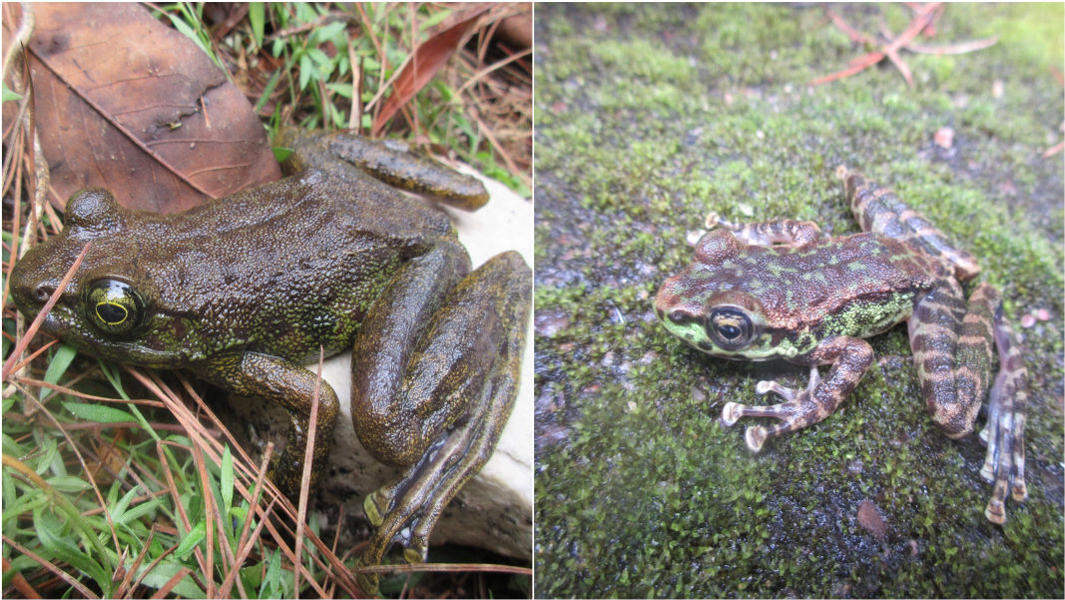

Shillong, May 31: In a rare and remarkable discovery, scientists have identified a new species of frog hiding in plain sight—right within the city limits of Shillong, the capital of Meghalaya. Named Amolops shillong, or the Shillong Cascade Frog, the species was found thriving in the fragmented urban forests and streams of Mawlai, revealing the extraordinary biodiversity that still survives amid growing urban sprawl.
The discovery, led by the Zoological Survey of India (ZSI) in collaboration with local universities, has been published in the latest issue of Records of the Zoological Survey of India. It marks a significant scientific milestone and a wake-up call for urban conservation efforts.

“Cities are often overlooked as biodiversity hubs, but Amolops shillong proves otherwise,” said Dr. Dhriti Banerjee, Director of ZSI. “Its discovery underscores the need to integrate conservation into urban planning. These frogs are indicators of clean and stable ecosystems—protecting them means protecting our own environmental future.”
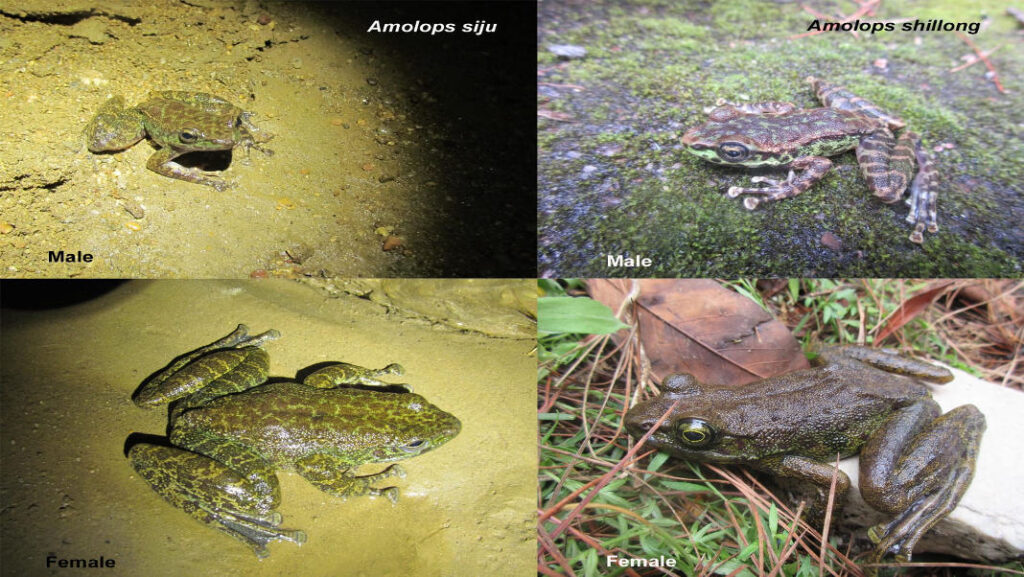
The Shillong Cascade Frog belongs to a group of visually similar, fast-flowing stream frogs that are notoriously hard to tell apart. Genetic analysis confirmed that Amolops shillong is part of the Amolops indoburmanensis complex, closely related to Amolops siju—another species described by ZSI in 2023 from Siju Cave in Meghalaya. However, unlike its cave-dwelling cousin, A. shillong was found amidst bustling neighborhoods, just kilometers from the city center.
Researchers collected three specimens between 2022 and 2023: two from Umthlong locality by Damepaia Pdah (Assam University, Silchar) and one from Umrynjah by Eugene Lyngkhoi (North-Eastern Hill University, Shillong). The frog shows unique features in its size, skin texture, and proportions, setting it apart from known relatives.

Frogs of the Amolops genus have been known from India since the 1850s, but urban discoveries are almost unheard of. This makes A. shillong not just another new species, but a symbol of what could still be found in India’s rapidly urbanizing cities.
“We were genuinely surprised to find an undescribed species right in Shillong,” said lead author Bhaskar Saikia of ZSI. “It speaks volumes about the hidden diversity that remains undocumented—even in cities.”
India now has 20 recognized Amolops species, 16 of which were discovered within the country. Nine of these, including A. shillong, were described in just the last 20 years—most from Northeast India, a known biodiversity hotspot.

Scientists stress that this discovery is more than academic—it’s an ecological alarm.
“Urban biodiversity is still largely absent from mainstream conservation planning,” said co-author Dr. Bikramjit Sinha. “Yet here we are, uncovering a genetically distinct species from city streams. Amolops shillong demands protection, and so do its fragile urban habitats.”
Cascade frogs like this one depend on clean, flowing water. Their presence in Shillong’s streams signals the existence of vital but overlooked microhabitats. The authors call for urgent documentation of urban biodiversity—not just in Shillong, but across Indian cities—before unchecked development wipes out species that haven’t even been named yet.

“There could be many more hidden species waiting to be discovered,” said Dr. K. P. Dinesh, another co-author. “Molecular tools are helping us uncover layers of diversity we never saw before.”
The study was co-authored by A. Shabman (ZSI Pune), Eugene Lyngkhoi (NEHU), and Damepaia Pdah (Assam University), whose fieldwork and molecular analysis brought Amolops shillong to light.
As India’s cities continue to expand, this discovery is a compelling reminder: even amid concrete and congestion, nature is quietly holding its ground.