

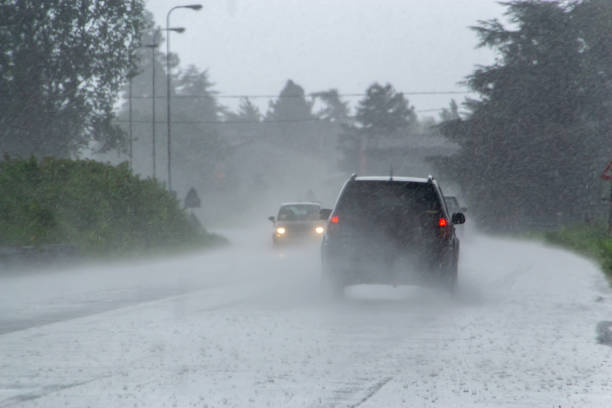

Shillong, July 6: Meghalaya, known for being one of the wettest regions in the world, is facing a glaring shortfall in monsoon rainfall this year.
According to the latest data released by the India Meteorological Department (IMD), the state has recorded a 48% rainfall deficit from June 1 to July 5, receiving only 453.3 mm of rain compared to the normal average of 873.1 mm for the period.

This sharp decline categorises Meghalaya’s condition as “deficient,” and could have significant implications for agriculture, water resources, and forest ecosystems across the state. On July 5 alone, the state recorded 20.1 mm of rainfall, still falling short of the day’s normal of 30.7 mm, marking a 34% deficit. The West Garo Hills district suffered from the highest deficit of 79 per cent. The East Khasi Hills district, with Mawsynram and Cherrapunji, the two rainiest places on Earth, recorded 40 per cent deficient rainfall.
The monsoon shortfall comes at a time when most parts of Northeast India are reeling from erratic weather. Assam (-32%), Arunachal Pradesh (-37%), and Sikkim (-35%) are also facing serious rainfall deficiencies, raising broader regional concerns.
Deficient rainfall has an impact on the state’s kharif crops, particularly rice, which is highly dependent on consistent monsoon rains. Water tables may also decline, posing risks for both rural drinking water access and hydroelectric power generation.
The rainfall anomaly also raises ecological concerns in a state rich in biodiversity and forest cover. Reduced rain can disturb groundwater recharge, forest growth, and even the unique limestone cave systems of Meghalaya, which rely on stable hydrological cycles.
A study by Andy T G Lyngdoh and Subrata Purkayastha of NEHU on Rainfall Trend Analysis of the Meghalaya Plateau: A Case Study of Ri Bhoi District suggests an erratic rainfall pattern in the highland and lowland zones of Ri Bhoi district that could impact agriculture and agro-based livelihoods.
Climate change has emerged as a critical challenge for agriculture in Meghalaya, a region characterised by its unique topography and farming practices. A Study on the Impact of Climate Change on Average Yields and their Variability of the Principal Crops in Meghalaya found that the majority of the respondents reported a noticeable increase in temperature over the past decade. Around 70 per cent of farmers observed that the temperatures in their areas have been rising, with only a small percentage reporting no change.
“More than 80% of farmers highlighted an increase in rainfall irregularity, with seasons becoming unpredictable. Some experienced excessive rainfall, while others faced droughts, negatively impacting crop yield consistency,” the study revealed. The study was carried out by Kresphulin Wahlang, Assistant Professor, Department of Economics, Sngap Syiem College, Mawkyrwat and Research Scholar, Martin Luther Christian University, Shillong.
Most respondents noted a decrease in agricultural yields over the past 5 years, with rice and maize being the most affected crops. Around 85 per cent of farmers reported a significant reduction in rice yields due to delayed rainfall and inconsistent precipitation patterns.
“Nearly 86 per cent of respondents observed greater variability in crop yields, with some years showing lower yields due to droughts, while others saw losses from waterlogging due to excessive rainfall”, the study found.

The study revealed that around 75 per cent of respondents reported a decline in the yield of rice due to excessive rainfall, followed by 71% citing crop damage due to erratic rainfall, and 70 per cent of potato growers reported yield losses due to fluctuating weather conditions.
The study suggested encouraging the farmers to adopt drought-resistant and climate-resilient crop varieties such as hybrid rice, maize, and millet that are better suited to fluctuating rainfall patterns. Government initiatives and research institutions can play a significant role in making these varieties available to farmers.
Also Read: One NSCN militant killed in gunbattle with security forces in Longding, Arunachal Pradesh
Also Watch
Find latest news from every corner of Northeast India at hubnetwork.in, your online source for breaking news, video coverage.
Also, Follow us on-
Twitter-twitter.com/nemediahub
Youtube channel- www.youtube.com/@NortheastMediaHub2020
Instagram- www.instagram.com/ne_media_hub
Download our app from playstore – Northeast Media Hub