

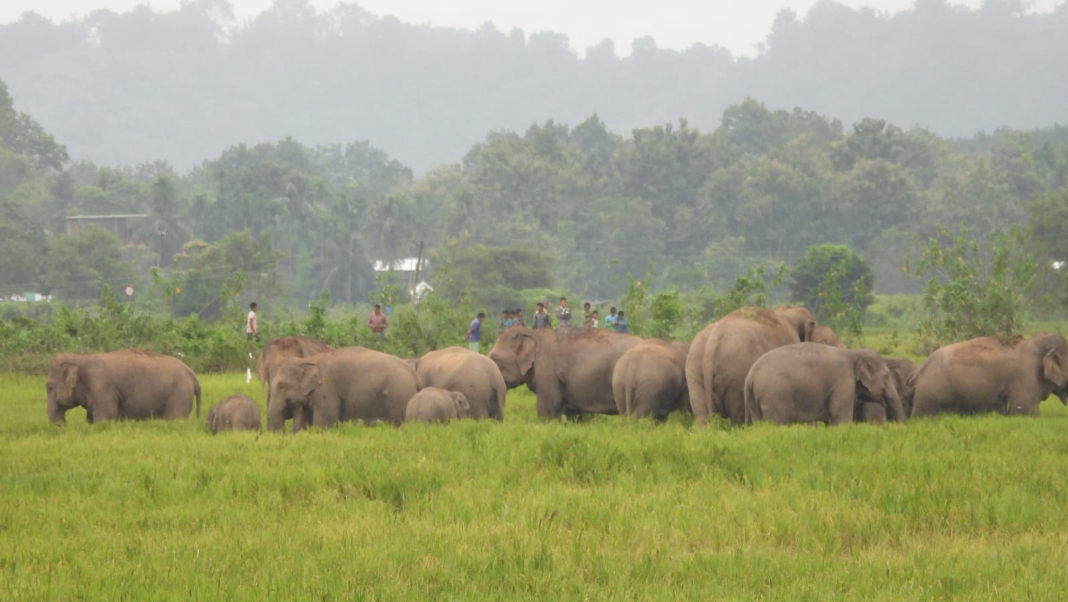

Shillong, April 12: Meghalaya recorded 92 human deaths and 58 elephant deaths due to human–elephant conflict over the past 16 years, reflecting a persistent, though relatively lower, level of conflict in the state.
According to a national study, a total of 7,868 people were killed in elephant encounters across 16 states between 2009 and 2024, averaging nearly 492 deaths annually.
Odisha reported the highest number of fatalities at 1,495, followed by West Bengal (1,306), Jharkhand (1,205) and Assam (1,161), with these four states together accounting for nearly 70 per cent of all deaths. States such as Tamil Nadu (747), Chhattisgarh (782) and Karnataka (520) reported moderate figures, while Kerala (290), Meghalaya (92) and Uttarakhand (132) recorded lower but consistent fatalities. Very few cases were reported from Nagaland (9), Tripura (13) and Maharashtra (17).
Also Read: Assam–Meghalaya border villagers join hands to tackle rising elephant conflict
“North-eastern states such as Assam and Meghalaya also contributed significantly to the overall fatalities”, the study said.
The study also highlights that elephant deaths across the country are largely driven by human-related factors, with electrocution emerging as the leading cause. In Meghalaya, most elephant deaths were linked to electrocution and train accidents, indicating the risks posed by power infrastructure in forested landscapes.
Biodiversity organisation from Assam Aaranyak has been working in Meghalaya to provide effective ways for the mitigation of human-elephant conflict as well as boosting conservation in the state.
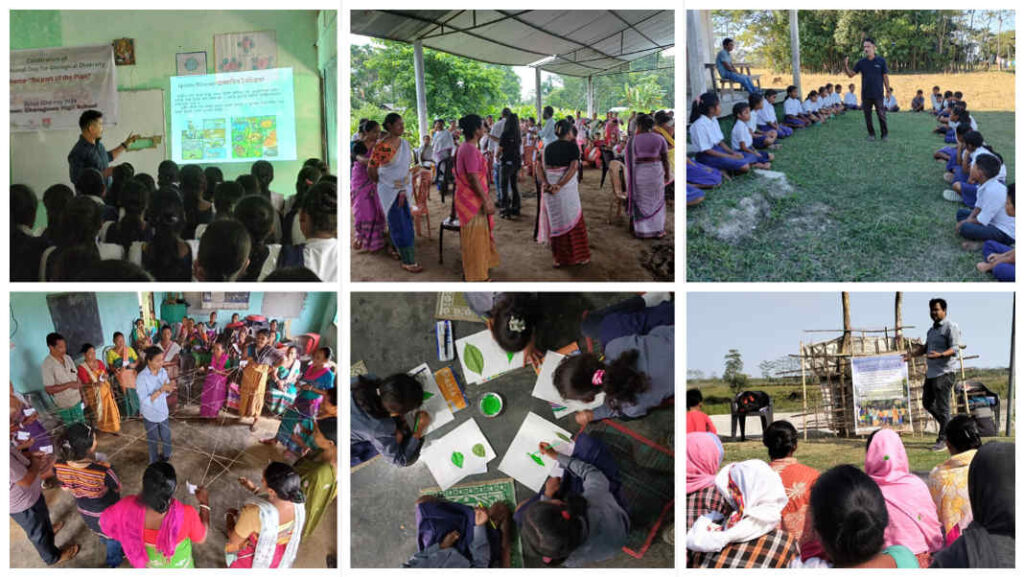
The organisation, in collaboration with the Krishnai Forest Range in Goalpara, had organised a cross-border awareness programme at Ketekibari village recently. The village cluster — Ketekibari, Chaplengkata, Thakurbila and Borjhora — straddles the border between Assam’s Goalpara district and Meghalaya’s West Garo Hills. Home to Rabha and Garo communities, residents here have been grappling with escalating elephant depredation for years, leading to crop loss, property damage and rising tensions.
Also Read: Forest departments of Assam, Meghalaya urged for joint patrolling to curb human-elephant conflict
Despite relatively lower numbers, the study cautions that Meghalaya remains part of a wider pattern of ongoing human–elephant conflict in the Northeast. Experts attribute this to increasing habitat fragmentation, expansion of agriculture and settlements, and growing overlap between human activity and elephant movement corridors.
The findings further underline that conflict intensity is not necessarily linked to elephant population size, but is shaped by land-use patterns and landscape changes. For Meghalaya, this suggests that while the situation may not be as difficult as in some other states, the risk remains steady, warranting focused and region-specific mitigation efforts.
Also Read: Elephant Cup 2025 unites Assam–Meghalaya border communities in fight against human–elephant conflict
Also Watch
Find latest news from every corner of Northeast India at hubnetwork.in, your online source for breaking news, video coverage.
Also, Follow us on
Twitter-twitter.com/nemediahub
Youtube channel- www.youtube.com/@NortheastMediaHub2020
Instagram- www.instagram.com/ne_media_hub
Download our app from playstore – Northeast Media Hub