

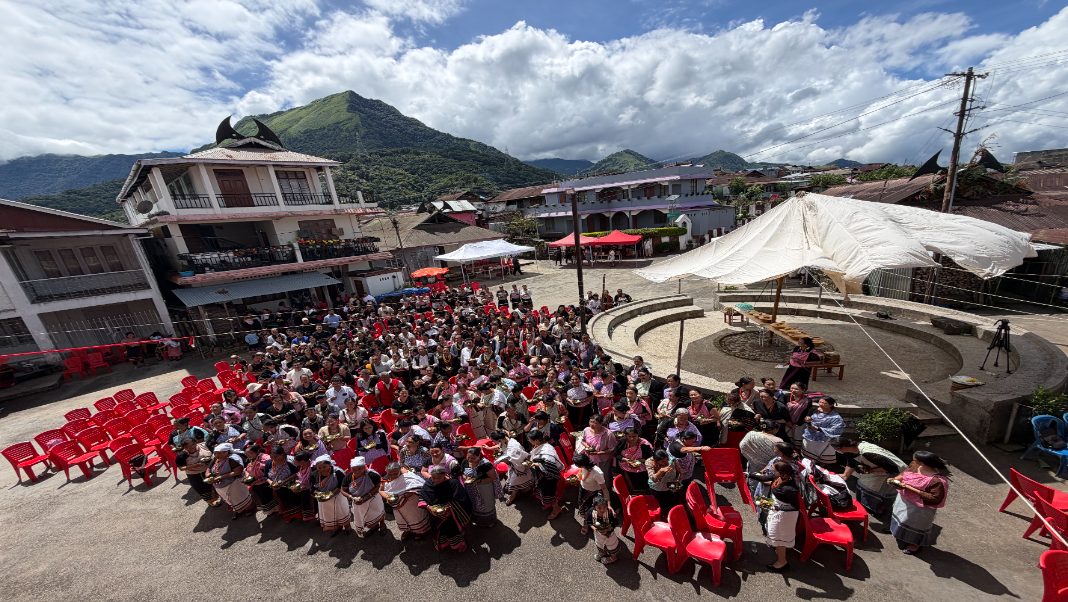

While many parts of India continue to battle gender bias, an ancient Angami tradition in Nagaland has honoured daughters with gratitude, dignity and pride for centuries.
Kohima, July 27: At a time when many parts of the country are still striving to improve the status of the girl child, Viswema village in Nagaland offered a powerful reminder that some indigenous traditions have celebrated daughters for generations. On Monday, the village came alive as Telkhukhu Nyi, an ancient Angami festival dedicated exclusively to the girl child, was revived in a colourful celebration with community women and elders coming together to preserve the centuries-old tradition.
Organised by the Rachü Women Society at Tazweo Kita, the festival reaffirmed a profound indigenous tradition that honours girls through a unique celebration of thanksgiving, sharing and fraternity. Traditionally observed on the 13th day of Chiinyi, the Angami lunar month following the completion of paddy sowing, Telkhukhu Nyi remains one of the few indigenous festivals devoted solely to celebrating the girl child.
Delivering the keynote exhortation, Medohole Pusa highlighted the wisdom of the ancestors, urging people to forgive past grievances, nurture relationships and work towards a peaceful society.

The legend of “Te-L Khukhu”, or “The Toad’s Share,” from which the festival derives its origin, was narrated by Neithono Sothu and Videneile Neikha. According to Angami folklore, the tradition began when a woman vowed to dedicate a portion of her harvest to a faithful toad after it succeeded in retrieving a ripe ear of millet from a pond when all other creatures had failed. Millet continues to remain central to the ritual, symbolising gratitude and celebrating nature’s role in sustaining life.
Traditionally, young girls received Khukhu, a lovingly prepared meal from their mothers, before gathering to sing, share food and forge lifelong friendships. One of the festival’s most enduring customs is setting aside a portion of the meal as “the toad’s share” before anyone in the household begins eating, symbolising gratitude, humility and abundance.
Despite the influence of Christianity and modernisation over the centuries, the festival continues to uphold its timeless values of generosity, unity and the importance of the girl child.
Addressing the gathering, Mezhlhou Miachieo, Vice President of the Angami Women Organisation (AWO), Kevisele Sophie, President of the Southern Angami Women Organisation (SAWO), and Evhole Chaya, President of the Viswema Women Organisation (VWO), called upon women leaders to continue preserving indigenous traditions while safeguarding the dignity, rights and well-being of girls.
The celebration concluded with traditional folk music and cultural performances reflecting the richness of Angami heritage, carrying a simple yet powerful message that a society which honours its daughters also honours its future.
Also Read: ‘We had no time to save anything’: Sivasagar counts cost of worst floods in 50 years
Also Watch
Find latest news from every corner of Northeast India at hubnetwork.in, your online source for breaking news, video coverage.
Also, Follow us on
Twitter-twitter.com/nemediahub
Youtube channel- www.youtube.com/@NortheastMediaHub2020
Instagram- www.instagram.com/ne_media_hub
Download our app from playstore – Northeast Media Hub