

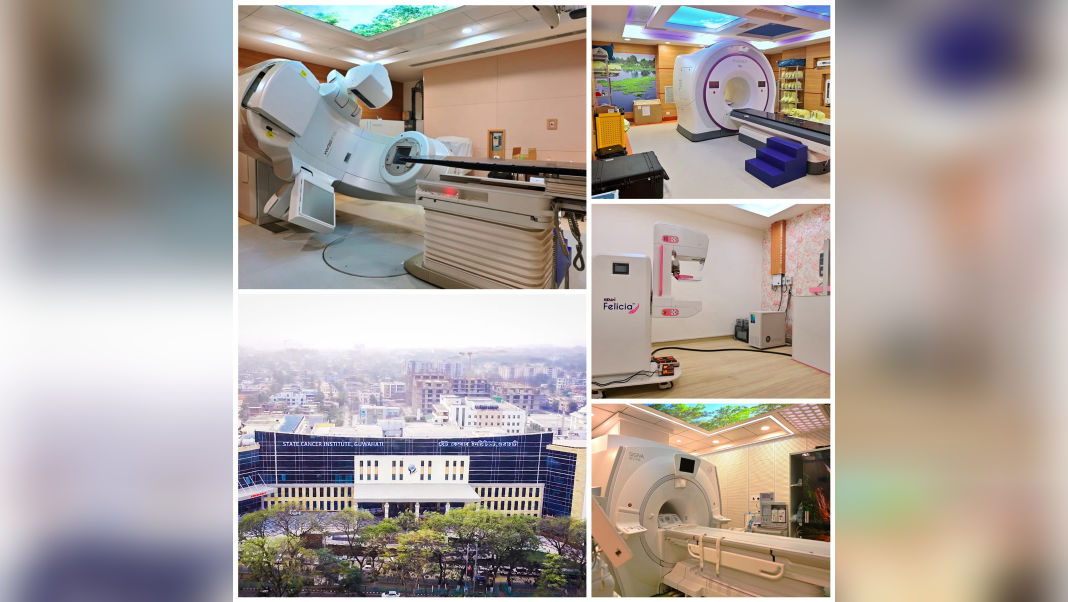

Guwahati, July 9: Assam’s decentralised cancer care model, backed by one of India’s largest population-based cancer screening programmes, has helped the state achieve a cancer survival rate of 62 per cent—the highest in the country and well above the national average of around 40 per cent, according to a report.
Health experts attribute the improvement to aggressive early detection, expanded access to treatment and the rapid expansion of specialised cancer hospitals across the state, a strategy that is increasingly being seen as a model for improving cancer care in geographically challenging regions.
According to the report, nearly 47 lakh people have been screened for cancer so far, leading to the early detection of more than 900 cancer patients. The state has intensified its screening programme with a target of covering 1.24 crore people.

“Earlier, a majority of patients reached hospitals when the disease had already advanced to Stage III or IV. Today, a growing number of cancers are being diagnosed at Stages I and II, when treatment is far more effective, and survival outcomes are significantly better,” a health expert said.
Officials said Assam’s cancer control strategy follows a comprehensive approach encompassing prevention, early detection, diagnosis, treatment, palliative care, survivorship and research. Central to this effort has been the decentralisation of cancer care, ensuring that specialised treatment is available closer to patients instead of being concentrated in Guwahati or outside the Northeast.
The transformation has been driven by the Assam Cancer Care Foundation (ACCF), a joint initiative of the Assam government and the Tata Trusts. Over the past few years, the Foundation has established a network of dedicated cancer hospitals and oncology centres aimed at making quality cancer treatment accessible across the state.

Dedicated cancer hospitals are operational in Barpeta, Dibrugarh, Diphu and Silchar, while diagnostic and day-care centres have been set up in Golaghat, Jorhat, Kokrajhar, Lakhimpur, Mangaldai, Tezpur and Tinsukia. The network has substantially reduced the need for patients to travel to metropolitan cities outside the Northeast for advanced treatment, cutting both delays and treatment costs.
Experts said decentralising cancer care has played a critical role in improving survival by enabling earlier diagnosis and timely treatment. They added that the partnership with the Tata Trusts has also made cancer treatment significantly more affordable, reducing the financial burden on thousands of patients.
Assam is now preparing to take another major leap in oncology care with plans to introduce proton beam therapy in the government healthcare sector. Proton therapy is one of the most advanced forms of radiation treatment, using positively charged protons to precisely target tumours while minimising radiation damage to surrounding healthy tissues. The technology is particularly beneficial for cancers located close to vital organs and for paediatric patients, where limiting long-term side effects is crucial.
The state’s investment in cancer infrastructure is also strengthening its position as the Northeast’s leading healthcare destination. On Wednesday, Chief Minister Himanta Biswa Sarma announced that Mizoram has partnered with the Assam Cancer Care Foundation, enabling cancer patients from the neighbouring state to receive cashless treatment at ACCF hospitals across Assam under the Mizoram Universal Healthcare Scheme (MUHCS).

Announcing the development on social media platform X, Sarma said the agreement marked another milestone in Assam’s emergence as a regional healthcare hub. He noted that, after similar arrangements with Arunachal Pradesh and Nagaland, the partnership with Mizoram would further expand access to quality and affordable cancer treatment for people across the Northeast.
The development underscores Assam’s growing role as the region’s oncology referral centre, with its decentralised model demonstrating how sustained investment in early detection, specialised infrastructure and affordable treatment can significantly improve cancer outcomes while reducing the need for patients to seek care outside the region.
Also read: Amit Shah assures action on FCRA, invites church leaders for further talks: Meghalaya CM
Also Watch
Find latest news from every corner of Northeast India at hubnetwork.in, your online source for breaking news, video coverage.
Also, Follow us on
Twitter-twitter.com/nemediahub
Youtube channel- www.youtube.com/@NortheastMediaHub2020
Instagram- www.instagram.com/ne_media_hub
Download our app from playstore – Northeast Media Hub