

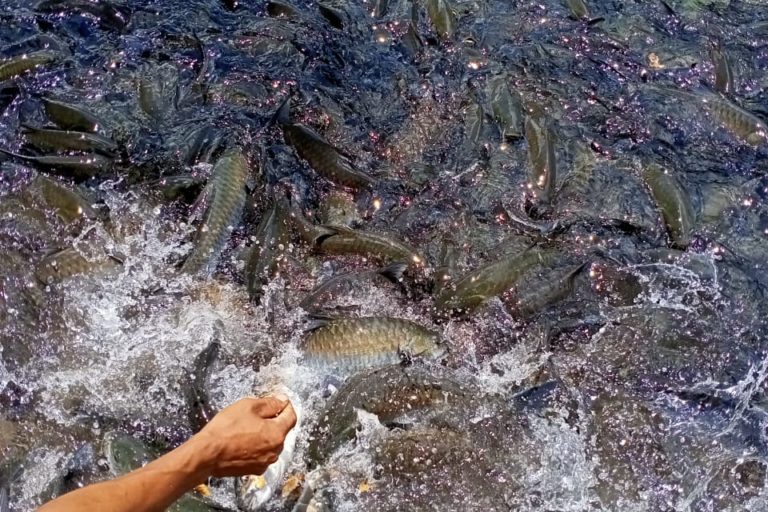

Guwahati, Sept 22: A new scientific study has highlighted how community-led fish sanctuaries in South West Khasi Hills are reviving river ecosystems, protecting endangered Mahseer species, and opening fresh avenues for eco-tourism and local livelihoods.
Published in the International Journal of Fisheries and Aquatic Studies, the research examined four sanctuaries — Ursngikyllut (Rohbah), Photumnew (Mawkyrwat), Shnongkalong, and Wahsohstap (Pyndengumjarain). It found that fish diversity and production in the district have surged since these rivers were declared protected zones.
Meghalaya today has around 79 fish sanctuaries across its districts, which support species such as the Chocolate Mahseer (Neolissocheilus hexagonolepis) and the Golden Mahseer (Tor putitora). Yet, despite abundant water bodies, the state continues to import fish to meet demand, as many rivers remain degraded by illegal fishing and unscientific mining.
Between 2016 and 2024, South West Khasi Hills recorded nearly 3,886 metric tonnes of fish and produced over 9.5 million fish seeds, with output peaking in 2022–23 at 683 metric tonnes. The Chocolate Mahseer — once under serious threat — has made a striking recovery.
One of the most successful models is the Ursngikyllut Fish Sanctuary on the Rilang River, established in 2012 by the Mawthawpdah Area Rilang Fishing Association, a federation of 18 villages. With support from the Meghalaya State Aquaculture Mission, the sanctuary has been developed for eco-tourism, complete with viewpoints and homestays. Visitors now flock to Rohbah to watch Mahseer rise to the surface during feeding times — a spectacle that also sustains local guides, cooks, and homestay operators.
The study reported that Ursngikyllut has the highest Mahseer production, followed by Wahsohstap, Shnongkalong, and Photumnew. At Photumnew, strict community rules ban soaps, detergents, and overfishing to maintain water quality. Similarly, in Shnongkalong and Wahsohstap, local associations have ensured that indigenous species like Rohu, Catla, and Common Carp can thrive undisturbed.
Altogether, 33 fish species across nine families were documented, with Cypriniformes — including carps and Mahseer — being dominant. Water quality was also found to be robust, with pH levels between 7 and 8 and high dissolved oxygen content.
Challenges, however, persist. The researchers warned that deforestation, dynamite and poison fishing, poor awareness, and limited funds threaten the progress made. Despite sanctuary growth, Meghalaya still depends heavily on fish imports.
Even so, the findings offer hope. “There is tremendous potential for developing cold-water fisheries in the district,” the study noted. “While progress has been made, efforts must be intensified to ensure conservation and proper management of resources. A focused strategy by the fisheries department can transform the state’s fisheries sector.”
Also Read: Night blockade not allowed in West Garo Hills: DC
Also Watch
Find latest news from every corner of Northeast India at hubnetwork.in, your online source for breaking news, video coverage.
Also, Follow us on-
Twitter-twitter.com/nemediahub
Youtube channel- www.youtube.com/@NortheastMediaHub2020
Instagram- www.instagram.com/ne_media_hub
Download our app from playstore – Northeast Media Hub