


By Jerome Enriquez John
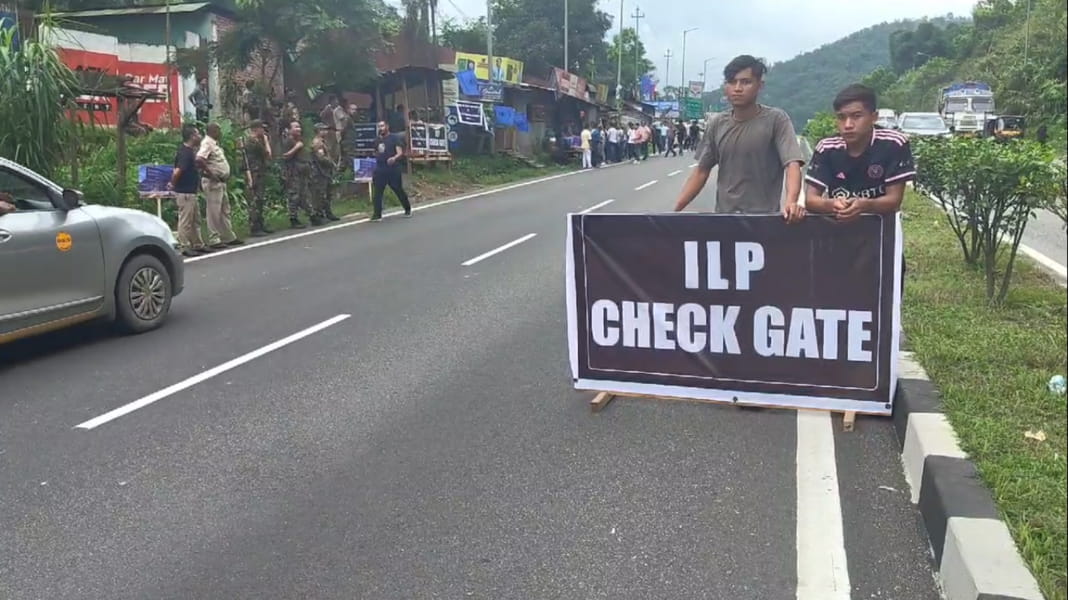
The demand for an Inner Line Permit (ILP) in Meghalaya has once again resurfaced, bringing with it a familiar but unresolved question: is the state protecting its identity, or risking its future?
At first glance, the argument for ILP appears straightforward. The system, already in place in states like Arunachal Pradesh, Nagaland, and Mizoram, regulates the entry and stay of outsiders. In Meghalaya, the demand is largely driven by concerns over migration, land ownership, and the preservation of indigenous identity among Khasi, Jaintia, and Garo communities.
These concerns are not imaginary.
Urban centers like Shillong have seen increasing migration over the years, driven by economic opportunities, education, and trade. According to Census trends and state-level estimates, Meghalaya has experienced steady population growth alongside rising urbanization. Shillong, in particular, has evolved into a regional hub, intensifying pressure on land and local resources. For many residents, this fuels fears of demographic imbalance and cultural dilution.
Supporters of ILP see it as a necessary safeguard. They argue that without regulation, Meghalaya risks losing control over its social and cultural landscape. The ILP, in this view, is not about exclusion but about survival—ensuring that indigenous communities remain central to the state’s identity. Civil society groups across the state have repeatedly raised concerns about land alienation and the long-term impact of unchecked migration.
However, the question remains: is ILP an effective solution—or simply the most visible one?
Meghalaya’s economy is still developing and depends significantly on openness. Tourism, in particular, has emerged as a key growth sector. According to Meghalaya Investment Promotion Authority data, the state has been actively promoting tourism as a pillar of economic development. As reported by the Times of India, tourist arrivals increased from around 10.24 lakh in 2022 to over 16 lakh in 2024, reflecting rapid growth.
Introducing ILP could create additional barriers for tourists, requiring permits and formalities that may discourage travel. In a competitive tourism market, ease of access often determines visitor choice. Even minor procedural hurdles can shift tourist flows to alternative destinations.
Beyond tourism, there are broader economic implications.
Investment and business activity rely on the movement of people. According to the India Brand Equity Foundation, Meghalaya’s economy—valued at approximately ₹66,000 crore—remains dependent on sectors like agriculture, mining, and services, all of which benefit from external engagement. At the same time, policy analysis by NITI Aayog highlights persistent structural challenges, including infrastructure gaps and limited industrialization.
In such a context, restricting entry could make it harder to attract investment, skilled professionals, and entrepreneurship—factors that are critical for long-term growth.
There is also the issue of implementation.
States that currently operate ILP systems have faced challenges in enforcement. Monitoring entry, tracking duration of stay, and ensuring compliance require administrative capacity that is often uneven. Without strong governance systems and digital infrastructure, ILP risks becoming more symbolic than effective—adding bureaucracy without delivering real control.
More importantly, ILP does not address the deeper issues driving the demand.
Concerns about migration are often rooted in economic insecurity. When employment opportunities are limited, outsiders are seen as competitors rather than contributors. Regulating entry may reduce visible inflow, but it does not create jobs, improve infrastructure, or strengthen local economies. It addresses the symptom, not the cause.
There is also a growing generational divide.
Younger people in Meghalaya are increasingly connected to national and global networks. Many pursue education outside the state or seek employment in metropolitan cities. For them, mobility is not a threat—it is a necessity. The idea of restricting entry into Meghalaya, while relying on outward mobility for opportunities, reflects a contradiction that highlights the complexity of the debate.
At the same time, traditional institutions and community organizations continue to emphasize the importance of cultural preservation. This tension between protection and progress lies at the heart of the ILP discussion. It is not simply about migration—it is about identity, governance, and the future direction of the state.
The challenge, therefore, is not to choose between protection and development, but to balance both.
Protection of indigenous identity is essential. But protection does not have to mean isolation. Strengthening land rights, improving governance, ensuring transparency, and investing in local industries may offer more sustainable solutions. Targeted reforms can address concerns related to land and identity without broadly restricting movement.
Ultimately, the ILP debate is about the kind of future Meghalaya envisions.
Is it a future defined by controlled access and cautious engagement? Or one that combines cultural preservation with economic openness and resilience?
The answer will not lie in a single policy decision.
It will lie in how Meghalaya balances identity with opportunity, protection with progress, and tradition with change.
Author bio:
Jerome Enriquez John is a writer focusing on public policy, human rights, and social issues. His work explores governance, identity, and development, with a particular interest in Northeast India and emerging policy debates.