


Study finds low food diversity score in Meghalaya’s Anganwadi meals
ROOPAK GOSWAMI
Shillong, April 7: Meals served to children at Anganwadi centres in Meghalaya are among the least diverse in the Northeast, a new national study has found, raising concerns over the nutritional quality of food under the ICDS scheme in the state.
The study, published in World Nutrition, examined meals provided under the Supplementary Nutrition Programme (SNP) of the Integrated Child Development Services (ICDS) across India, including centres in Ri Bhoi and South Garo Hills. Researchers Melari S. Nongrum and Sandra Albert from IIPH Shillong were part of the study team. The data collection was conducted in 2023 across eight states of north east region.
The ICDS, one of India’s largest child nutrition programmes, provides supplementary nutrition through take-home rations (for children aged 6–36 months) and hot cooked meals for those aged 3–6 years.
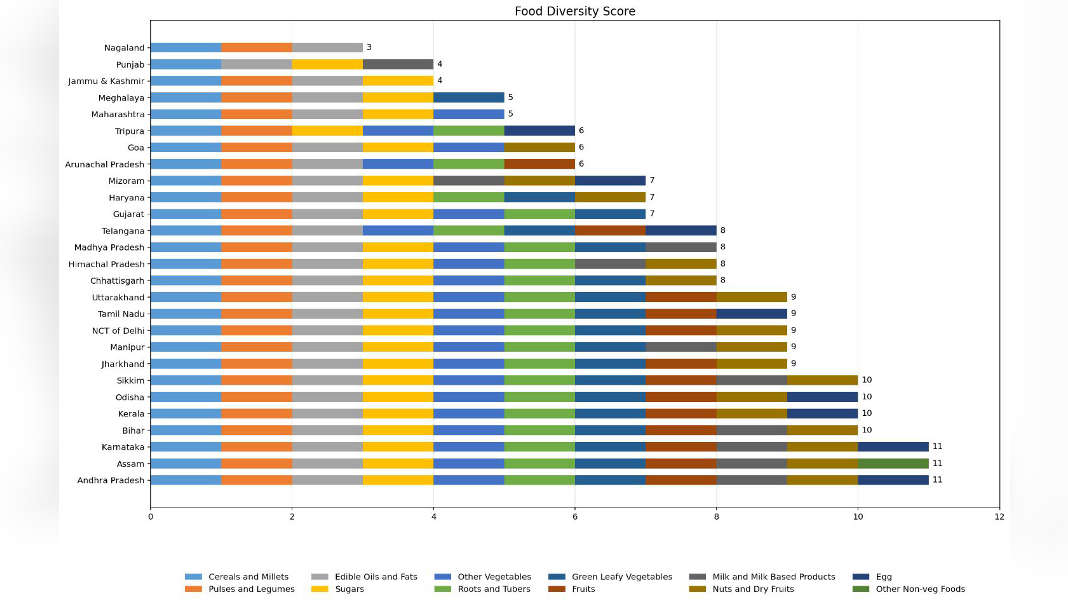
The study found that Meghalaya recorded a food diversity score of just 5, placing it at the lower end among northeastern states. In comparison, Assam scored 11, Sikkim 10 and Manipur 9—indicating significantly more varied meals in the Anganwadi Centres in those states.
It also highlighted sharp variation within the Northeast. While Assam, Sikkim and Manipur reported high meal diversity, Nagaland and Meghalaya remained on the lower side, with scores of 3 and 5 respectively.
Across the region, Anganwadi meals typically include a mix of rice- and wheat-based dishes along with pulses. However, the inclusion of fruits, vegetables and other nutrient-rich foods varies widely from state to state.
Despite the lower diversity, Meghalaya has made some progress in the use of fortified foods. The study notes the use of double-fortified salt (with iodine and iron), along with fortified rice and whole wheat flour enriched with micronutrients such as iron, folic acid and Vitamin B-12. Take-home rations (THR) premixes distributed in the state are also fortified with one or more micronutrients, in line with practices in several other states.
Researchers say food diversity is critical for improving child nutrition, as it ensures the intake of essential vitamins and minerals beyond basic calories and protein.
However, current ICDS guidelines largely focus on energy and protein norms, with limited emphasis on diversity—leading to uneven meal quality across states. The study suggests that while ICDS has achieved wide coverage, improving the variety of foods—particularly fruits, vegetables, eggs, and dairy—will be key to strengthening its impact on child health.
The authors have called for clearer guidelines on minimum food group inclusion in SNP menus while allowing flexibility for locally available foods.
They also stressed the need for better coordination among Anganwadi workers, supervisors, self-help groups, and local communities to improve implementation and ensure the programme delivers meaningful nutritional outcomes.
The Government of Meghalaya through the Early Childhood Development Mission (ECD) and First 1000 days campaign has initiated efforts to address this problem. Through a combination of direct nutrition delivery (egg procurement), community-led governance models (SNP decentralisation), and protocol-based malnutrition management (CMAM), the government aims to ensure that nutrition interventions reach every child across both Aganwadi Centres covered and uncovered villages. This approach emphasises local food systems, community ownership, and systematic identification and treatment of acute malnutrition.