

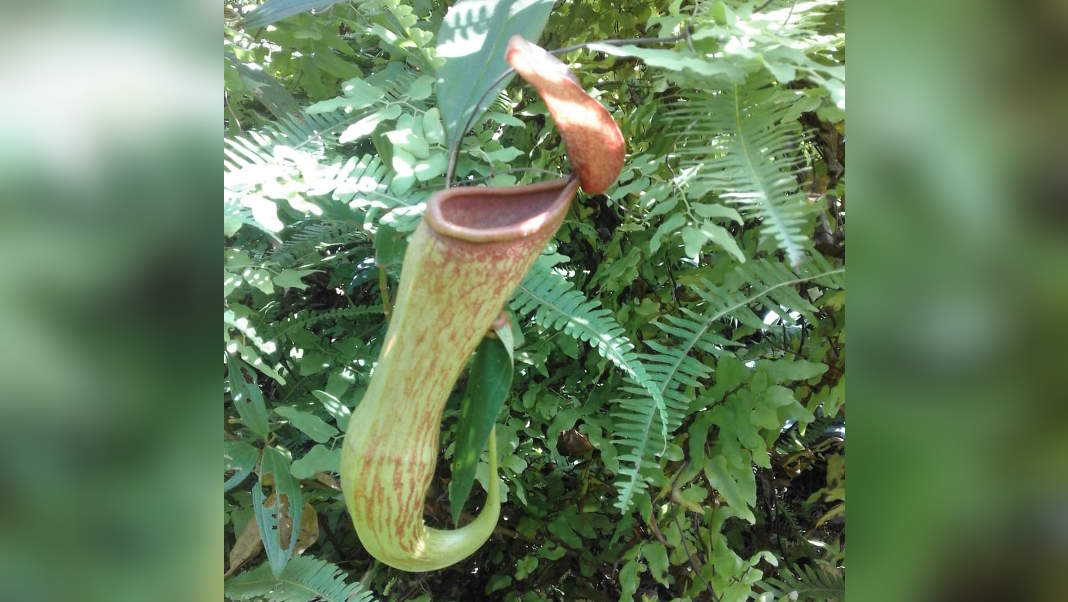

Jaintia Hills emerge as a vital sanctuary as scientists discover soil health is as important as insect prey for the endangered species’ survival
ROOPAK GOSWAMI
SHILLONG, June 21: Meghalaya’s iconic pitcher plant may be famous for trapping and digesting insects, but a new study has found that the endangered carnivorous species depends just as much on healthy, nutrient-rich soils for survival, overturning the long-held belief that it thrives primarily in poor, barren ground.
The research, conducted by scientists Anindita Bhattacharya, Sarah G. Momin and Prabal Sarkar of USTM, found that Nepenthes khasiana— the only pitcher plant species endemic to India—flourishes in acidic soils rich in organic carbon, phosphorus and potassium, particularly in parts of the Jaintia Hills. The findings could provide a crucial blueprint for conserving one of Meghalaya’s most distinctive and threatened species.
Based on an analysis of 150 soil samples collected from pitcher plant habitats and nearby non-habitat areas across the Khasi, Jaintia, and Garo Hills, the study is among the most comprehensive investigations to date into the environmental conditions that support the species.
Often described as nature’s “living insect trap, “Nepenthes khasiana is found nowhere else in the wild except Meghalaya. The species is listed as Endangered by the International Union for Conservation of Nature (IUCN) and faces growing threats from habitat degradation, mining, land-use changes and illegal collection.
One of the study’s most striking findings is the emergence of the Jaintia Hills as a stronghold for the species. Researchers found that soils in the region contained significantly higher levels of moisture and nutrients than comparable habitats in the Khasi and Garo Hills.
“The Jaintia Hills exhibited greater concentrations of most soil nutrients,” the study noted, suggesting that the region offers particularly favourable conditions for the survival and growth of the species.
The findings challenge conventional wisdom about carnivorous plants. While pitcher plants supplement their nutrition by digesting insects trapped inside their modified leaves, the researchers found that soil quality remains a critical factor in determining where the species can thrive.
“Although carnivory supplements nitrogen and phosphorus, soil fertility appears to play a crucial role in sustaining populations of carnivorous plants,” the researchers observed.
Lead author Anindita Bhattacharya said the study reveals that insect consumption is only part of the plant’s survival strategy.
“Carnivory is only one component of the nutritional strategy of Nepenthes khasiana. Our research shows that favourable soil properties work together with insect-derived nutrients, highlighting the complex ecological requirements of this remarkable plant,” she said.
Bhattacharya added that the research is among the first to systematically compare soil characteristics across all three major hill regions of Meghalaya using a large dataset of habitat and non-habitat samples.
“The findings provide valuable baseline information for ecological restoration and long-term conservation planning,” she said.
The researchers identified soil acidity, organic carbon, phosphorus, potassium, and trace metals such as copper and nickel as among the most important factors shaping pitcher plant habitats.
Co-author Prabal Sarkar said the findings could have practical implications beyond conservation.
“Our research shows that favourable soil properties together with insect-derived nutrients provide evidence-based information for future species reintroduction programmes,” Sarkar said.
The study argues that conservation efforts must go beyond protecting the plant itself and focus on safeguarding the unique soil ecosystems that sustain it.
“Understanding these soil-plant relationships is essential for conservation planning, habitat restoration and sustainable management in Meghalaya,” the researchers concluded.
For Meghalaya, which harbours India’s only wild populations of this extraordinary pitcher plant, the message is clear: saving the pitcher plant will require protecting not only what grows above the ground, but also the fragile ecosystem beneath it.
Also Read: Golden Punch! Lovlina Borgohain Strikes Gold in Czech Republic
Also awatch
Find latest news from every corner of Northeast India at hubnetwork.in, your online source for breaking news, video coverage.
Also, Follow us on
Twitter-twitter.com/nemediahub
Youtube channel- www.youtube.com/@NortheastMediaHub2020
Instagram- www.instagram.com/ne_media_hub
Download our app from playstore – Northeast Media Hub