

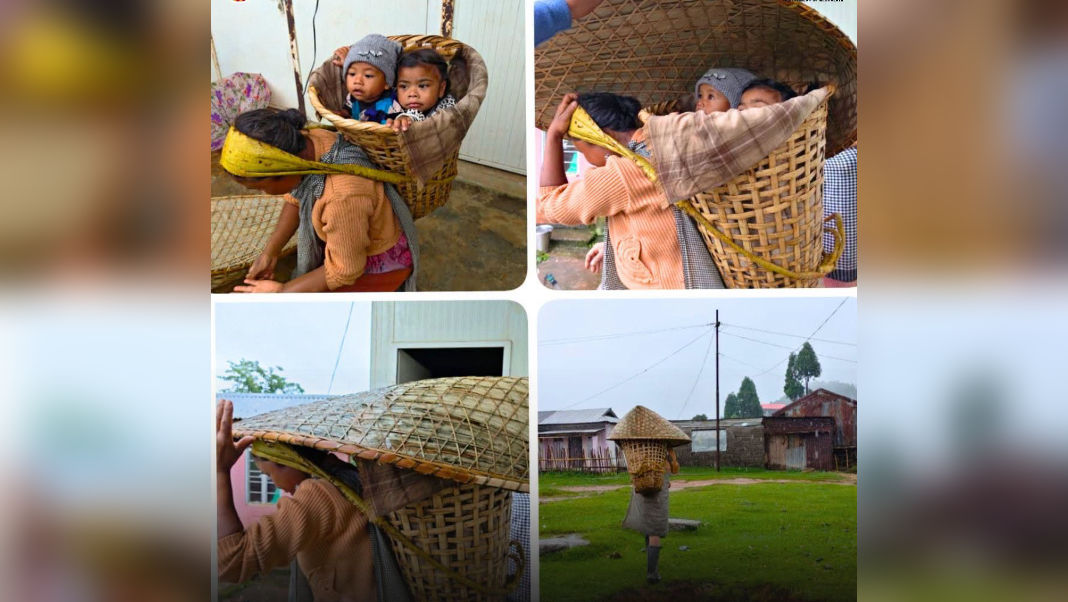

A mother’s determination. A health worker’s promise. Between them lies the future of an entire generation.
Shillong, July 1: Long before sunrise, a mother in Meghalaya gently lifted her two small children into a traditional bamboo basket, balanced it across her shoulders and stepped into the rain. The narrow mountain paths were slippery, landslides had scarred the hillsides, and the journey would take time. Yet turning back was never an option. Her destination was not a marketplace or a town, but a Pulse Polio vaccination booth.
That same morning, several kilometres away, another journey had already begun.
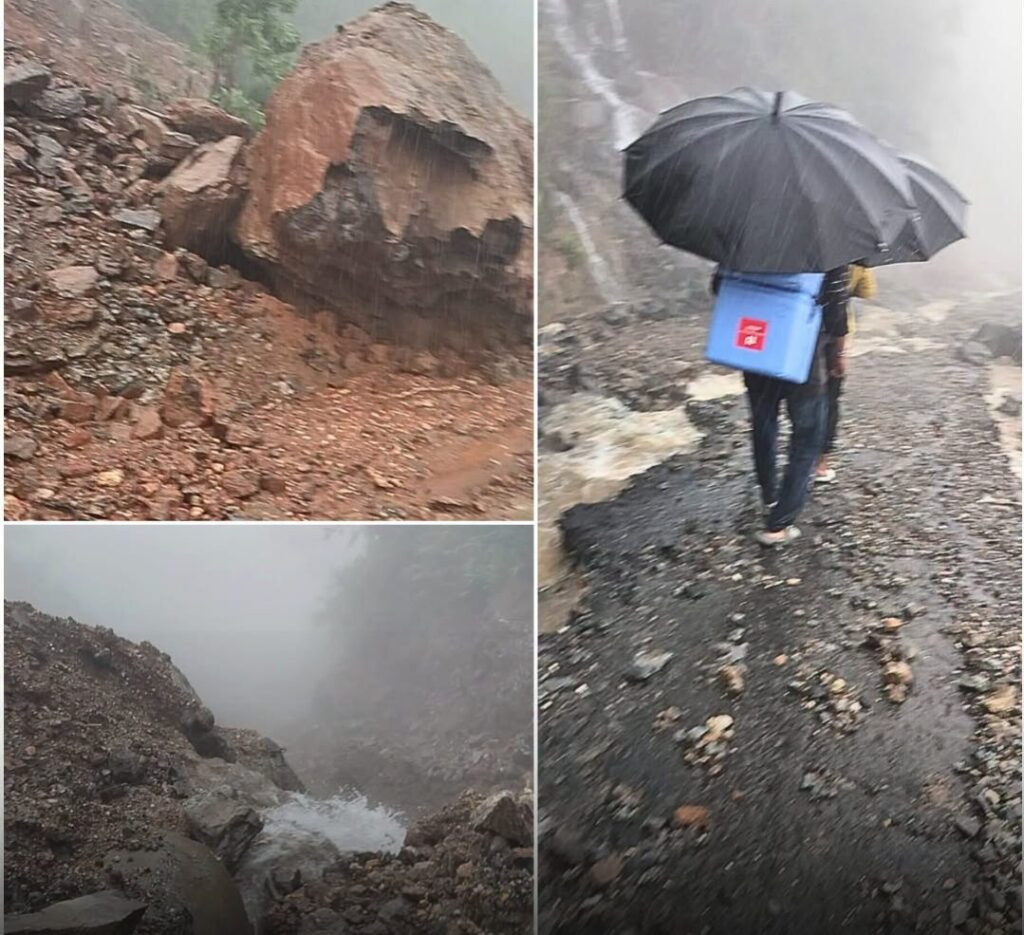
Health workers carrying blue vaccine carriers crossed fragile suspension bridges, climbed muddy slopes, negotiated landslide-hit roads and trekked for hours through forests and remote villages. Some walked nearly seven hours to reach children living in isolated settlements, carrying no expectation of recognition, only vaccines.
Together, these journeys capture the spirit of Meghalaya’s Intensified Pulse Polio Immunisation Programme better than any statistics ever could.
In East Khasi Hills, the determined mother reached the Thainthynroh Sub-Centre with her children safely tucked inside the traditional Khoh, shielding them from rain and rough terrain so they would not miss their life-saving polio drops.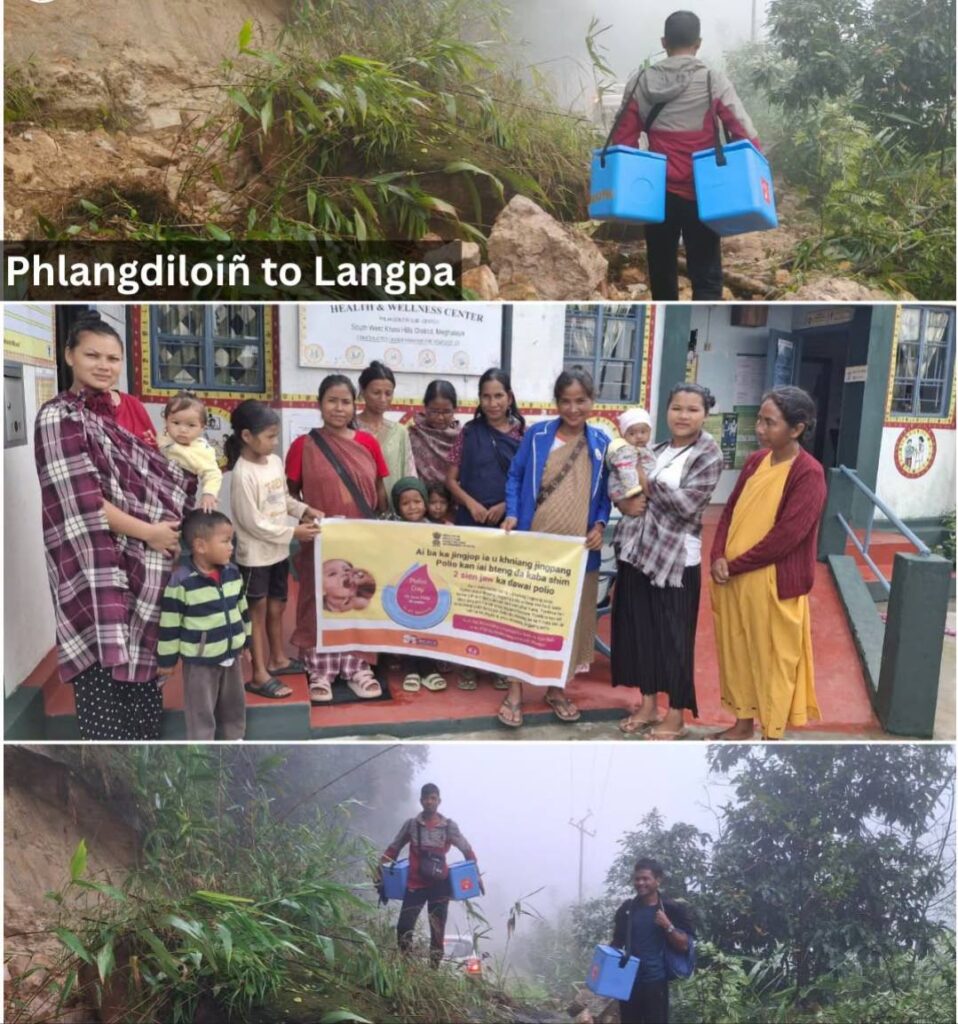
Elsewhere, the team from Phlangdiloin Sub-Centre continued towards Langpa village despite landslides blocking the road. In Mawkhyrwang, South West Khasi Hills, health workers pressed on through relentless rain and rugged terrain to reach scattered households. The IPPI team under Saipung Primary Health Centre walked nearly seven hours through non-motorable roads and dense forests to reach Tuidam village with vaccines and essential supplies, ensuring that every eligible child received protection.
The campaign offers a glimpse into a side of public healthcare that rarely makes headlines. Immunisation is often measured through coverage figures, but behind every vaccinated child is the determination of parents, ASHAs, ANMs and frontline health workers who continue to overcome difficult terrain to reach the last mile.
The Health and Family Welfare Department has acknowledged the extraordinary efforts of its frontline workers, ASHAs, ANMs and supporting teams, whose commitment continues to keep immunisation services running in some of Meghalaya’s most inaccessible villages.
For many of these teams, reaching a child often means walking for hours through rain, landslides and broken roads. For many parents, it means making equally difficult journeys to ensure their children are protected.
Together, those efforts continue to keep Meghalaya’s fight against polio moving forward—one village, one family and one child at a time.
Also Read: Meghalaya estate unveils world’s first Brahma Muhurta tea harvest
Also Watch
Find latest news from every corner of Northeast India at hubnetwork.in, your online source for breaking news, video coverage.
Also, Follow us on
Twitter-twitter.com/nemediahub
Youtube channel- www.youtube.com/@NortheastMediaHub2020
Instagram- www.instagram.com/ne_media_hub
Download our app from playstore – Northeast Media Hub