

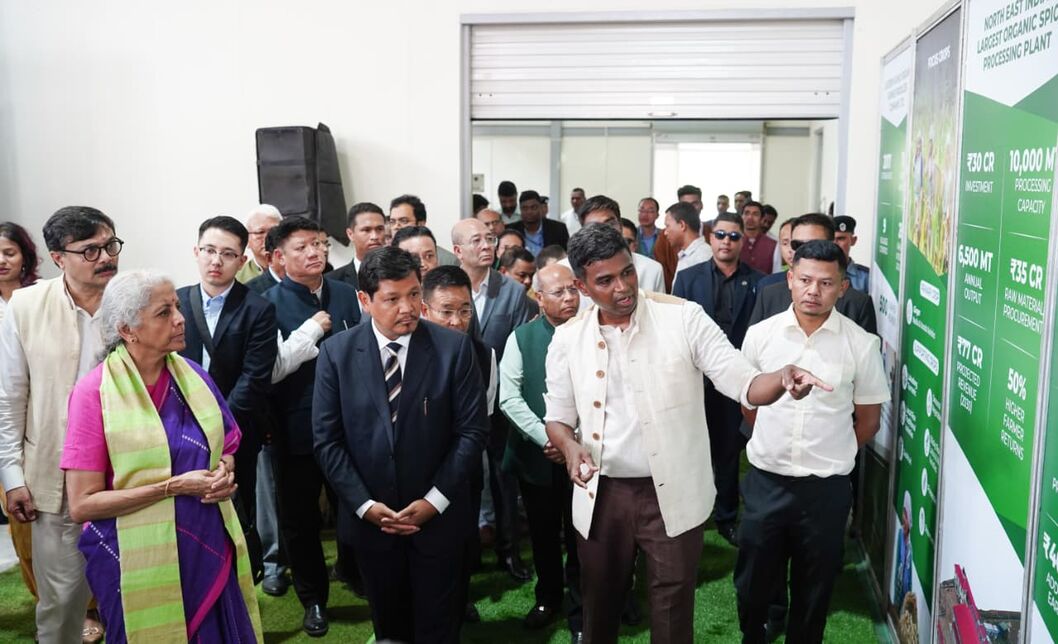

The inauguration of Northeast India’s largest organic spice processing facility is not merely an agricultural milestone. It offers a rare glimpse into what development looks like when policy, execution and political will align.
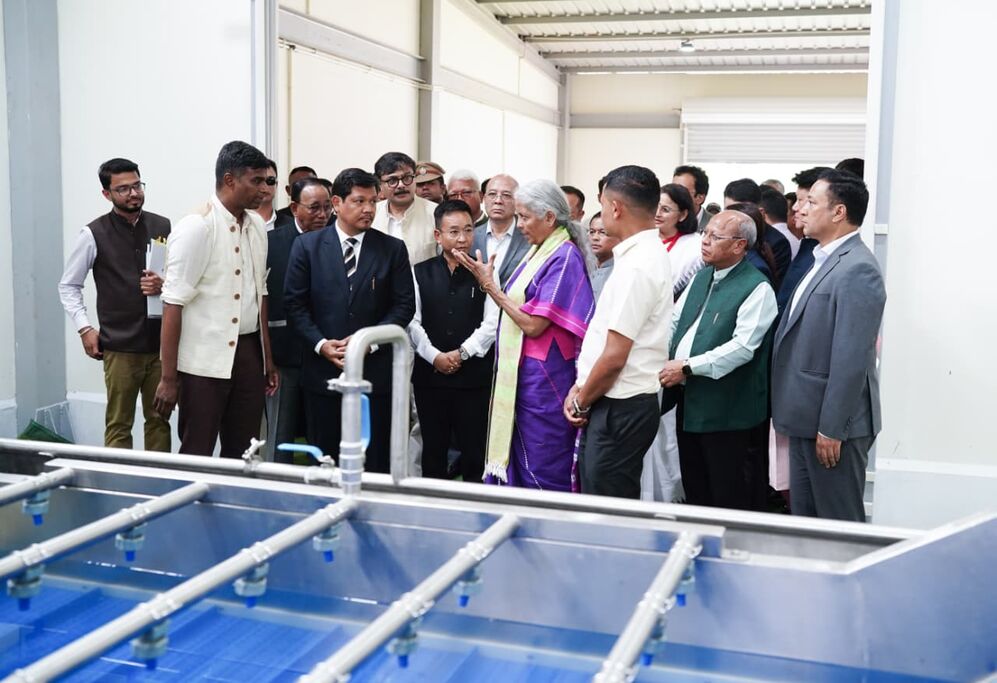
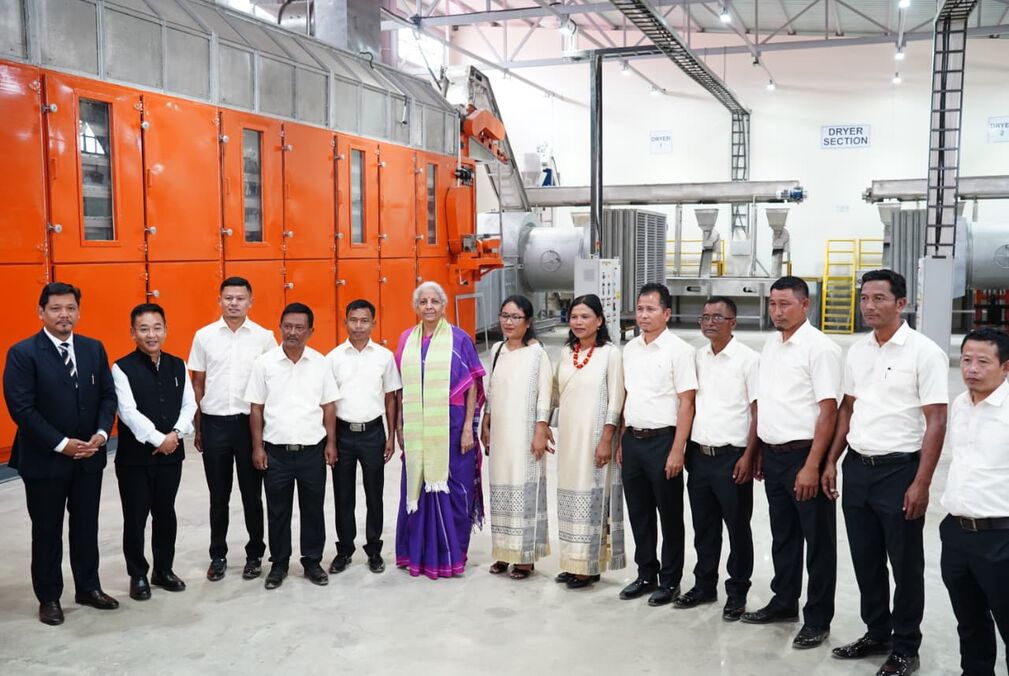
Shillong, June 19: When Union Finance Minister Nirmala Sitharaman travelled to Bhoirymbong in Ri-Bhoi district to inaugurate Northeast India’s largest organic spice processing facility, it could easily have been dismissed as yet another government event. It wasn’t.
What unfolded in Meghalaya on Friday was the story of something Indian governance often struggles to achieve: execution. Beyond the speeches, ribbon-cutting and ceremonial photographs lay a deeper story about how sustained policy support, institution-building and political will can translate into tangible economic opportunity.
Meghalaya’s farmers have, for decades, been producing some of the country’s finest agricultural produce. Lakadong turmeric is GI-tagged and among the finest in the world for its curcumin content; the state’s ginger is celebrated internationally for its low fibre content; black pepper, chilli and several other high-value crops thrive across Meghalaya’s hills.
But the economic returns rarely reached the people growing them. Like many other parts of rural India, Meghalaya has been caught in an all-too-familiar bind. Farmers may grow premium produce, but much of the value is created further down the chain, from where it journeys to national and international markets under banners with little resemblance to its rural origins.
The Bhoirymbong processing facility aims to break this cycle.
Costing ₹32 crore, it has the capacity to process over 10,000 metric tonnes of organic spices every year and is expected to directly benefit nearly 5,500 organic farmers.
More importantly, it signifies a change in Meghalaya’s approach to agriculture. The aim now is not so much to produce more, but to retain greater value from what is already being produced.
That may sound abstract.
But from a farmer’s point of view, selling raw ginger and selling certified, organic, processed ginger for premium markets in India and beyond are two vastly different things. One traps a farmer in the commodity cycle; the other holds the promise of higher income and better livelihoods.
There’s another interesting element to the Bhoirymbong story.
The plant itself is merely the most visible part of a much longer process.
Becoming organic isn’t a decree. It takes years of effort—avoiding synthetic fertilisers and pesticides, meeting strict organic standards, and maintaining meticulous records and audits. An organic ecosystem doesn’t spring up overnight; it needs to be built patiently over time.

Meghalaya now has almost 27,000 hectares under certified organic cultivation, and more than 40,000 families have adopted organic farming practices.
The processing unit is not where the story begins; it is where it culminates.
A journey that started close to a decade ago has seen organic farmers come together with government support and market connections to form a producer organisation that now manages this large facility.
This is a story that offers a larger lesson. Development is often quantified through infrastructure – the miles of road built or the bridges constructed.
But infrastructure alone cannot build prosperity. An empty processing plant with no farmers, or farmers without market links, are both inert. Development happens when these elements — infrastructure, institutions and livelihoods — are stitched together.
This project also illustrates a lesser-discussed aspect of development: the role of externally aided projects.
Meghalaya Chief Minister Conrad Sangma used the occasion to address the perception that such projects merely push external funding. Of that, nearly 90 per cent of the loan burden is borne by the Union government, allowing the state to take up infrastructure and livelihood programmes it would otherwise struggle to finance.
For a hill state like Meghalaya, with significant geographical challenges, this is less a financial arrangement and more a development strategy.
Whether states should take loans from external bodies is a less pertinent question than how effectively they can utilise these funds to produce tangible outcomes.
Roads, logistics hubs, farmer collectives and processing plants are only relevant if they generate income and improve livelihoods. In this regard, Meghalaya appears to be establishing a credible track record.
Its emphasis on PRIME Hubs, Farmer Producer Organisations, logistics infrastructure and organic agriculture reflects a broader attempt to move farmers from producing low-value commodities to creating value-added products.
It is no longer merely about agricultural production; it is increasingly about agricultural entrepreneurship, where farmers function not simply as suppliers of raw materials, but as producers and sellers of finished goods backed by certification, branding and market access.
This vision was reflected in Nirmala Sitharaman’s remarks at Bhoirymbong. She rightly noted that the future belongs to producers of clean, safe and traceable food — precisely the direction in which global food and wellness markets are moving.
The most compelling aspect of the inauguration, however, was the far-reaching vision outlined by the Finance Minister. The initiative, we were reminded, was not merely a state-level project but part of a broader effort to place the Northeast at the centre of India’s economic story in the decades ahead. The proposition was straightforward: India cannot hope to become a developed nation by 2047 if large parts of the Northeast remain disconnected from that journey. The challenge, therefore, is not simply to unlock the region’s potential, but to convert that potential into prosperity through infrastructure, market access, entrepreneurship and value creation.
In such an environment, Meghalaya’s organic certification is not merely an environmental advantage; it is an economic one.
The journey is far from over, of course. Maintaining organic status, expanding market access and building an export ecosystem require sustained effort. The fruits of development need to reach all parts of the state, and not just one district.

But the opening of this facility is nevertheless a milestone — one that marks a transition from a narrative of untapped potential to one of value creation, market access and institutional capacity.
Where local markets once absorbed farmers’ produce, they are now being linked to national and global supply chains.
Development, in that sense, is slowly changing form. It is no longer only about roads and buildings, but about creating opportunity at the grassroots level.
In an age defined by project announcements and foundation stones, Bhoirymbong stands as a reminder that development is ultimately about execution — transforming natural wealth into enduring economic value for the people who have always been closest to it.
Also Read: Sitharaman unveils 8-point growth blueprint for Northeast, says region key to Viksit Bharat 2047
Also Watch
Find latest news from every corner of Northeast India at hubnetwork.in, your online source for breaking news, video coverage.
Also, Follow us on
Twitter-twitter.com/nemediahub
Youtube channel- www.youtube.com/@NortheastMediaHub2020
Instagram- www.instagram.com/ne_media_hub
Download our app from playstore – Northeast Media Hub