

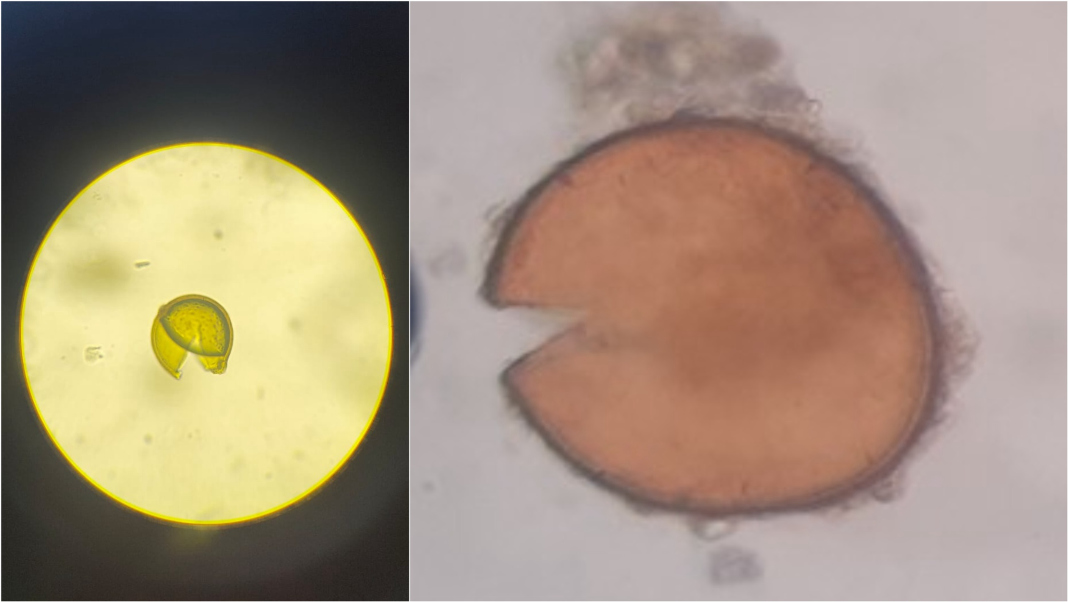

Shillong, Aug 6: Researchers from the University of Science and Technology Meghalaya have thrown new light on how invisible soil allies — arbuscular mycorrhizal (AM) fungi — could be the key to conserving the state’s rich diversity of medicinal plants, many of which are now threatened by habitat loss, overharvesting, and climate change.

The research has been successfully completed in four years through metagenomic analysis by Mrs. Nilufa Afruza under the supervision of Dr. Dhritiman Chanda, Assistant Professor, Department of Botany, University of Science & Technology Meghalaya. Together, the studies examined nine key species, including Zingiber montanum (Ahuda), Curcuma zedoaria (Dekhichuphal), Ageratum conyzoides (Sambanguri), Alternanthera brasiliana (Sambanguri), Ricinus communis (Khoronda), and Crinum asiaticum (Raja muri).
The findings were striking. Zingiber montanum recorded the highest fungal diversity during summer 2022, with a Simpson’s Diversity Index of 0.7, while Ageratum conyzoides showed an impressive 80% root colonization during the rainy season of 2023. These fungal partnerships were found to significantly boost nutrient uptake — especially phosphorus and nitrogen — improve soil structure, and protect plants against pathogens and environmental stress.
“AM fungi are nature’s own biofertilizers,” explained Afruza. “They not only help plants thrive in nutrient-poor soils but also enhance the production of valuable medicinal compounds. This opens a pathway for sustainable cultivation of endangered species without heavy reliance on chemical fertilizers.”

Microscopic analysis revealed two dominant AM fungal groups — Acaulospora, Glomus emerging as the most widespread across all studied plants. Soil quality indicators such as organic carbon and moisture were found to be highest in the rainy season, correlating with peak spore counts and colonization.
The studies suggest that creating inoculum banks of native AM fungi could transform conservation strategies in Northeast India. By developing protocols for inoculation, scientists envision cultivating medicinal plants on a larger scale while reducing ecological stress on wild populations.
“Meghalaya’s hills are more than landscapes; they are living pharmacies. If we fail to act, we risk losing not only biodiversity but also centuries of indigenous knowledge tied to these plants,” said Chanda.
The researchers advocate for a gene bank of medicinal plants supported by AM fungal inoculation, positioning Meghalaya as a hub for eco-friendly biotechnology. With traditional medicine forming a vital part of rural healthcare in the Northeast, the stakes go far beyond conservation — they touch livelihoods, cultural heritage, and the future of sustainable healthcare.
Also Read: Government employee caught taking bribe in land mutation case
Also Watch
Find latest news from every corner of Northeast India at hubnetwork.in, your online source for breaking news, video coverage.
Also, Follow us on-
Twitter-twitter.com/nemediahub
Youtube channel- www.youtube.com/@NortheastMediaHub2020
Instagram- www.instagram.com/ne_media_hub
Download our app from playstore – Northeast Media Hub

 fungi — could be the key to conserving the state’s rich diversity of medicinal plants, many of which are now threatened by habitat loss, overharvesting, and climate change.)