

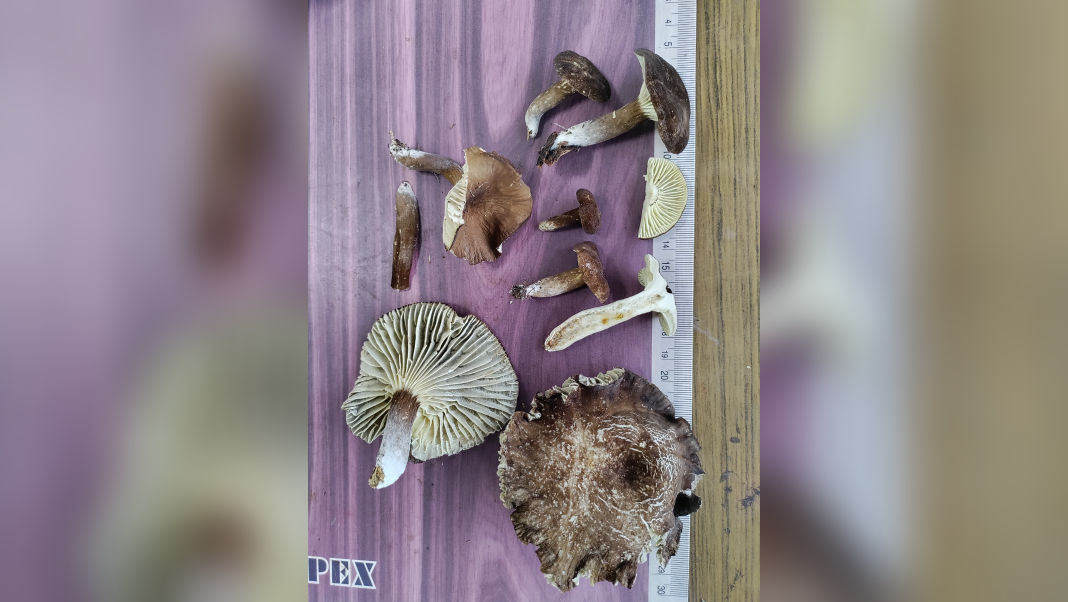

Guwahati, Sep 20: The rain-drenched pine forests of the East Khasi Hills have yielded both a scientific surprise and a cultural affirmation. Researchers have discovered a new species of edible mushroom, now formally named Lactifluus khasianus—but long known to Khasi tribal communities as “Tit iongnah.”
The finding, published this month in the international journal Phytotaxa, was made by a team of scientists from the Botanical Survey of India’s Eastern Regional Centre in Shillong, St. Xavier’s College (Dumka), and Mahidol University, Thailand. Led by Dyutiparna Chakraborty, Debala Tudu, Aniket Ghosh, and Komsit Wisitrassameewong, the study combined field surveys, microscopic analysis, and DNA sequencing to confirm the mushroom as a new species within the milkcap genus Lactifluus.
Belonging to Lactifluus sect. Gerardii, the new species stands out for its chocolate-brown cap, distinctive microscopic features, and genetic markers. It grows in association with Khasi pine (Pinus kesiya) at altitudes of around 1,600 metres.
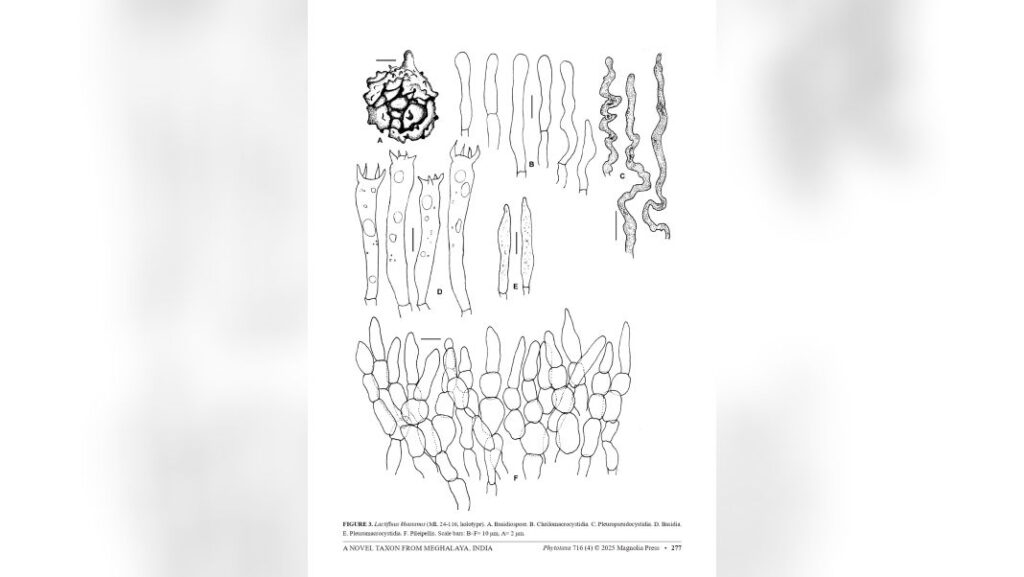
Though it resembles the widespread Lactifluus gerardii found in North America and Asia, L. khasianus differs in its larger cystidia (specialised fungal cells) and DNA signatures. It is now the fifth confirmed species of this section in India—and notably, the first to be reported as edible.
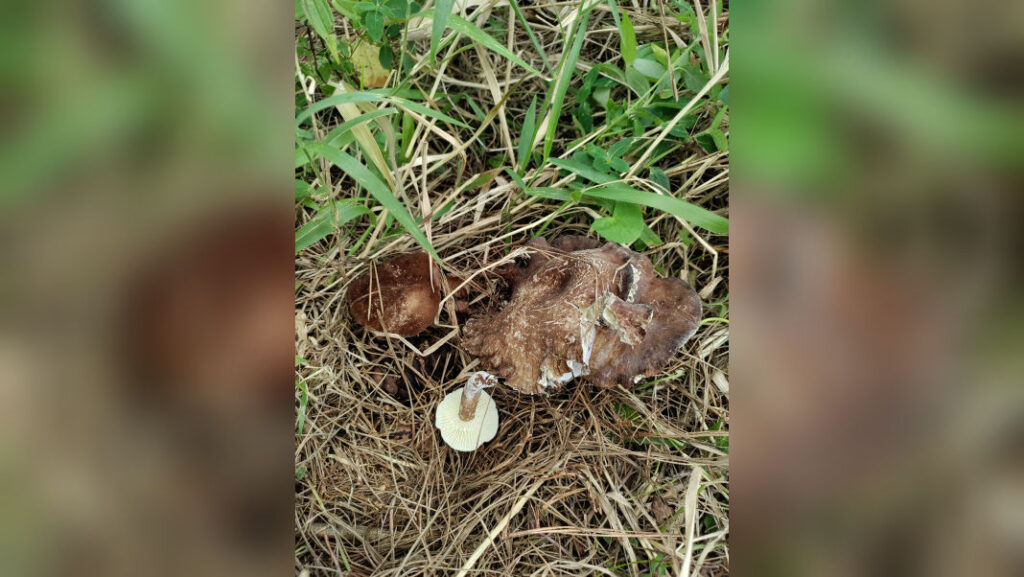
For Khasi villagers, however, the mushroom has never been a stranger. “Tit iongnah” has long been gathered from the forest floor, sold in local markets during the monsoon, and savoured as a seasonal delicacy.
This underscores a wider truth: indigenous knowledge often recognises edible and valuable mushrooms decades before science provides Latin names and molecular classifications. Studies show that wild mushrooms from Meghalaya are rich in proteins and micronutrients, forming an important part of tribal diets during the rains.
The East Khasi Hills, part of the Indo-Burma biodiversity hotspot, are increasingly recognised as a treasure trove of fungi. More than 34 species of Lactifluus are now documented from India, with Meghalaya contributing significantly. By formally describing L. khasianus, scientists have added to this growing list while also highlighting the role of tribal communities in preserving food traditions.
The authors stress that documenting such fungi is not only about taxonomy. It also safeguards local food heritage, informs conservation of forest ecosystems, and may even open doors to future applications in nutrition and medicine.
Also Read: NEHU Tura students hold candlelight tribute for Zubeen Garg
Also Watch
Find latest news from every corner of Northeast India at hubnetwork.in, your online source for breaking news, video coverage.
Also, Follow us on-
Twitter-twitter.com/nemediahub
Youtube channel- www.youtube.com/@NortheastMediaHub2020
Instagram- www.instagram.com/ne_media_hub
Download our app from playstore – Northeast Media Hub