

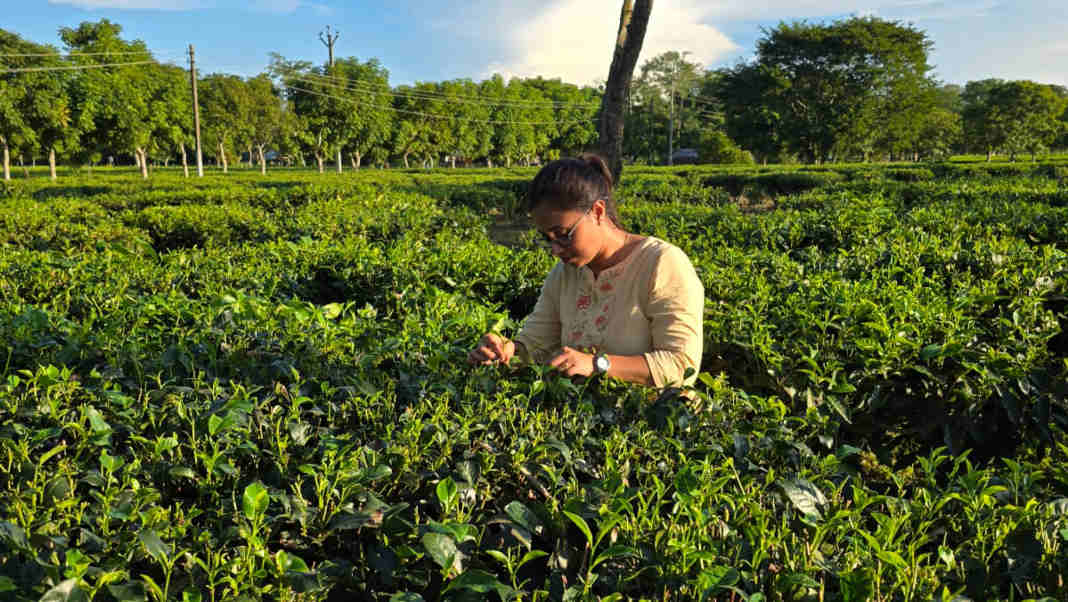

Guwahati, Oct 13: A Nagaland University-led multi-institutional research has unveiled the hidden health potential of tea blossoms—often discarded as agricultural byproducts. The study reveals that these delicate flowers are rich in potent bioactive compounds, positioning them as a promising natural source for health supplements and functional beverages.
While tea leaves dominate global research and consumption, blossoms remain largely overlooked. This study marks the first systematic effort in Assam—one of the world’s largest tea-producing regions—to analyse the biochemical richness of tea blossoms from seven premium cultivars, shifting the traditional focus away from leaves.
According to the researchers, nutraceutical companies could harness tea blossom extracts to create natural energy boosters, relaxation aids, and skin-health products. Beyond consumer health, the findings open new economic opportunities for smallholder tea farmers through blossom collection and processing, offering an additional source of income.
This approach also promotes environmental sustainability by reducing agricultural waste and advancing a circular bioeconomy. With the global demand for plant-based, eco-friendly health products on the rise, India has a unique chance to position itself as a leader in functional foods and supplements derived from tea blossoms.
The study was led by Dr Sagarika Das from the Centre for Biotechnology and Bioinformatics, Dibrugarh University, in collaboration with Mr Monoranjan Goswami, renowned tea biochemist at Tocklai Tea Research Institute, Jorhat, Assam, and Prof. Tanmoy Karak from the Department of Soil Science, School of Agricultural Sciences, Nagaland University.
This transformative work also brought together experts from the University of California (U.S.), ICAR–Indian Agricultural Statistics Research Institute (New Delhi), and departments of Horticulture, Soil and Water Conservation (Nagaland University), and Chemistry (Dibrugarh University), reflecting an extraordinary alliance in pursuit of scientific excellence.
The findings have been published in the peer-reviewed Food Research Journal (https://doi.org/10.1016/j.foodres.2025.117337) in a paper co-authored by Sagarika Das, Monoranjan Goswami, Ranjit Kumar Paul, and Md. Yeasin, Animesh Sarkar, C.S. Maiti, Saumik Panja, Manoj Dutta, Jiban Saikia, and Tanmoy Karak.
Highlighting Nagaland University’s focus on translational research benefitting local communities, Prof. Jagadish K. Patnaik, Vice-Chancellor of Nagaland University, said: “This groundbreaking research highlights the potential of innovation originating from our region to effect significant global change. By tapping into the often-overlooked benefits of tea blossoms, our dedicated scientists are pioneering advancements in health and wellness that could revolutionise dietary supplements and natural remedies.
This effort not only broadens the scope of scientific inquiry but also fosters opportunities for rural entrepreneurship, empowering local communities to engage in sustainable agricultural practices and create new economic avenues. Nagaland University is particularly proud to collaborate with esteemed research organisations, both within India and internationally, to facilitate this transformative work. Together, we are building a more resilient and sustainable future for our communities and beyond.”
The research team plans to advance to clinical trials, explore synergies with other nutraceuticals, and scale up for industrial applications across the food, pharmaceutical, and wellness sectors.

Elaborating on the findings, Dr Sagarika Das explained: “Tea blossoms are known to be abundant in health-enhancing compounds, featuring notably higher concentrations of polyphenols, catechins, terpenoids, and L-theanine—while also containing less caffeine than traditional tea leaves. The presence of L-theanine, especially when combined with caffeine, promotes mental clarity, relaxation, and stress reduction. By repurposing tea blossoms, we can minimise agricultural waste, increase rural incomes, and diversify the tea industry through the development of nutraceuticals, herbal teas, and dietary supplements.”
Adding further, Prof. Tanmoy Karak noted: “Our study highlights the potential of tea blossoms as versatile ingredients that can be transformed into herbal teas, infused oils, dietary supplements, and unique wellness formulations. Rich in antioxidants and essential amino acids, tea blossoms show great promise for stress relief, cognitive enhancement, and in preventing chronic diseases such as diabetes and cardiovascular disorders.”
He added that tea blossoms should no longer be regarded merely as by-products of tea cultivation but as valuable nutraceutical resources with significant commercial potential.
“With further clinical validation to substantiate their health benefits,” Prof. Karak said, “tea blossoms could play a crucial role in promoting wellness and stimulating economic growth in rural tea-growing regions. This innovation also strengthens India’s global leadership in plant-based health products, showcasing the country’s biodiversity and commitment to sustainable health solutions.”
Also Watch
Find latest news from every corner of Northeast India at hubnetwork.in, your online source for breaking news, video coverage.
Also, Follow us on-
Twitter-twitter.com/nemediahub
Youtube channel- www.youtube.com/@NortheastMediaHub2020
Instagram- www.instagram.com/ne_media_hub
Download our app from playstore – Northeast Media Hub