

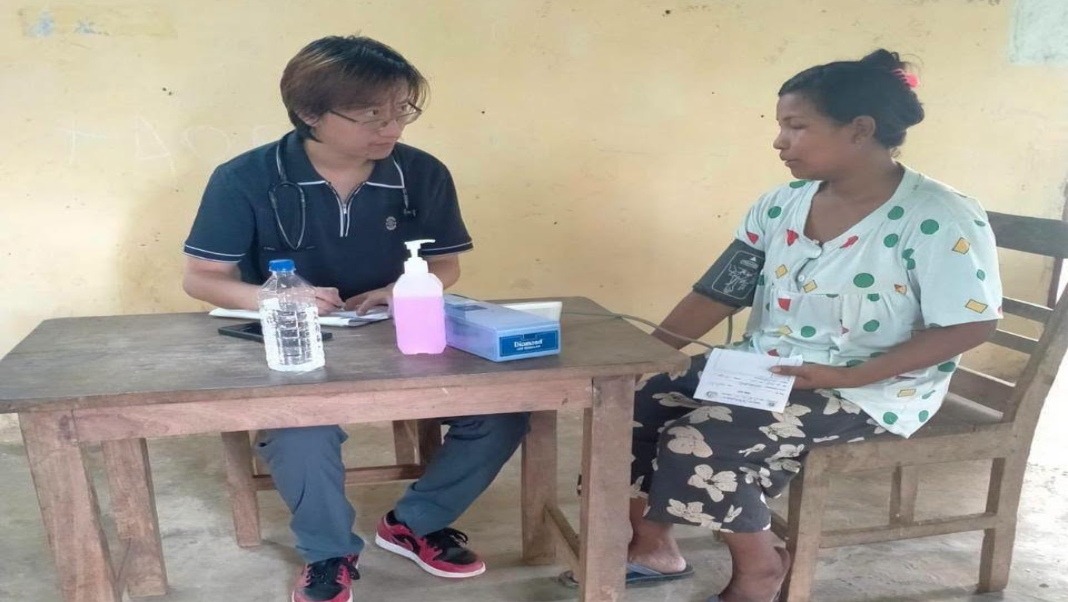

Researchers say tackling hypertension and diabetes in Meghalaya will require more than awareness campaigns—it will need community leaders, traditional healers and a stronger rural health system.
ROOPAK GOSWAMI
Shillong, July 21: Even as diabetes and hypertension continue to rise across India, many people in Meghalaya’s Garo Hills are choosing not to get screened—not because services are unavailable, but because of a complex mix of fear, cultural beliefs, work pressures and gaps in the health system.
That is the key finding of a new study published in the journal BMC Health Services Research, led by Balaplielad Warlarpih, Melari Shisha Nongrum, Baldeep K. Dhaliwal, YounJung Na, Preet Verma, Tiameren Jamir, Krishna D. Rao, Sandra Albert and Svea Closser.
The researchers, from the Indian Institute of Public Health Shillong, Johns Hopkins Bloomberg School of Public Health and AIIMS New Delhi, conducted the study in West Garo Hills, interviewing 52 participants, including healthcare providers, frontline workers, Village Health Council members and community residents.
The findings offer one of the clearest pictures why screening rates for diabetes and hypertension remain low in Meghalaya despite the National Programme for Prevention and Control of Cancer, Diabetes, Cardiovascular Diseases and Stroke (NPCDCS).
Rather than simply lacking awareness, many residents believed diabetes and hypertension were caused almost entirely by diet and assumed that feeling healthy meant they did not need testing. Although screening for hypertension and diabetes was provided during Village Health Nutrition Days (VHNDs) and health centres, community members avoided screening because they feared being diagnosed with a lifelong illness that would require continuous medication.
For many daily wage earners and farmers, missing work to visit a Health and Wellness Centre was another major deterrent.
The study also found that family elders often play a decisive role in health decisions. In many cases, older family members discouraged screening or preferred traditional healing practices over modern healthcare.
Researchers say this makes community engagement essential rather than relying solely on health workers.
Another challenge is the limited role currently played by Village Health Councils in non-communicable disease awareness. Most councils remain focused on maternal and child health, leaving diabetes and hypertension with far less community attention
The health system itself faces significant hurdles.
Researchers found that some Health and Wellness Centres serve a large number of villages, with one serving more than 30 scattered villages. Staff shortages, vacancies and limited training make it difficult to organise monthly screening camps at the village level.
Beyond awareness campaigns
The study argues that Meghalaya needs a community-based strategy tailored to local realities rather than conventional awareness drives.
Among its recommendations are involving Nokmas, village elders, religious leaders and even traditional healers in promoting screening, using traditional messengers such as the Dakura to announce screening days, training Village Health Councils to include diabetes and hypertension in their activities, and taking screening closer to people through home visits and workplaces such as MGNREGS sites.
Researchers also suggest providing villages with digital blood pressure monitors and glucometers so routine monitoring becomes part of community health practices instead of depending solely on health facilities.
Why it matters
The findings come at a time when non-communicable diseases account for nearly two-thirds of deaths in India, with diabetes and hypertension rising rapidly in rural areas.
For Meghalaya, where healthcare access remains difficult in many remote villages, the study suggests that improving screening will depend as much on understanding local social and cultural realities as on expanding medical infrastructure.
The authors conclude that reducing the burden of diabetes and hypertension in Meghalaya will require coordinated action involving communities, families and the health system, rather than focusing on any single intervention.