

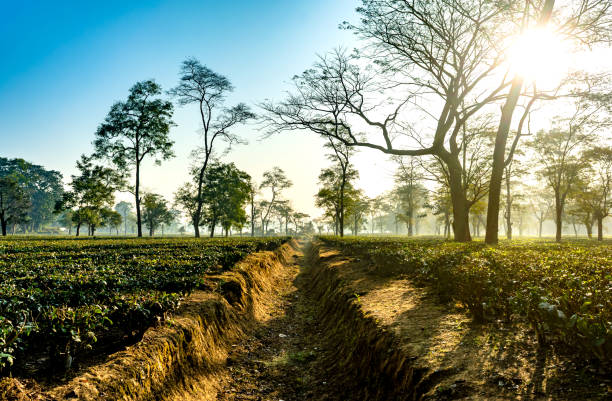

Guwahati, July 28: Climate change impact is no longer just about reduced yields and is reshaping the traditional rhythm of tea production. The predictable cycle of flushes—the periodic growth spurts of new tea leaves that determine harvest quality and volume—has been thrown into disarray.
Experts say it is becoming increasingly difficult to determine the timing of the flushes. Unseasonal dryness followed by erratic rainfall has disrupted the plants’ natural growth cycle, making planning for plucking, processing, and exports far more challenging.
A tea flush is the new growth of tender tea leaves and buds that sprout on a tea bush after plucking. These young leaves are what tea planters harvest to make tea. Tea doesn’t grow continuously year-round — instead, it grows in cycles of flushes. Each flush has its own timing, quality, and flavour profile, influenced by rainfall, temperature, and sunlight.
The ongoing weather crisis has dealt a severe blow to Assam’s tea industry, with June production alone plunging by 20 to 25 per cent compared to the same month last year. A prolonged dry spell, coupled with soaring temperatures, has left both tea and paddy fields parched, exposing deep cracks in soils that should otherwise be lush green at this time of year.
Veteran tea planter and former Chairman of the Tea Board of India, Prabhat Bezbaruah, said the industry is reeling under one of its toughest seasons in decades. “Tea output in Assam during June and July has been significantly affected. Compared to last year, June alone saw a 20 to 25% drop in production. When temperatures reach 35 to 36 degrees Celsius, the tea plants’ ability to absorb nutrients is hampered, which in turn reduces leaf yield. This level of weather-induced stress on tea crops hasn’t been witnessed in the last 30 years,” he noted.
Adding to the crisis is a surge in green fly infestation, a pest that thrives in hot, dry conditions and damages tender leaves. Many bushes are showing signs of withering, with some leaves turning black and drying prematurely. “Even Assam’s premium varieties, which are globally renowned for their flavour and quality, have been hit,” Bezbaruah said.
Tea planters argue that while paddy farmers often receive aid in the face of weather-related losses, the tea sector is largely left to manage its own risks. “Despite facing similar climate challenges, tea planters are often left to fend for themselves,” Bezbaruah added, warning that without targeted support, the industry’s long-term sustainability could be at risk.
While there’s no single solution, the only way out is exploring several adaptation and mitigation strategies to counter the impact of climate change on tea. At the field level, planting shade trees reduces heat stress, lowers soil temperature, and conserves moisture is one way out.
Integrated pest management systems are being promoted to control green fly and other pests that proliferate in warmer, drier conditions.
Also Read: AGP pushes for more seats in 2026 Assembly polls
Also Watch
Find latest news from every corner of Northeast India at hubnetwork.in, your online source for breaking news, video coverage.
Also, Follow us on-
Twitter-twitter.com/nemediahub
Youtube channel- www.youtube.com/@NortheastMediaHub2020
Instagram- www.instagram.com/ne_media_hub
Download our app from playstore – Northeast Media Hub