

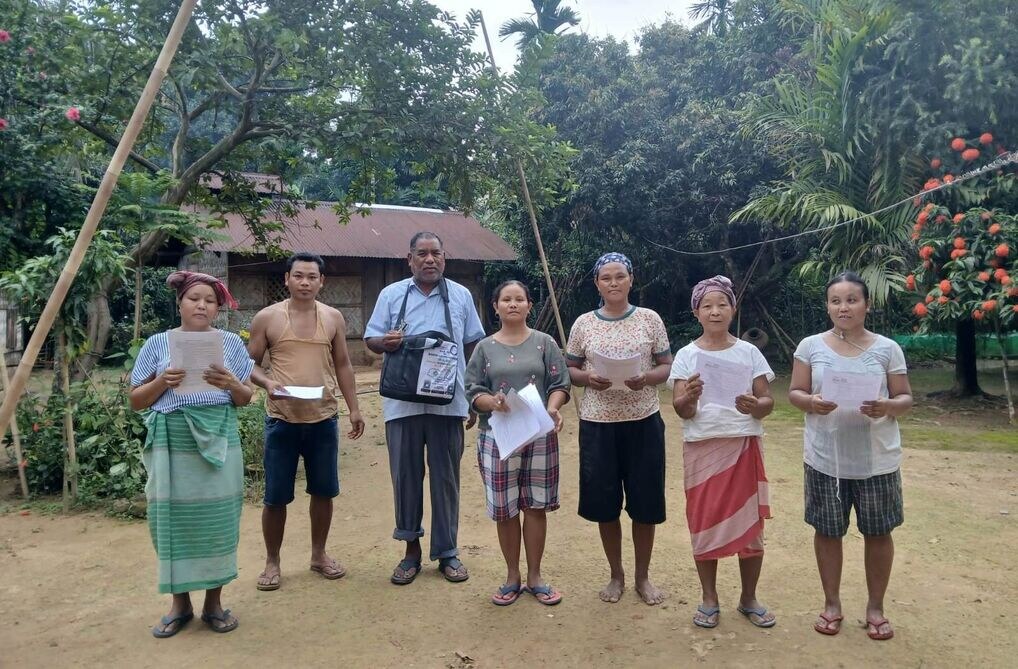

SIR (Special Intensive Revision) is an exercise conducted by the Election Commission of India to verify, update, and clean electoral rolls (voter lists).
It involves:
- House-to-house enumeration
- Verification of existing voter details
- Inclusion of eligible citizens
- Removal of duplicate or ineligible entries
The goal is simple: ensure that every eligible voter is included and no ineligible name remains.
The cut-off year for the exercise is 2005. Electors whose names appear in the 2005 electoral roll will not be required to submit documentation. However, those whose names do not appear must provide details of their family through legacy documents, including records showing their family members’ names in the 2005 electoral rolls.
What are the admissible documents ?
For the ongoing Special Intensive Revision (SIR) of electoral rolls in Meghalaya, the cut-off year has been fixed as 2005. Electors whose names appear in the 2005 electoral roll are not required to submit any additional documents.
However, individuals whose names do not appear in the 2005 roll must establish their eligibility through admissible documents. These include valid proof of identity (such as EPIC, Aadhaar, Passport, etc.), proof of residence (such as utility bills, ration card, or residence certificate), and importantly, legacy documents showing linkage to family members whose names are included in the 2005 electoral roll.
Documents establishing family relationships, such as birth certificates, school records, or ration cards, may also be required to support such claims.
The objective of this process is to ensure accuracy, transparency, and inclusiveness in the electoral roll while maintaining proper verification standards.
What is happening in Meghalaya right now?
A statewide SIR exercise is currently underway in Meghalaya (July 2026).
- Officials have begun door-to-door verification across urban and rural areas
- Residents are being asked to confirm identity and residency details
- Data is being updated in official government records
This large-scale verification drive started in early July and is being implemented across districts.
Why is SIR important in the Meghalaya context?
- a) Electoral integrity
Meghalaya, like other states, requires accurate voter lists before elections. Electoral rolls must be revised periodically under law to reflect:
- New voters (18+)
- Migration (in/out of constituencies)
- Deaths or duplicate entries (Election Commission of India)
b) Governance and service delivery
Although primarily an electoral exercise, SIR data can indirectly support:
- Better targeting of welfare schemes
- Accurate population records
- Reduced duplication in beneficiary databases
How the process works on the ground
The SIR exercise typically follows these steps:
- House-to-house visits by Booth Level Officers (BLOs)
- Filling of enumeration forms with family details
- Verification of documents (ID, address proof)
- Updating of draft electoral rolls
- Period for claims and objections
- Publication of final voter list
This process ensures both inclusion and correction of data.
Key objectives of SIR
- Ensure no eligible voter is left out
- Remove duplicate or fake entries
- Improve transparency in elections
- Strengthen democratic processes
What citizens should do
Residents in Meghalaya are advised to:
- Cooperate with verification officials
- Provide correct documents
- Check their names in draft rolls
- File claims/objections if needed