


Wage hikes and welfare schemes seen as part of a broader push to consolidate support in tea belt constituencies
Avik Chakraborty
Dibrugarh, March 26: The arrival of the first flush has brought a sense of hope and renewed energy to Assam’s tea gardens, with workers in Upper Assam welcoming timely rains, government welfare measures, and a promising start to the season.
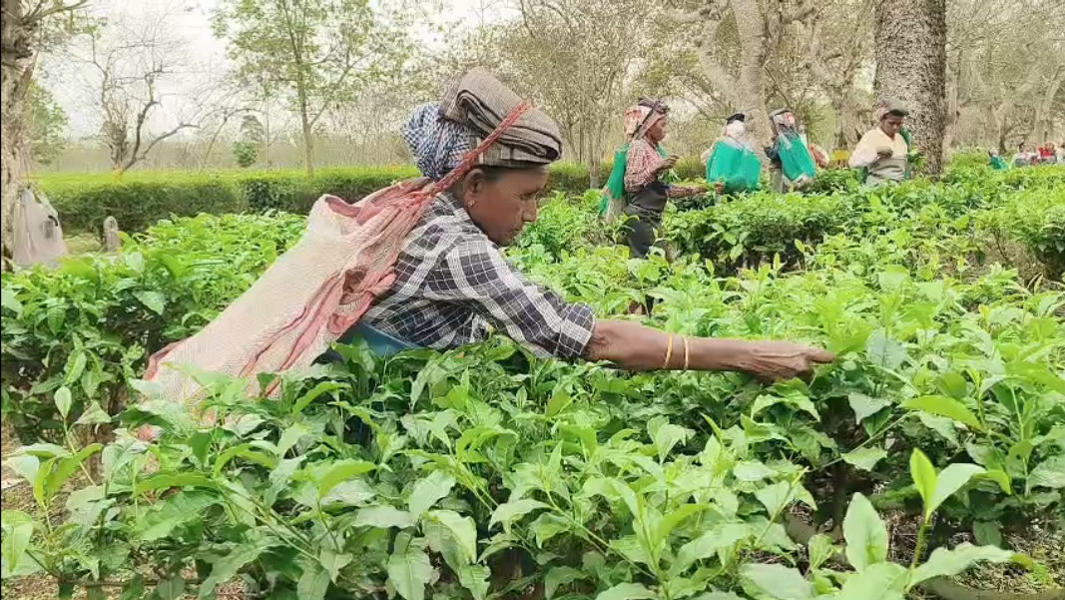
At Beheating Tea Estate in Dibrugarh, tea pluckers say good rainfall has helped improve leaf growth, raising expectations for a better harvest. The mood in the gardens is upbeat, with women workers singing traditional songs as they pluck the fresh “two leaves and a bud.”
Rita Mura (45), a tea plucker, said the season has begun on a positive note. “This year, the first flush is good, and the rain has helped. We are hopeful the season will be better,” she said.
She also welcomed government welfare measures. “We are happy to get schemes like Eti Koli Duti Paat. The present government is thinking for us. Earlier, we did not get such benefits,” she told Hub News.
Workers say the combination of good rains and early growth has lifted spirits across estates. Many also pointed to the recent wage hike. “Our daily wage has increased by Rs 30, and now we get Rs 280. We thank the government for this,” Rita added.
Anita Tanti, another worker, echoed the optimism around the tea season but flagged gaps in welfare coverage. “We request the government to expand the Orunodoi scheme. Many of us are still not included,” she said.
Workers said their socio-economic conditions have improved compared to earlier years, but long-standing demands remain. “If we are given Scheduled Tribe (ST) status, it will benefit our community a lot,” said Binita Munda.
The tea garden community remains politically crucial in Assam, especially in Upper Assam districts like Dibrugarh—often called the ‘Tea City of India’—where tea tribes form a decisive voter base.
This election season, that importance has become even more pronounced. In recent weeks, the BJP-led government has rolled out a series of measures targeting tea garden workers, including the distribution of land pattas—a first in the 200-year history of Assam’s tea industry. More than 28,000 families have already received land rights, with a larger rollout planned.
The push, combined with wage hikes and welfare schemes, is seen as part of a broader strategy to consolidate support in tea belt constituencies, which influence around 30–35 Assembly seats. Tea tribes make up nearly 17 per cent of Assam’s population, making them a key electoral bloc.
“We are happy that after long protests, the government has included 37 tea garden communities in the OBC category,” said Lakhindra Kurmi of the Assam Tea Tribes Students’ Association (ATTSA). “But the demand for ST status still remains.”
Political observers say the community’s shifting support could play a crucial role in the upcoming polls. “The BJP has made significant inroads through welfare outreach, but issues like ST status and wages are still unresolved,” said political analyst Rupak Bhattacharjee.
As the first flush sets the tone for the tea season, the combination of good rains and rising expectations is evident in the gardens. But alongside the optimism, workers say their long-pending demands—and how they are addressed—will shape the choices they make at the ballot box.
Watch