

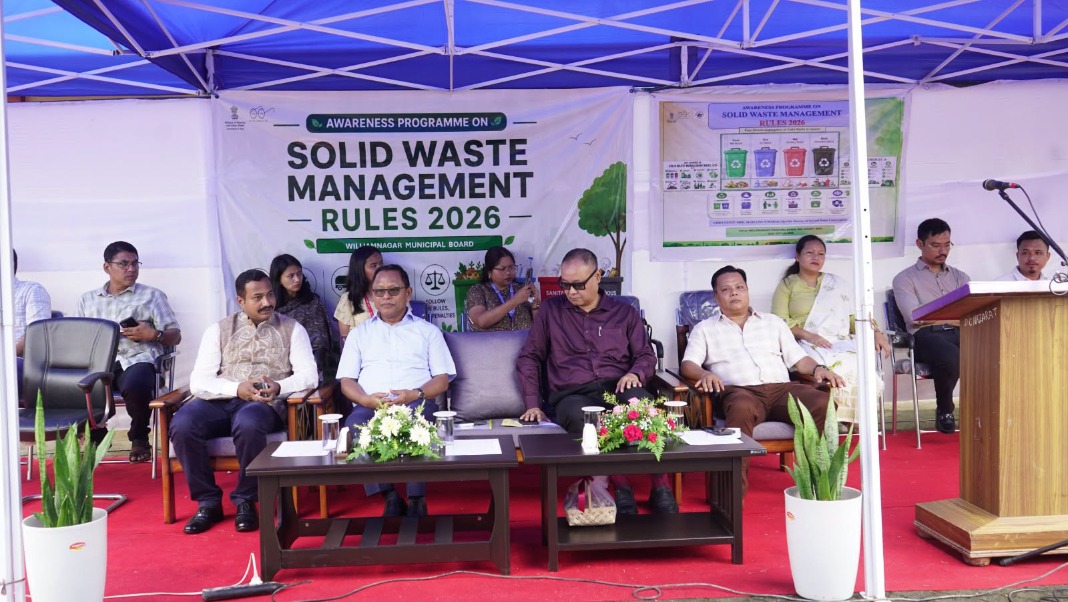

Williamnagar generates 12.5 tonnes of waste daily as government pushes scientific waste management to curb pollution and flooding
Shillong, July 23: Meghalaya has stepped up its push for cleaner towns with the rollout of the Solid Waste Management Rules, 2026, making segregation of waste into four categories mandatory and placing greater responsibility on households, businesses and institutions.
Launching an awareness programme in Williamnagar on Thursday, Housing and Urban Affairs Minister Marcuise N. Marak said effective waste management was no longer optional but essential to protect the state’s environment and public health.
“The Solid Waste Management Rules are vital for the well-being of society and require the active participation of every citizen,” he said, adding that proper waste segregation would ease waste processing, reduce urban flooding and help conserve Meghalaya’s rivers and forests.
The minister said the state government was strengthening urban infrastructure ahead of the National Games 2027, while also pursuing Smart City initiatives and measures to protect the Simsang River and improve biomedical waste disposal.
The programme comes as Meghalaya grapples with mounting pressure on existing dumping sites. Officials warned that continued dumping of untreated waste poses a serious threat to the state’s water bodies, forests and river basins.
Williamnagar alone generates around 12.5 tonnes of waste every day, with door-to-door collection currently covering eight of the town’s 10 wards, according to Williamnagar Municipal Board CEO R.N. Sangma.
She said the new rules require waste to be segregated at source into wet waste, dry waste, sanitary waste and special care waste, with separate colour-coded bins for each category.
Deputy Commissioner Raksin P. Marak said rapid urbanisation and changing lifestyles had made scientific waste management a necessity, warning that improper disposal contributes to water pollution, clogged drains and the spread of diseases.
The new rules also make bulk waste generators—including apartment complexes, hotels, restaurants, schools, hospitals and markets—responsible for processing wet waste, handing over other waste to authorised collectors and filing annual compliance reports with urban local bodies.