

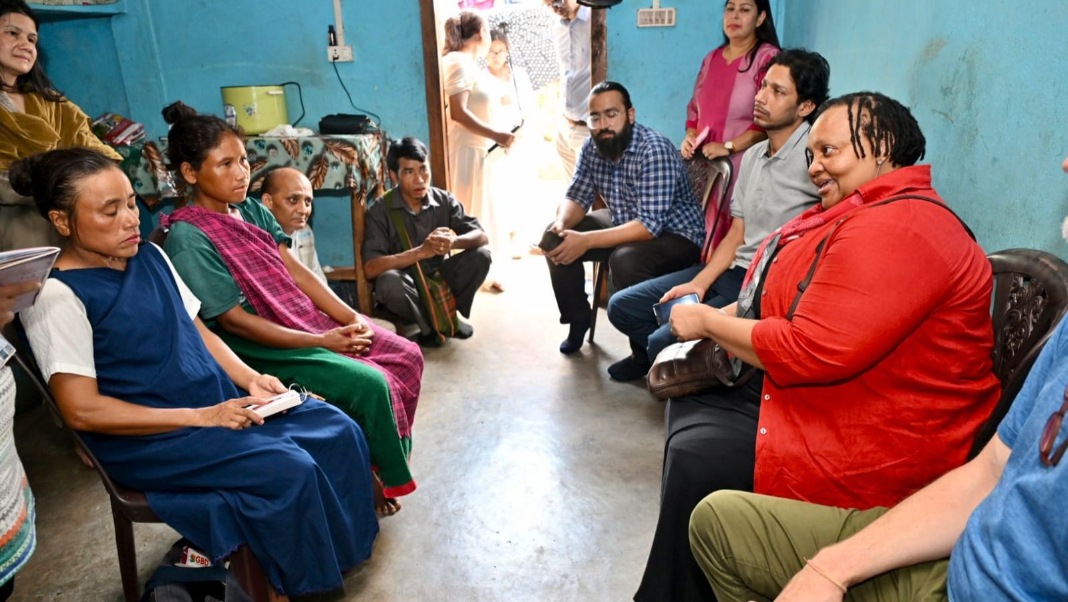

Ri-Bhoi pilot achieves 100% coverage as state eyes expansion to all 12 districts under Mission 100
Shillong, July 23: A community-driven maternal and child healthcare model that has achieved full coverage in Meghalaya’s Umling block is set to be scaled up across the state, with UNICEF India and its partners working with the government to integrate the initiative into public health programmes.
Following a field visit to Sohkhwai village in Ri-Bhoi district, UNICEF India said locally designed interventions such as the Mama Alert Flashcard, Husiar Ko Kmie (Mother Info) sticker, and the Community Emergency Transport Roster had proved effective even during the monsoon, when pregnant women and children often struggle to access healthcare services.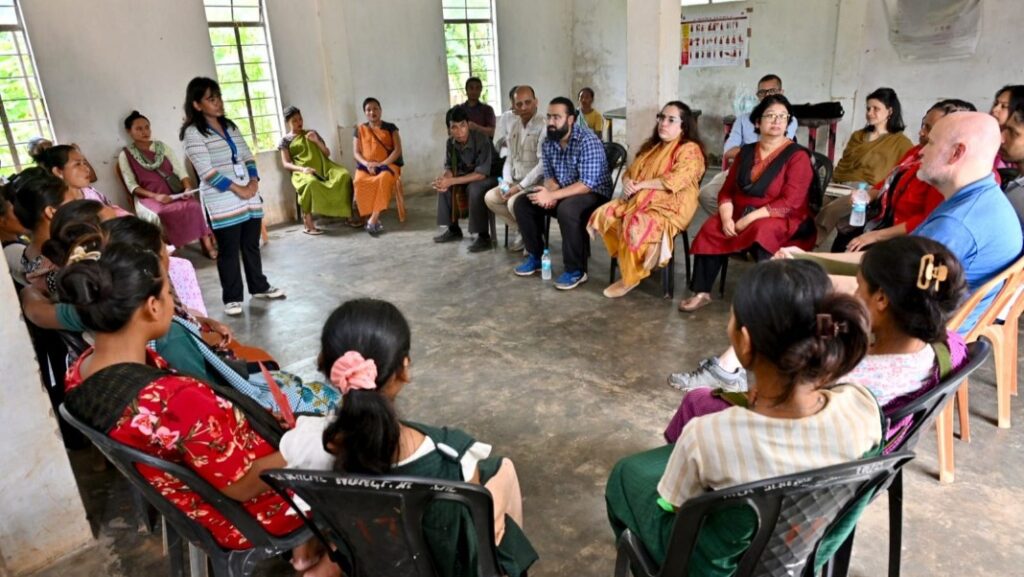
The pilot, implemented by UNICEF in partnership with Blockchain for Impact (BFI), was tested under challenging weather conditions to assess whether the community-designed tools could ensure uninterrupted antenatal care, immunisation and timely access to health facilities.
According to UNICEF, Umling block has now achieved 100% coverage across all villages and health facilities, with the model already being integrated into routine district administration.
The next phase will see the programme expanded across Ri-Bhoi through a District Action Plan, while discussions with Meghalaya’s Principal Secretary and Director of Health Services have laid the groundwork for a State Roadmap Framework.
The framework aims to replicate the community-led approach across all 12 districts under the state’s Chief Minister’s Mission 100, while incorporating climate resilience into maternal and child healthcare planning.
The initiative is supported by Tattva Foundation, Assam Don Bosco University (ADBU), the Centre for Policy, and IIT Bombay, alongside the Meghalaya government.
UNICEF said the model demonstrates how simple, community-led innovations can strengthen healthcare delivery in remote and weather-vulnerable regions.