

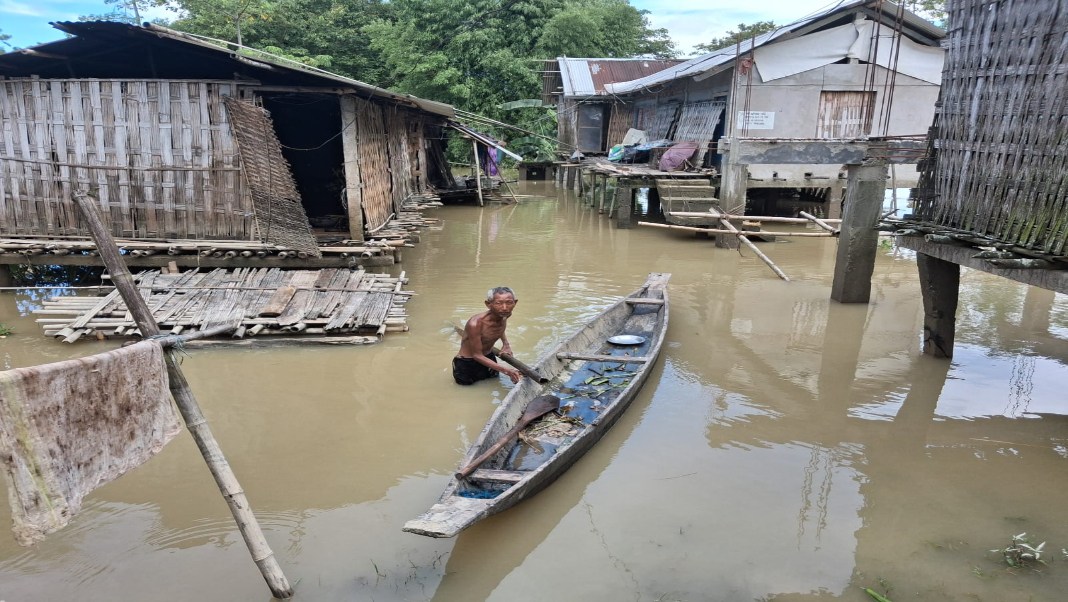

As the Buri Dehing swells, boats become the only lifeline for nearly 600 residents of Janzimukh battling floods and erosion
Avik Chakraborty
Dibrugarh, July 23: Every monsoon, the people of Janzimukh village in Assam’s Dibrugarh district brace for rising waters. This year, they are once again living on boats.
With the Buri Dehing River overflowing after heavy rain in Arunachal Pradesh, the Mising-majority village has been cut off, forcing residents to rely entirely on Tulunga Naon—small traditional country boats—to travel, fetch essentials and reach relief camps.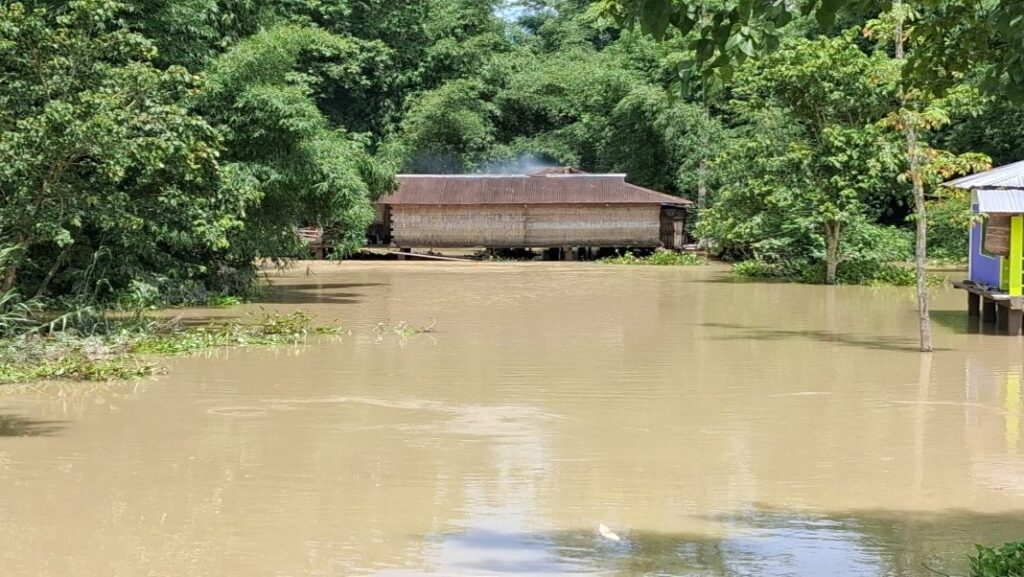
For 42-year-old Nilima Tayeng, whose home is surrounded by floodwater, each day begins with uncertainty.
“Our village is completely submerged. We have received some relief materials, but they are not enough for our family. We request the government to provide more assistance,” she said.
Janzimukh, home to 99 families and 575 residents under the Dibrugarh West Revenue Circle, is among the worst-hit villages in the district. Official figures show floods have affected 85 villages and over 13,000 people in Dibrugarh, with 22 villages under the Dibrugarh West Revenue Circle alone inundated.
While floods are an annual ordeal, villagers say the growing threat of riverbank erosion worries them even more.
“Floods come every year, but after the water recedes, erosion begins. We have already lost large stretches of farmland and don’t know what our future holds,” said resident Mrinal Panging.
Agriculture, the community’s primary livelihood, has come to a standstill as paddy fields remain submerged. Many families continue to live in Chang Ghars—traditional stilt houses raised on bamboo or wooden posts that have protected the Mising community from floods for generations. But even these elevated homes offer little relief when floodwaters remain for days.
The district administration has distributed relief materials, but for families in Janzimukh, survival still depends on the humble wooden boat that has become their only connection to the outside world.