

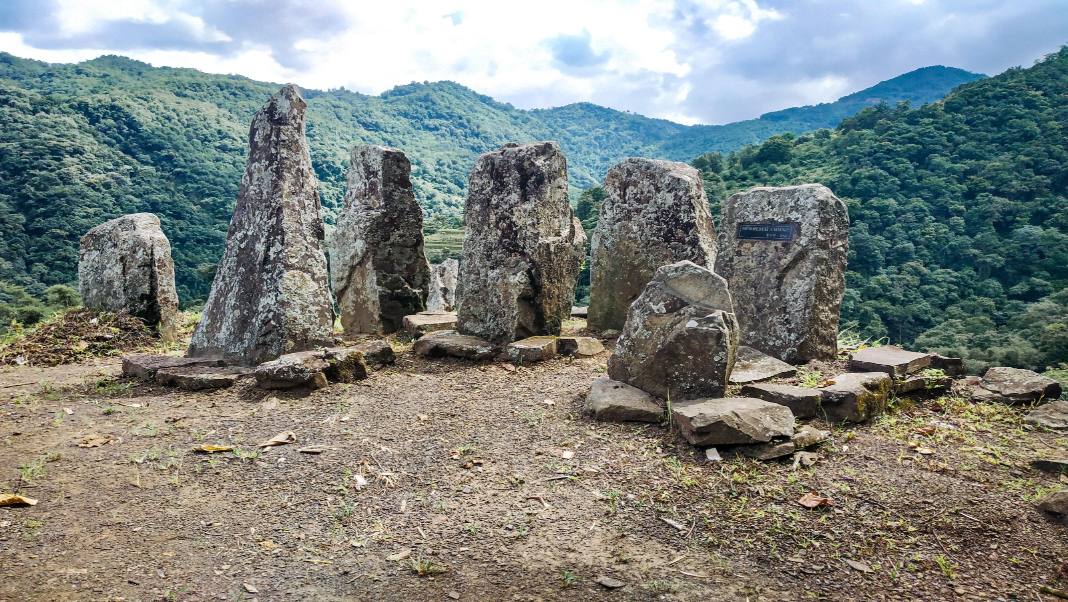

An ancient Chakhesang Naga tradition has survived the test of time, where honour is earned and not inherited. Where an entire village comes together to pull history into the present.
Phek, June 29: His face is etched with the passage of time. Every wrinkle tells the story of a century spent in these hills. Draped in the richly woven Thüpikhü, or Shawl of Merit, the 102-year-old Sülüngoyi D. Vadeo of Sakraba Village sits quietly, watching hundreds of villagers pull a giant stone across the mountains just as he once did in his youth.
For him, this is not a cultural performance. It is a lifetime of memories unfolding before his eyes.
Across the hills of Phek district, the ancient Chakhesang Naga tradition of Kütsü Sü, or stone pulling, continues to endure in an age of highways, smartphones and rapid change. What appears to outsiders as the movement of a massive monolith is, in reality, one of Nagaland’s most enduring expressions of community, honour and identity.

Unlike the great megalithic monuments of the world that survive largely as archaeological relics, the Chakhesang tradition remains one of the rare living megalithic traditions where stones are still pulled, songs are still sung, and entire villages come together to keep an age-old custom alive.
For centuries, stone pulling formed the heart of the prestigious Feast of Merit, or Zhotho–Zhove, regarded as the highest honour in Chakhesang custom. Yet, unlike inherited titles or family privilege, this distinction could never be passed from one generation to another. Honour had to be earned.
In many societies, status is inherited. Among the Chakhesang Nagas, honour came through generosity. The Feast of Merit was not simply a celebration of wealth but of sharing it. Families earned prestige by hosting community feasts, feeding fellow villagers and giving back to society. Wealth alone was never enough.
Traditionally, a man became eligible to pull and erect his first commemorative stone only after hosting the third Feast of Merit. With each successive feast came the right to erect additional stones. The first two Feasts of Merit also earned both husband and wife the Thüpikhü, or Shawl of Merit, and the Ciekha, or House Horn symbols of honour that reflected generosity and service rather than status by birth.
Perhaps the most remarkable aspect of the tradition is the place accorded to women.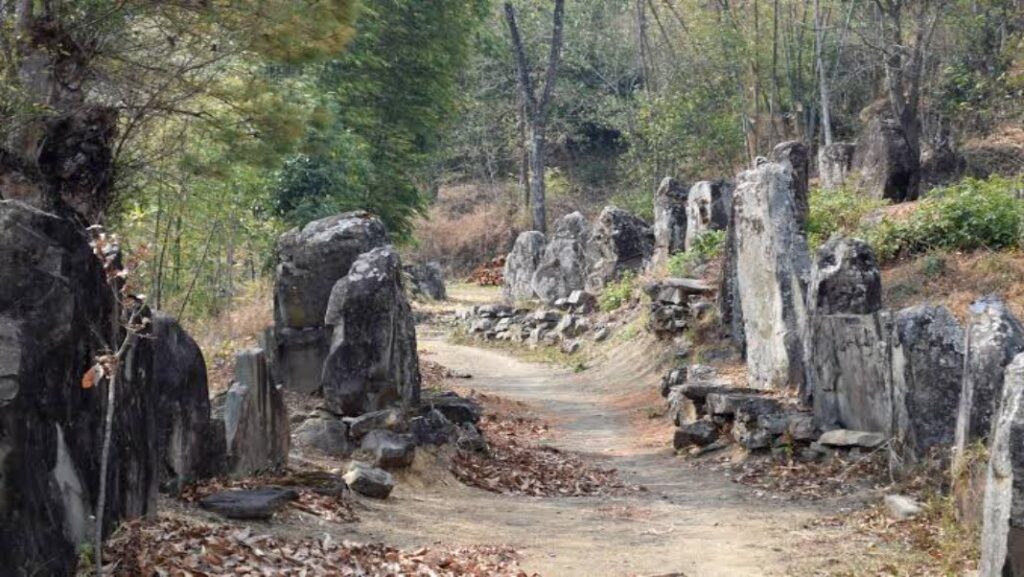
Long before conversations around gender equality entered modern discourse, Chakhesang custom recognised women as equal partners in honour. During the fourth Feast of Merit, a separate stone was pulled in the wife’s name, and she enjoyed the same right as her husband to wear the Thüpikhü. In a society where honour had to be earned, recognition belonged equally to husband and wife.
The tradition also offers an intriguing perspective for the modern world. At a time when gender equality continues to be debated across many societies, the Chakhesang Feast of Merit had already recognised women as equal recipients of one of the community’s highest honours. The right to wear the Thüpikhü and have a commemorative stone erected in one’s name reflected a cultural understanding that honour, service and generosity belonged equally to husband and wife. It is a reminder that indigenous traditions often evolved their own ideas of dignity, partnership and shared recognition long before such conversations entered contemporary public discourse.
The ritual itself remains deeply symbolic. Elders begin with prayers and traditional rites before selecting a suitable stone from sacred sites, often several kilometres away, while the date is traditionally fixed after consulting omens. On the appointed day, the oldest elder takes hold of the rope tied around the stone and calls upon it to begin its journey.
Soon, the village begins to move as one.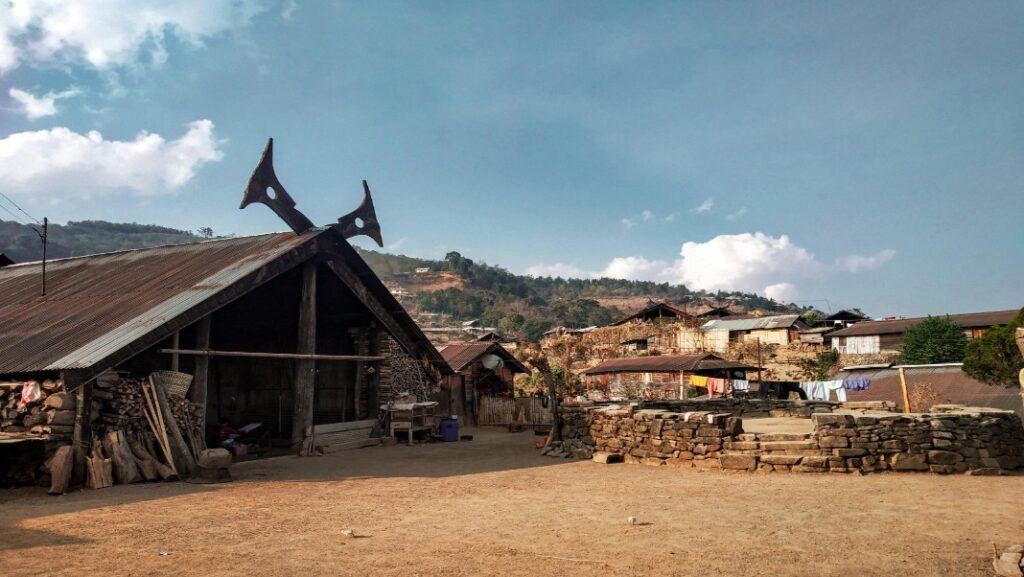
Men, women, children and elders gather together. Thick ropes woven from forest vines are fastened around the monolith. Women and children accompany the procession carrying food and rice beer. The giant stone inches forward on wooden sledges to the haunting rhythm of Kühu folk chants, each pull perfectly synchronised.
When the destination is reached, the elder cuts the rope, marks the exact spot where the stone will stand, and the monolith is finally raised into the earth.
The megalith becomes far more than a monument. It is a permanent record of generosity, cooperation and collective memory. Dotting villages such as Sakraba, these stones are not merely archaeological remains; they are living archives of lineage, migration and social milestones.
The ceremony concludes with feasting, dancing and the retelling of village histories, ensuring that oral traditions continue to pass from one generation to the next.
While the traditional Feasts of Merit have largely faded, the ritual has found new meaning. Today, stone pulls commemorate church jubilees, cultural festivals, major community gatherings and other important milestones. The latest ceremony marked the Golden Jubilee of the Sakraba Youth Organisation, demonstrating how an ancient custom continues to evolve without losing its essence.
Modern logistics may occasionally include trucks, steel cables and public address systems, but the spirit of Kütsü Sü remains unchanged. Villages, churches, civil organisations, youth groups, student bodies and cultural troupes continue to preserve the tradition, transforming it into a living classroom for younger generations while promoting cultural education and heritage tourism.
As the final chants fade and another stone rises into place, the centenarian watches silently. The monument before him is more than a reminder of the past; it reflects values that have endured across generations.
In Sakraba, every stone continues to speak of a society where honour was earned rather than inherited, generosity defined prestige, women shared equal recognition in one of the community’s highest traditions, and the strength of the individual was measured by the strength of the community. As long as the chants continue to echo across these hills, Kütsü Sü will remain not just a ritual of moving stone, but a living tradition carrying memory, identity and continuity into the future.