

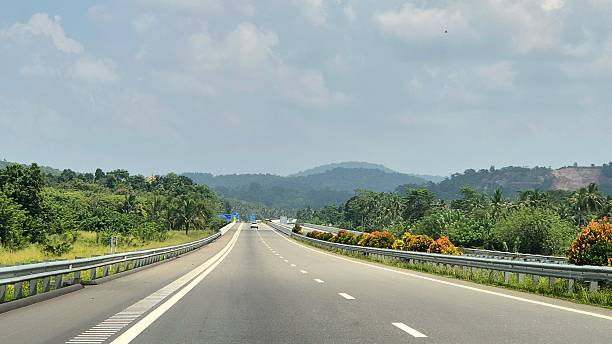

Shillong, June 25: The Meghalaya Integrated Transport Project (MITP), supported by the World Bank, is making significant progress in reshaping the state’s transport ecosystem, with over 212 kilometres of road infrastructure completed and major institutional reforms underway. The latest Implementation Status Report, released on June 23, 2025, shows marked improvements in road safety, public mobility planning, and policy development.
The $120 million project, launched in October 2020, is designed to enhance transport connectivity in key districts and modernise sector governance. The report rates the project’s performance as “moderately satisfactory” but highlights steady momentum across physical works and capacity-building initiatives.
As of May 2025, 20% of Meghalaya’s population is benefiting from improved transport connectivity—an impressive leap from a baseline of 0% in 2020. The share of state and major district roads (SH/MDRs) in good or fair condition has soared to 64.5%, compared to just 6.4% last year.
A major breakthrough is the operationalisation of the state’s Road Safety Action Plan, with detailed designs ready for retrofitting 200 km of roads. This strategic focus on safety is backed by audits and inspections currently underway.
In a move to institutionalise technical excellence, the Road Research Laboratory of the Public Works Department has been officially notified as a Centre of Excellence (CoE). The roles and responsibilities of the CoE are set to be defined under the ongoing Institutional Strengthening Study, signalling a long-term investment in innovation and quality assurance in Meghalaya’s infrastructure sector.
On the urban planning front, a statewide urban mobility study has been completed, and an urban mobility plan for Tura is now available. Additionally, a comprehensive strategy for improving passenger transport services is already in place, targeting better connectivity and service delivery in both urban and rural regions.
The MITP has successfully restored roads damaged by the June 2022 floods. Meanwhile, the groundwork for climate-resilient and nature-based transport infrastructure is being laid, with consultants engaged and strategies under preparation. However, construction of innovative climate-resilient bridges has yet to begin.
The project also emphasises inclusion, with 13 gender-based capacity-building workshops conducted and increasing participation of female engineers in technical training. The establishment of an Integrated Transport Network Development Plan (ITNDP) and the implementation of a Human Resources Development Strategy are building a foundation for long-term sectoral transformation. Seventy per cent of funds have been disbursed.
By its planned closing in October 2026, the project targets 1,000 km of roads under performance-based maintenance contracts, 500 km of road safety audits and climate vulnerability assessments and completion of a green growth strategy and transport sector vision 2030.
Also Read: Meghalaya CM to Meet US Ambassador Over ‘Incorrect’ Travel Advisory
Also Watch
Find latest news from every corner of Northeast India at hubnetwork.in, your online source for breaking news, video coverage.
Also, Follow us on-
Twitter-twitter.com/nemediahub
Youtube channel- www.youtube.com/@NortheastMediaHub2020
Instagram- www.instagram.com/ne_media_hub
Download our app from playstore – Northeast Media Hub

, supported by the World Bank, is making significant progress in reshaping the state's transport ecosystem, with over 212 kilometres of road infrastructure completed and major institutional reforms underway. The latest Implementation Status Report, released on June 23, 2025, shows marked improvements in road safety, public mobility planning, and policy development.)