

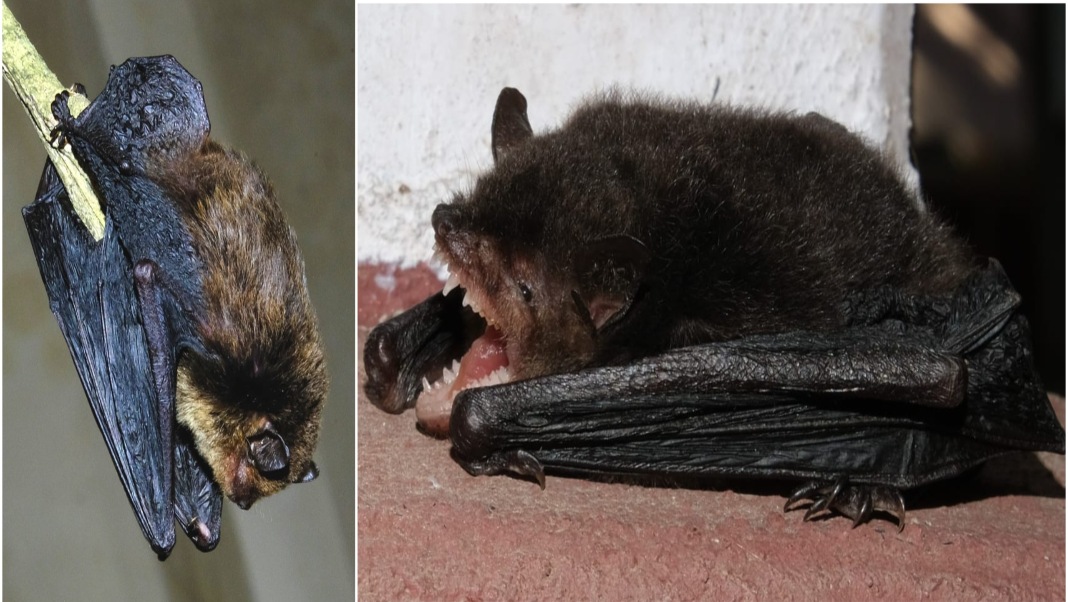

ZSI-led study extends the known range of two Southeast Asian bats into South Asia, taking India’s bat diversity to at least 138 species
GUWAHATI, July 7: A study led by researchers of the Zoological Survey of India, Shillong in collaboration with scientists from other institutes of India and Hungarian Natural History Museum, has documented the first-ever occurrence of two species of bats Glischropus bucephalus and Myotis indochinensis in India. The discoveries, based on specimens collected from the northeastern state of Mizoram, significantly extend the known distribution of both species from Southeast Asia into South Asia and highlight the rich but understudied biodiversity of the region. The study was published in the journal Animal Taxonomy and Ecology
The findings emerge from extensive field surveys conducted across Mizoram between 2023 and 2025 as part of ongoing efforts to document the bat fauna of northeastern India. The newly recorded species were identified using a combination of detailed morphological examinations, molecular genetic analyses, and echolocation studies.
Until now, Glischropus bucephalus, commonly known as Indo-Chinese thick-thumbed bat, was known only from parts of Cambodia, Vietnam, Thailand and Myanmar. The present record from Chhiahtlang in Serchhip district of Mizoram extends its known range approximately 670 kilometres westward from its previously known westernmost locality in Myanmar. Similarly, Myotis indochinensis, commonly called Indo-Chinese mouse-eared bat and described relatively recently, was previously known from Vietnam, Laos and southern China. The discovery from Reiek in Mizoram extends its distribution by nearly 1,300 kilometres westward, representing a major expansion of its known geographic range. The research team also noted that a recently published gene sequence from Bangladesh, currently attributed to another species, indeed belongs to Myotis indochinensis. If confirmed through further studies, this would provide additional evidence that the species is more widely distributed across South Asia than previously recognized.
According to Dr. Uttam Saikia, the lead researcher of the study, the discoveries demonstrate how much remains unknown about the mammalian diversity of the region. “Northeast India lies at the junction of the Indian and Southeast Asian biogeographic realms. Continued exploration in this region is revealing species and distribution patterns that were previously overlooked, emphasizing the need for more intensive biodiversity surveys,” he said.

The study addresses what biologists refer to as the ‘Wallacean Shortfall’—the lack of adequate information on the geographic distribution of species. This knowledge gap is considered one of the major challenges in biodiversity conservation worldwide, particularly in biologically rich but poorly surveyed regions. Bats, despite constituting more than 30 percent of India’s mammalian diversity, remain among the least studied groups of mammals in the country.
The discoveries add to a growing list of recent findings by Dr. Saikia and his collaborators that are reshaping scientific understanding of bat diversity in the Indian subcontinent including description of Himalayan long-tailed Myotis and records of Golden-haired Tube-nosed Bat and Titania’s wooly Bat from India.
Beyond their scientific significance, these discoveries have important conservation implications as accurate knowledge of species distributions is essential for biodiversity assessments, habitat management and conservation planning and also reinforces the global conservation value of the forests of Northeast India. With these current additions, the country’s known bat diversity expands to at least 138 species.
Also Read: Mizoram University museum designated India’s 21st biodiversity repository
Also Watch
Find latest news from every corner of Northeast India at hubnetwork.in, your online source for breaking news, video coverage.
Also, Follow us on
Twitter-twitter.com/nemediahub
Youtube channel- www.youtube.com/@NortheastMediaHub2020
Instagram- www.instagram.com/ne_media_hub
Download our app from playstore – Northeast Media Hub