

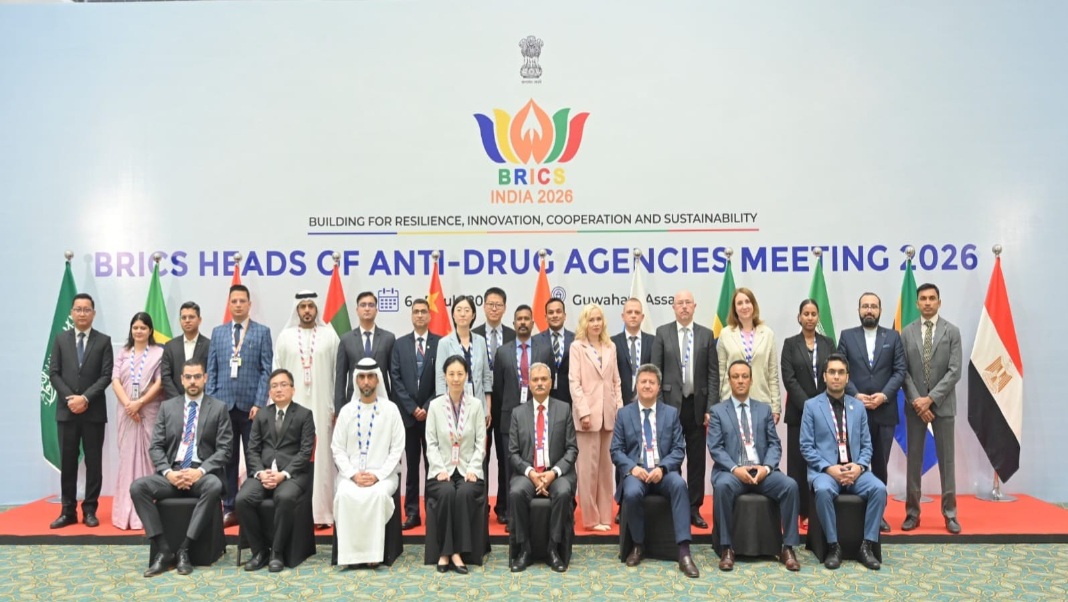

Guwahati, July 7: In a significant development for India’s Northeast, which continues to grapple with cross-border narcotics trafficking from the Golden Triangle, BRICS nations on Tuesday adopted the Guwahati Declaration, pledging stronger cooperation to combat illicit drug trafficking and transnational organised crime.
The declaration was adopted at the conclusion of the two-day BRICS Heads of Anti-Drug Agencies Meeting held in Guwahati, where representatives from Brazil, China, Ethiopia, India, Indonesia, Iran, Russia and the United Arab Emirates agreed to deepen intelligence-sharing and strengthen coordinated action against international drug syndicates.
The declaration calls for faster exchange of information, intelligence and best practices among member countries, while promoting the use of digital technologies, data analytics and innovative tools to disrupt drug trafficking networks.

The move assumes particular significance for the Northeast, which has emerged as a major transit corridor for heroin, methamphetamine and other synthetic drugs smuggled from Myanmar through the porous international border. States such as Assam, Mizoram, Manipur, Nagaland and Arunachal Pradesh have witnessed frequent seizures of narcotics worth hundreds of crores in recent years.
Expressing concern over the rapidly evolving nature of the global drug trade, the BRICS countries highlighted the growing menace of synthetic drugs and New Psychoactive Substances (NPS), diversion of precursor chemicals, misuse of cryptocurrencies and emerging technologies, and the increasing use of maritime routes and digital platforms by transnational criminal networks.
The member countries also stressed the need for evidence-based programmes to reduce drug demand, particularly among children and youth, alongside stronger rehabilitation and public awareness initiatives.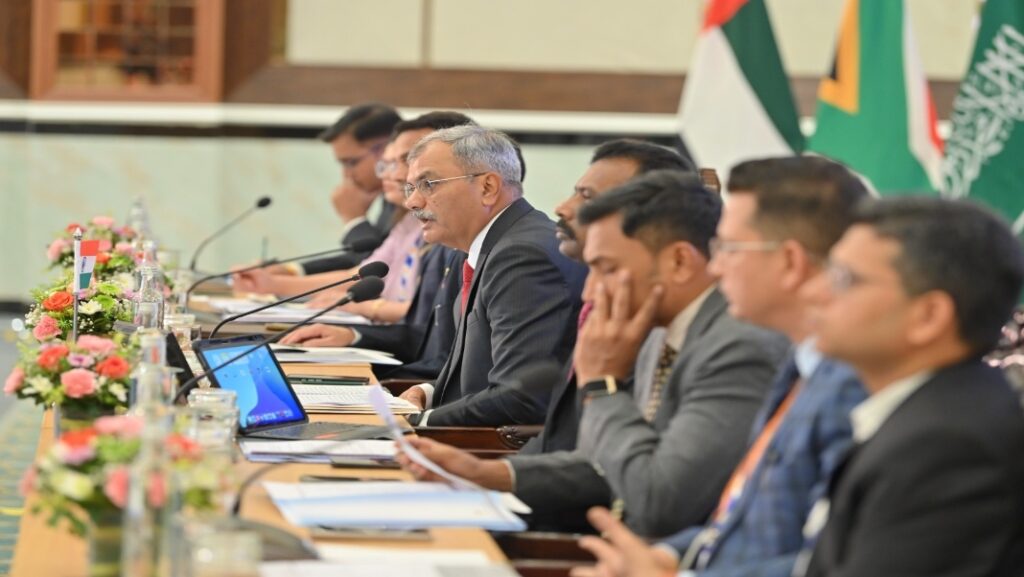
Leading the Indian delegation, Director General of the Narcotics Control Bureau (NCB) Anurag Garg called on BRICS anti-drug agencies to build a partnership based on speed, trust and real-time intelligence sharing to dismantle transnational drug cartels.
Highlighting India’s anti-drug strategy under the Centre’s zero-tolerance policy, Garg said the country has adopted a 2026-2029 Network-Centric Roadmap aimed at dismantling entire trafficking networks rather than targeting individual offenders. The strategy also focuses on preventing drug abuse through awareness campaigns and strengthening treatment and rehabilitation.
In his closing remarks, Garg said today’s drug trafficking networks operate across borders without jurisdictional barriers, making international cooperation indispensable. He proposed the creation of a BRICS Virtual Working Group and enhanced cross-border training initiatives to improve coordinated enforcement.
Also Read: Mizoram University museum designated India’s 21st biodiversity repository
Also Watch
Find latest news from every corner of Northeast India at hubnetwork.in, your online source for breaking news, video coverage.
Also, Follow us on
Twitter-twitter.com/nemediahub
Youtube channel- www.youtube.com/@NortheastMediaHub2020
Instagram- www.instagram.com/ne_media_hub
Download our app from playstore – Northeast Media Hub