


ROOPAK GOSWAMI
Shillong, April 21: A scientific study has reported the presence of the rare cave-associated frog Amolops siju in East Jaintia Hills, marking a significant addition to Meghalaya’s still-unfolding cave biodiversity story.

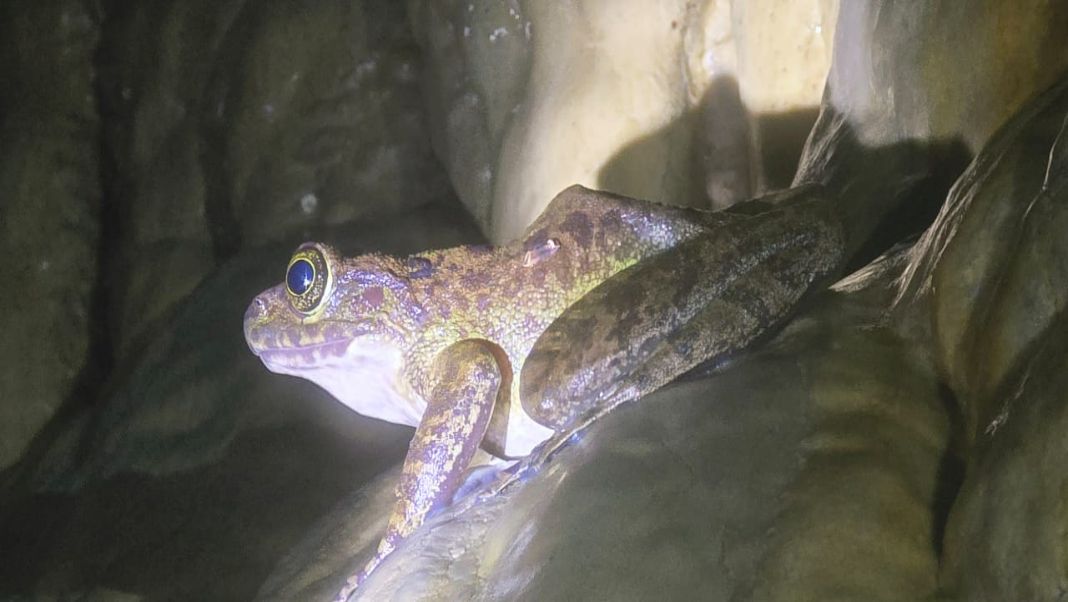
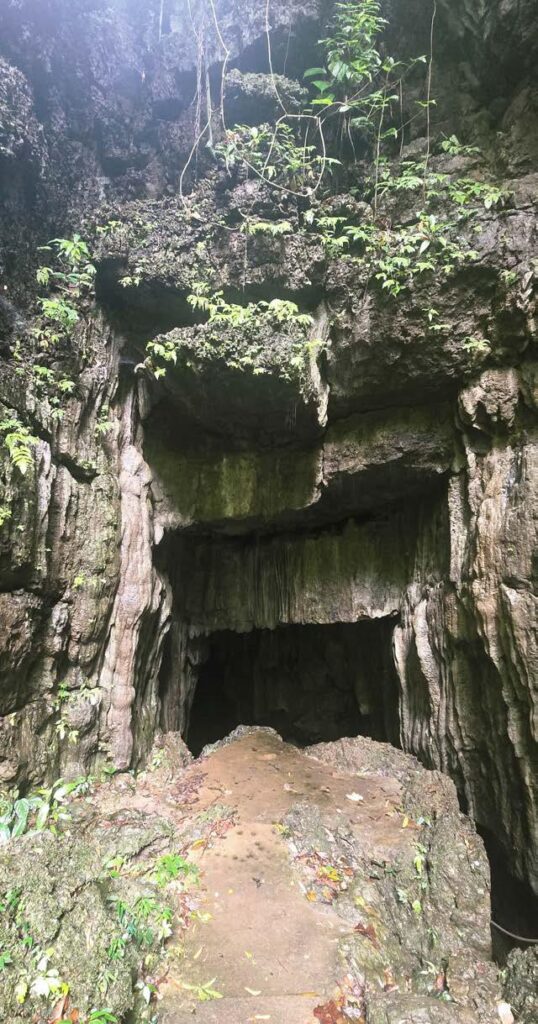
The frog was documented inside Syndai Cave during a field survey in October 2025 by researcher Bankerdonbor Kharbisnop and his team who observed and photographed the animal perched on a cave wall about 50 metres from the entrance. The study has been published in ZoosPrint.
What makes the sighting notable is the location.
Until now, Amolops siju had only been recorded from Siju Cave in South Garo Hills—nearly 200 km away—with no known underground connection between the two cave systems. The new record suggests the species may have a wider distribution across Meghalaya than previously thought
The frog identified in Syndai Cave was an adult female, distinguished by key features including an unusually small tympanum—about one-fifth the size of the eye—and its olive-green body marked with irregular blotches and banded limbs, consistent with earlier descriptions of the species.
The genus Amolops, commonly known as cascade frogs, is typically associated with fast-flowing streams across the Indo-Burma region and the Himalayas. However, A. siju stands out for being linked to cave environments, though scientists note it does not show strong physical adaptations usually seen in cave-dwelling species.
This has led research team to question whether the frog is a true cave inhabitant or simply uses such environments opportunistically.
The Syndai Cave record gains further importance as the cave itself has remained largely undisturbed for years after falling off the tourism map, allowing biodiversity to thrive. Apart from the frog, the survey also documented other cave-dwelling organisms, including huntsman spiders, cave crabs, crickets and millipedes.
Kharbisnop, who is affiliated with the College of Science and Commerce, Mawphlang said the finding highlights how little is known about Meghalaya’s subterranean ecosystems, despite the state being home to some of the longest and most complex cave systems in the region.
The study calls for more focused biospeleological surveys to better understand species distribution and ecological dynamics within these fragile habitats.
For Meghalaya, the discovery is a reminder that some of its most important wildlife may still be hidden in plain sight—deep inside its caves.
Also Read: GTF ends 12-day hunger strike after Meghalaya Govt drops Lumpongdeng Island from Taj project
Also Watch
Find latest news from every corner of Northeast India at hubnetwork.in, your online source for breaking news, video coverage.
Also, Follow us on
Twitter-twitter.com/nemediahub
Youtube channel- www.youtube.com/@NortheastMediaHub2020
Instagram- www.instagram.com/ne_media_hub
Download our app from playstore – Northeast Media Hub