


Natasha R Marak
For decades, shifting cultivation or jhum, has been framed as an ecological liability. Government narratives, development programmes, and sections of academic discourse have consistently positioned it as a driver of deforestation, soil degradation, and air pollution. This framing has not only shaped policy but has also quietly reshaped how indigenous communities perceive their own practices.
Among the Garos of Meghalaya, this narrative has been internalized to a dangerous extent.
But it is incomplete and in critical ways, misleading.
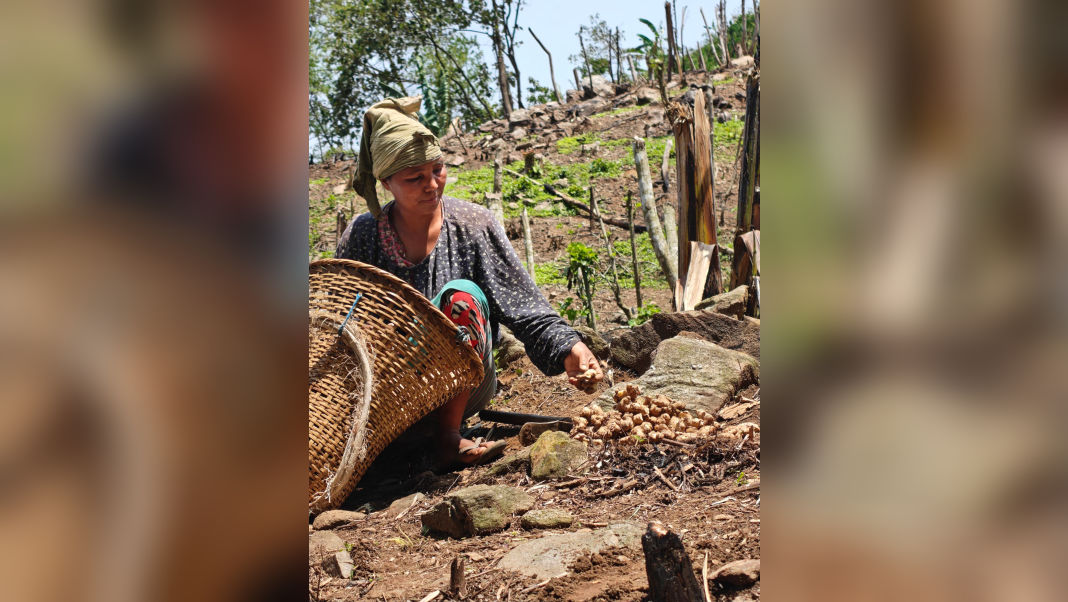
Jhum, within Garo society, is not simply a mode of cultivation. It is the foundation of a complex agroecological system that sustains biodiversity, dietary diversity, and cultural continuity. The structure of jhum cultivation, from A’gital (fresh fields) to A’jri and eventually A’jri Bolma, is not abandonment but a phased cycle of productivity, regeneration, and ecological succession. What policy frameworks routinely classify as “fallow land” is, in reality, a living, productive landscape that continues to yield food, support wildlife, and restore soil vitality over time.
To label this system as inherently destructive without accounting for its full cycle is not just an analytical error, it is a policy failure.
What is consistently missing from this discourse is empirical nuance.
Evidence from Northeast India shows that biodiversity in jhum landscapes is not necessarily lower than in intact forests. Regenerating fallows can support comparable bird species richness to old-growth forests in certain seasons, while also functioning as dynamic habitat mosaics that enhance landscape-level biodiversity.
Equally important, the ecological breakdown often attributed to jhum is, in many cases, the result of policy-induced distortion of the system itself. Traditional jhum cycles historically extended up to 10–20 years, allowing for meaningful forest regeneration. Today, these cycles have been compressed to as little as 3–4 years in many regions, far too short for soil recovery or ecological succession, leading to the very degradation critics now attribute to the system.
Further, shifting cultivation is not a low diversity system. On the contrary, a single jhum plot may integrate cereals, millets, legumes, vegetables, tubers, and spices simultaneously. This multi-cropping strategy enhances dietary diversity, distributes risk, and builds resilience, functions that monocropped settled agriculture often fails to deliver.
Taken together, these realities challenge the reductionist view of jhum as ecologically destructive. The issue is not the system in its traditional form, but the erosion of its ecological parameters under external pressures.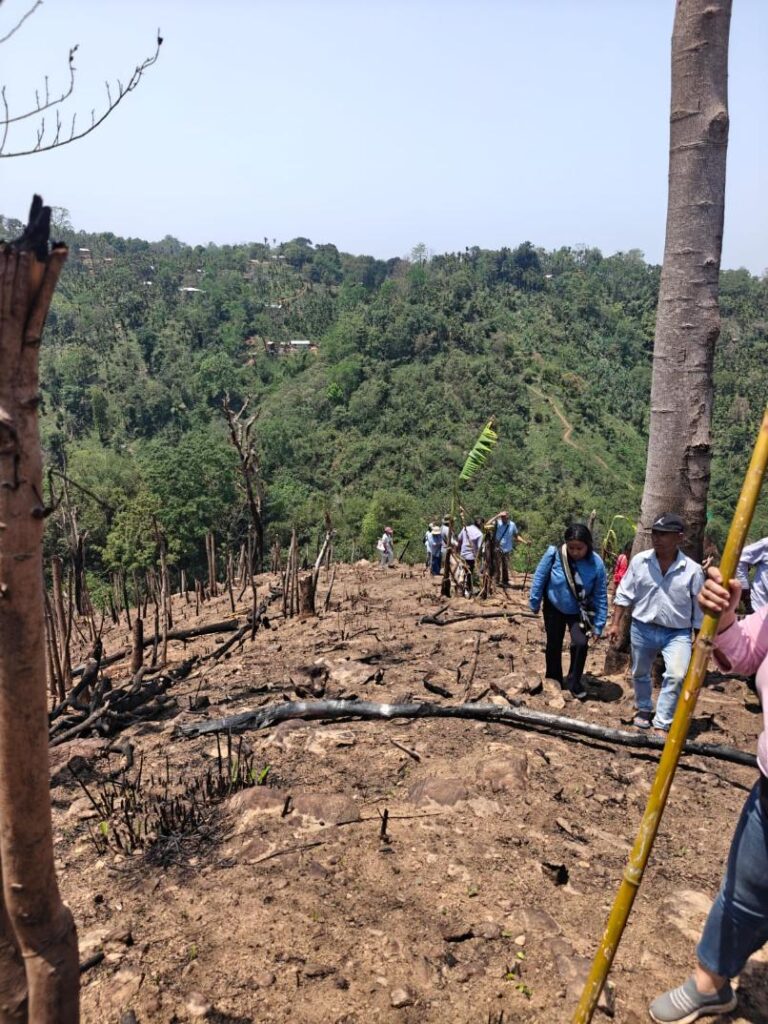
The consequences of this misreading are now visible. Shortened jhum cycles, declining access to land, and the push toward sedentary agriculture have disrupted both ecological balance and indigenous knowledge systems. Traditional seed varieties or Ma’bitchri are disappearing. With them goes not only genetic diversity but also resilience to local climatic conditions and the distinct sensory qualities that define Garo cuisine.
This is not merely an agricultural transition. It is cultural erosion.
Foodways are not peripheral to identity; they are central to it. Among the Garos, cultivation, harvest, preparation, and consumption are deeply embedded in social life, ritual practice, and collective memory. The Wangala Festival, now attracting national and international attention is not simply a cultural performance for tourism. It is a harvest festival rooted in the rhythms of jhum agriculture. Detaching it from its ecological base risks reducing it to spectacle, stripped of meaning.
If jhum disappears, the consequences will extend far beyond land use. There is a real risk of cultural dislocation, a gradual but irreversible weakening of what it means to be Garo.
Policy must confront this directly.
The question is no longer whether jhum should be replaced, but how it can be understood, supported, and adapted without dismantling the system itself. This requires a shift from eradication to engagement:
- Recognizing jhum as an agroecological system rather than a primitive practice
- Supporting longer fallow cycles where feasible, instead of compressing them
- Investing in the conservation and propagation of indigenous seeds (Ma’bitchri)
- Integrating indigenous knowledge into land-use policy rather than overriding it
At the same time, responsibility does not lie with policy alone.
The Garo community itself stands at a critical juncture. Cultural preservation cannot rely solely on resistance; it must also involve adaptation. There is an urgent need to reconnect younger generations with their foodways, not as relics of the past, but as living systems with contemporary relevance.
Reviving practices such as storytelling around a Waltim, the gathering around a fire to share stories, knowledge, and collective memory, can serve as a powerful tool of continuity. Storytelling is not nostalgia; it is infrastructure for identity. Without it, knowledge fragments and disappears.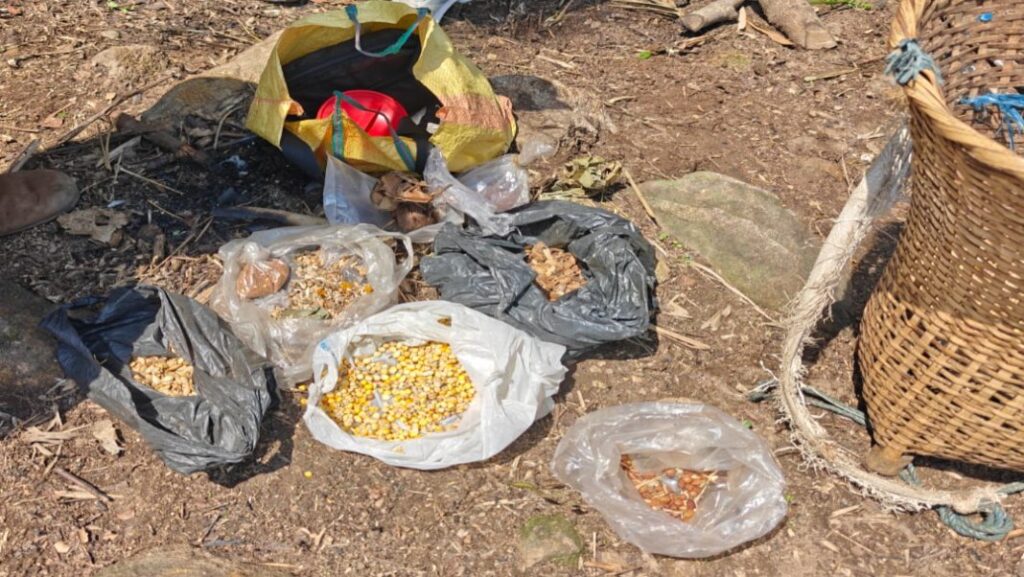
Equally important is reimagining traditional foods in forms that resonate with younger generations. Preservation does not mean rigidity. If the essence of Garo foodways is to survive, it must find expression in contemporary contexts, on urban plates, in new formats, and across changing lifestyles without losing its core integrity.
The choice, then, is not between tradition and progress. That is a false binary.
The real challenge is whether it is possible to move forward without severing the ecological and cultural systems that define who we are.
Jhum is not just about cultivation. It is about continuity, of land, of knowledge, of identity.
Undermining it without understanding it risks more than environmental miscalculation. It risks erasing a people.
Also Read: Katakey panel urges strict SoP compliance, GPS tracking to curb illegal coal mining in Meghalaya
Also Watch
Find latest news from every corner of Northeast India at hubnetwork.in, your online source for breaking news, video coverage.
Also, Follow us on
Twitter-twitter.com/nemediahub
Youtube channel- www.youtube.com/@NortheastMediaHub2020
Instagram- www.instagram.com/ne_media_hub
Download our app from playstore – Northeast Media Hub