

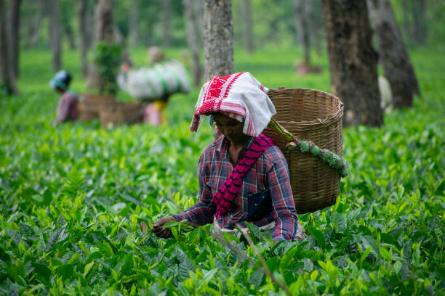

Guwahati, July 10: Tea emerged as one of the biggest winners in the Assam Budget 2026-27, with the state government unveiling a comprehensive package that spans welfare, value addition, exports and tourism, signalling an effort to reposition the industry beyond its traditional role as a producer of bulk tea.
Presenting his maiden budget on Friday, Finance Minister Jayanta Mallabaruah announced measures aimed at improving the lives of tea garden workers while also helping the industry move up the value chain through premium products such as Matcha and orthodox tea.
In perhaps the most significant welfare announcement for tea communities, the government said it would ensure legal land titles for all of Assam’s 3.5 lakh tea garden families over the next five years. The government has already distributed land pattas to nearly 30,000 tea garden families, while surveys are underway in another 250 tea gardens. During the current financial year alone, land rights will be extended to 1.14 lakh more families.
The Finance Minister also announced that the Centre has taken an in-principle decision to extend PMAY housing benefits to eligible tea garden workers, a move expected to improve housing security in tea estates.
In another landmark announcement, the government proposed that the entire proceeds of Agricultural Income Tax collected from tea industries will henceforth be earmarked exclusively for the welfare and development of tea garden communities, creating a dedicated funding stream for improving living conditions in Assam’s tea belts.
The budget also marks a strategic shift towards value addition in the tea industry.
To encourage production of premium teas, the government has included Matcha tea under the Assam Tea Industries Special Incentives Scheme (ATISIS), making it eligible for incentives available to orthodox and speciality teas.
The announcement follows Assam’s successful commercial debut in Matcha production. The Finance Minister noted that the state’s first lot of premium Matcha was sold through the Guwahati Tea Auction Centre for ₹3,000 per kg, demonstrating the potential of high-value tea products.
The government has also increased the production subsidy for orthodox and speciality teas from ₹10 per kg to ₹15 per kg. In addition, a new subsidy of ₹3 per kg has been introduced for export-oriented premium Assam CTC tea exported through recognised channels, aimed at boosting foreign exchange earnings and encouraging quality-focused production.
The budget notes that orthodox tea production in Assam has increased from 4.39 crore kg in 2021-22 to nearly 8 crore kg in 2025-26, registering more than 80 per cent growth in just four years.
The tourism sector also received a tea-themed boost with the announcement of the Assam Tea and Golf Trail, a new tourism initiative designed to combine the state’s iconic tea estates with its championship golf courses.
The proposed circuit will bring together Assam’s three 18-hole championship golf courses and ten nine-hole courses, many located inside picturesque tea estates, to create a premium tourism experience targeting high-value domestic and international visitors.
The government said the initiative, to be developed in partnership with tea estates, the hospitality sector and local communities, aims to strengthen Assam’s position as a niche tourism destination by leveraging two of its globally recognised assets—tea and golf.
Taken together, the announcements reflect a broader strategy to transform Assam’s tea sector—from improving the socio-economic condition of tea workers to creating new revenue streams through premium teas, exports and experiential tourism. Rather than treating tea merely as an agricultural commodity, the budget positions it as an engine for rural development, value addition and global branding.