

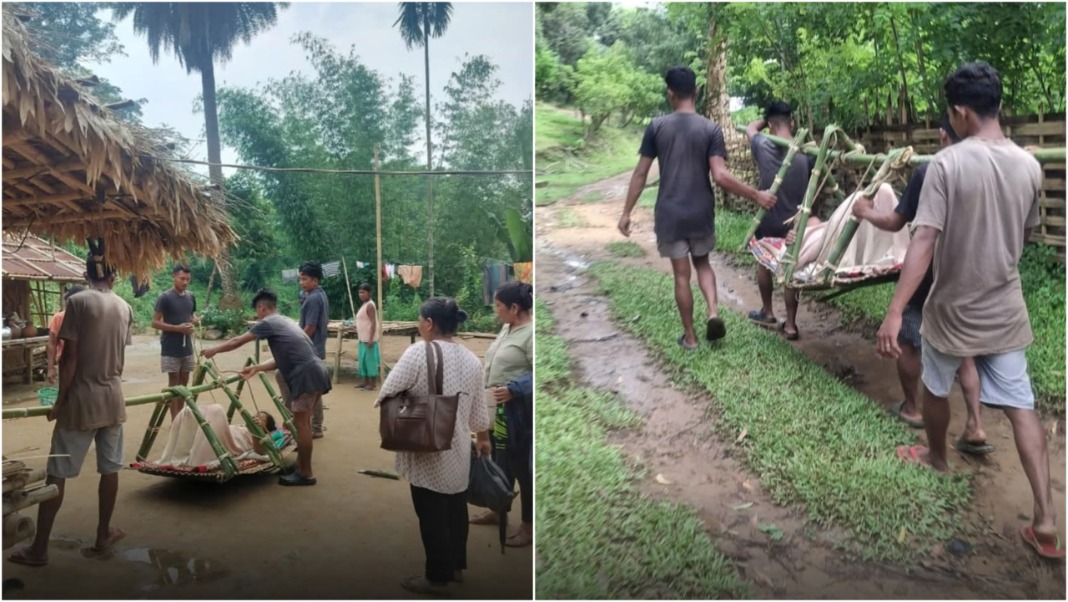

SHILLONG, June 11: A pregnant woman from a remote village nearly 10 km from Kherapara Primary Health Centre (PHC) was carried across difficult terrain on a bamboo stretcher by villagers and health workers before safely delivering a healthy baby girl, highlighting the challenges of maternal healthcare in Meghalaya’s hard-to-reach areas.
The first-time mother had initially opted against institutional delivery. However, when health officials received information that she had gone into labour, a team comprising Auxiliary Nurse Midwife (ANM) Merybell B. Marak, Mid-Level Health Provider (MLHP) Ritngenlang M. Umlong and Health Supervisor Lilysa Ch. Sangma rushed to the village, prepared to assist with a home birth if required.
As labour progressed, the team realised the woman was unable to bear down effectively and required urgent referral to a health facility.
With no road access to the village, community members joined hands with the healthcare workers to carry the expectant mother on a makeshift bamboo stretcher through rugged terrain to the nearest point accessible by vehicle. She was then transported to Kherapara PHC.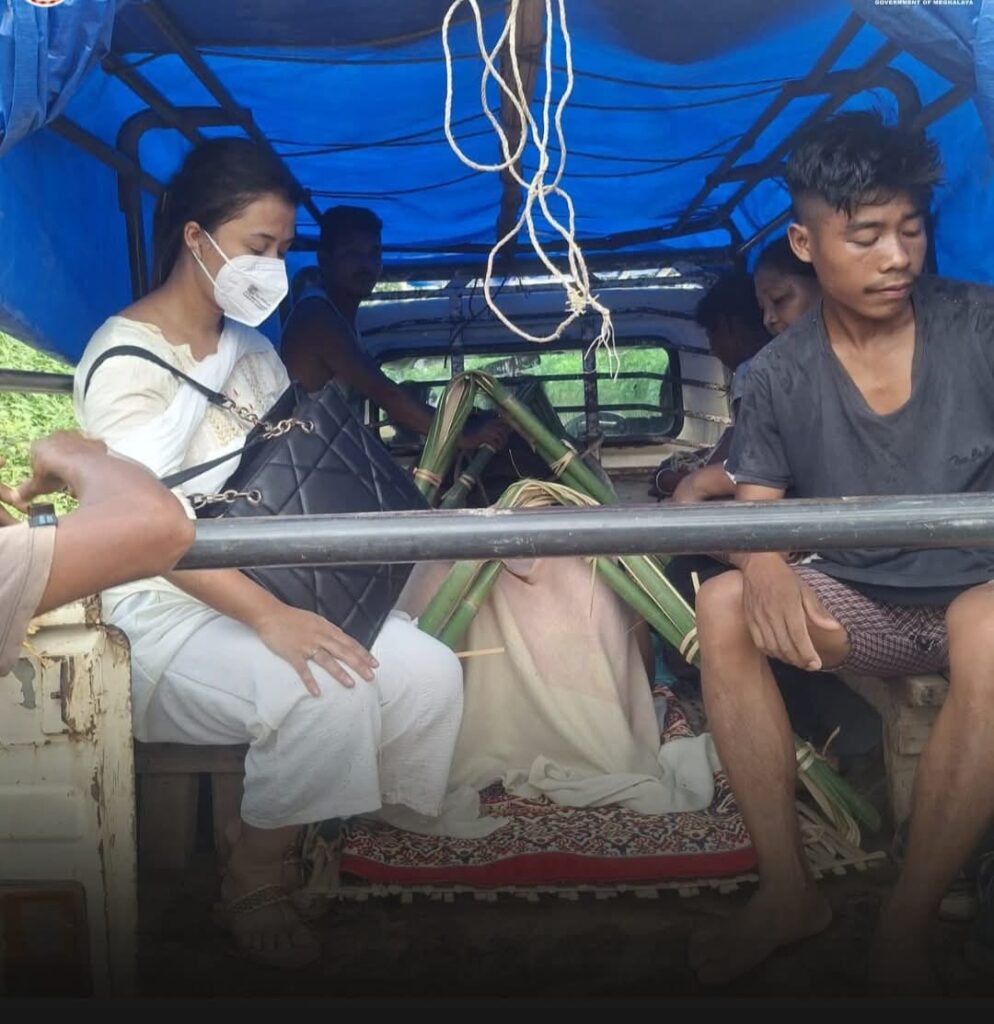
The effort paid off. The woman safely delivered a healthy baby girl weighing 3.3 kg, and both mother and child are reported to be in good health.
Health officials said the episode underscores the crucial role played by frontline healthcare workers and local communities in ensuring safe motherhood in some of Meghalaya’s most inaccessible regions.
A report, Meghalaya’s Health Trends: Progress & Priorities prepared by State Health Systems Resource Centre shows maternal deaths declined from 244 in 2020-21 to 106 in 2025-26, while infant deaths fell from 3,064 to 1,833 during the same period.
The improvements have been accompanied by a steady increase in institutional deliveries, which rose from 51.4 per cent in NFHS-4 (2015-16) to 65.6 per cent in NFHS-6 (2023-24). The report attributes part of this progress to interventions such as the Chief Minister’s Safe Motherhood Scheme (CM-SMS), launched in 2022 to provide transport support and incentives for pregnant women to deliver in health facilities.
The successful rescue and delivery have been hailed as a powerful example of dedication, teamwork and community participation, demonstrating how collective action can help overcome geographical barriers to healthcare and ensure that no mother is left behind.
Also Read: UNC calls 24-hour shutdown across Naga areas after six hostages found dead
Also Watch
Find latest news from every corner of Northeast India at hubnetwork.in, your online source for breaking news, video coverage.
Also, Follow us on
Twitter-twitter.com/nemediahub
Youtube channel- www.youtube.com/@NortheastMediaHub2020
Instagram- www.instagram.com/ne_media_hub
Download our app from playstore – Northeast Media Hub