



Guwahati, April 28: In a major conservation push, the Centre has launched its longest-ever wildlife translocation, moving endangered Asiatic wild water buffalo from Assam’s Kaziranga Tiger Reserve to Madhya Pradesh’s Kanha Tiger Reserve—over 2,000 km away—aimed at restoring a species absent from central India for more than 100 years.
मध्यप्रदेश के लिए आज का दिन ऐतिहासिक है।
कान्हा टाइगर रिजर्व में विलुप्त हो चुके जंगली भैंसों का सफल पुनर्स्थापन किया गया है। इस महत्वपूर्ण परियोजना के साथ मध्यप्रदेश और असम के बीच वन्यजीव आदान-प्रदान का एक नया अध्याय जुड़ रहा है। नए वन्य मेहमानों के आगमन से जैव-विविधता में… pic.twitter.com/zo6S5RQSdr
— Chief Minister, MP (@CMMadhyaPradesh) April 28, 2026
The Asiatic wild water buffalo (Bubalus arnee), listed as Endangered, now survives largely in Assam, which holds nearly 99% of the global population of fewer than 4,000. Once native to central India, the species disappeared from Kanha decades ago, with the last confirmed sighting recorded in 1979.

The ongoing effort seeks to reintroduce the species to its historic grassland habitat, where it is expected to play a key ecological role by maintaining open landscapes and supporting biodiversity.
The inter-state initiative is backed by the governments of Assam and Madhya Pradesh, with scientific inputs from the Wildlife Institute of India, which identified Kanha’s grasslands as suitable for reintroduction. The programme aims to translocate around 50 buffaloes in phases.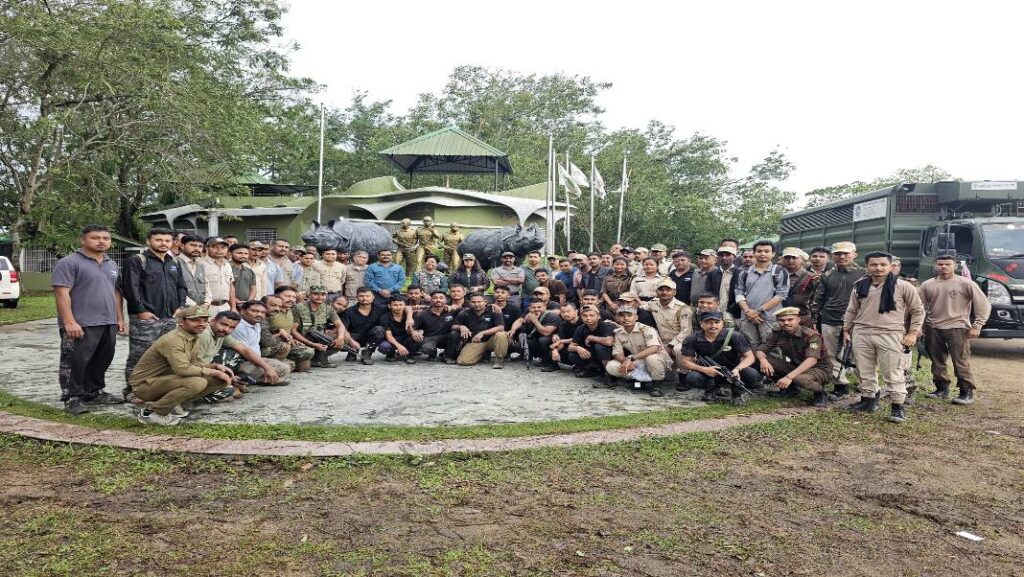
The operation on the ground was led by Kaziranga Field Director Dr Sonali Ghosh, with capture and logistics coordinated by DFO Arun Vignesh. Veterinary teams, including Dr Bhaskar Choudhury and Dr Saurabh Buragohain, oversaw immobilisation, quarantine, and health monitoring.
Between March 19 and April 10, seven sub-adult buffaloes were captured and acclimatised in holding enclosures to reduce stress before transport.
The first batch of four animals was flagged off on April 25 and reached Kanha on April 28 after a three-day journey. The animals have been placed in a controlled enclosure for acclimatisation ahead of a phased release.

Officials say the initiative will help diversify the species’ population, reduce risks from geographic concentration in Assam, and strengthen India’s capacity for large-scale wildlife recovery programmes.
A second batch is expected to follow soon, marking steady progress in re-establishing the species in central India.
Also Read: Woman arrested for allegedly killing her daughter in Assam’s Sivasagar
Also Watch
Find latest news from every corner of Northeast India at hubnetwork.in, your online source for breaking news, video coverage.
Also, Follow us on
Twitter-twitter.com/nemediahub
Youtube channel- www.youtube.com/@NortheastMediaHub2020
Instagram- www.instagram.com/ne_media_hub
Download our app from playstore – Northeast Media Hub