



Guwahati July 29:What a roaring news for Kaziranga on Global Tiger Day!
Kaziranga Tiger Reserve has recorded 148 tigers in 2024, making it one of the densest tiger habitats in the world with an astounding 18.65 tigers per 100 sq km.Kaziranga Tiger Reserve has reported a sharp rise in its tiger population, with 148 individuals recorded in the latest 2024 assessment — cementing its position as one of the world’s densest tiger habitats.
The report was released today.
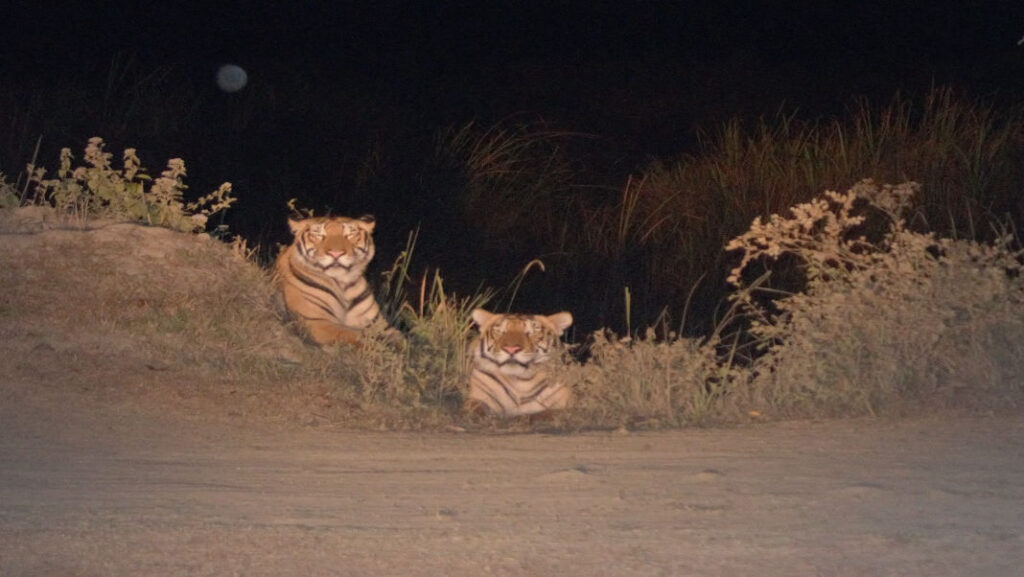
The survey, conducted under Phase IV monitoring protocols of the National Tiger Conservation Authority (NTCA), deployed 293 camera traps across the reserve’s 1,307 sq km landscape. Over 103 days, the effort yielded more than 1.3 million photographs, including 4,011 tiger images, enabling scientists to identify 148 adult tigers — 83 females, 55 males, and 10 of undetermined gender.
With an estimated density of 18.65 tigers per 100 sq km, Kaziranga now ranks among the highest tiger densities globally.
Particularly significant is the first-ever sampling in the Biswanath Wildlife Division, which added 27 newly recorded tigers to the reserve’s count. The core Eastern Assam Wildlife Division also witnessed growth, from 104 tigers in 2022 to 115 in 2024, while the Nagaon division maintained a stable count of six.
The findings highlight the ecological importance of Kaziranga, the only source population of tigers in Northeast India. Its mosaic of grasslands, wetlands, and semi-evergreen forests, shaped by the Brahmaputra River and Karbi-Anglong hills, sustains a rich prey base including hog deer, swamp deer, and wild water buffalo.
However, conservationists caution that critical corridors such as Laokhowa-Burhachapori and Biswanath, which connect Kaziranga with Orang and Nameri-Pakke reserves, are under mounting threat from habitat degradation and human activity. “Maintaining these linkages is vital for genetic connectivity and long-term survival,” the report warns.
Officials attribute the success to strict anti-poaching measures, habitat restoration, and community-driven conservation programs. Dr. Sonali Ghosh, Director of Kaziranga Tiger Reserve, said, “Kaziranga’s growing tiger numbers reaffirm the impact of sustained protection and collaborative conservation. The challenge now is to secure corridors and buffer zones against anthropogenic pressures.”
The report underscores that while prey biomass appears adequate for sustaining the high density, climate change and human encroachment continue to pose long-term risks.
Kaziranga, a UNESCO World Heritage Site, remains not only a stronghold for tigers but also for megaherbivores like the greater one-horned rhinoceros and Asian elephant, reinforcing its status as one of India’s most critical wildlife refuges.
Also Read: Citizens demand inquiry into negligence after 7-year-old’s tragic death in Dibrugarh
Also Watch
Find latest news from every corner of Northeast India at hubnetwork.in, your online source for breaking news, video coverage.
Also, Follow us on-
Twitter-twitter.com/nemediahub
Youtube channel- www.youtube.com/@NortheastMediaHub2020
Instagram- www.instagram.com/ne_media_hub
Download our app from playstore – Northeast Media Hub