

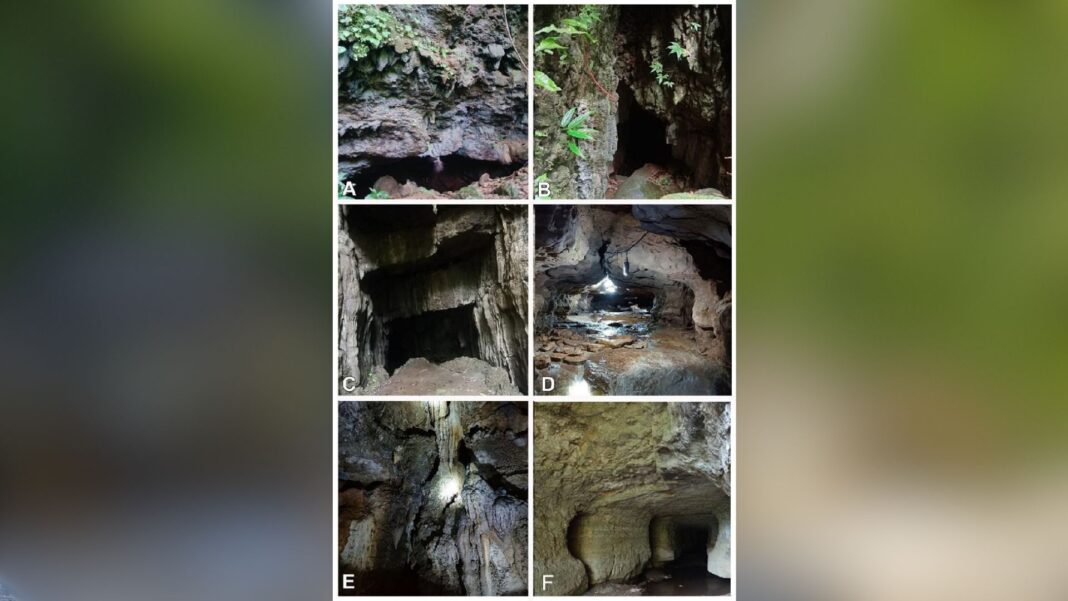

First detailed ecological assessment across multiple limestone caves provides baseline for conserving rare underground biodiversity
ROOPAK GOSWAMI
Shillong, July 13: Home to some of India’s longest limestone caves, Meghalaya has got its first detailed ecological assessment spanning multiple cave systems, with researchers saying the findings could provide the scientific foundation for protecting the state’s fragile underground ecosystems.
The study, “Ecological Assessment of Limestone Caves of Meghalaya, India: Baseline Study of Microclimate and Water Quality for Faunal Conservation,” by Cynthia Mylliem Umlong and Madhurima Das, published in the Asian Journal of Conservation Biology, is the first comprehensive ecological assessment to examine the microclimate and water quality across several of the state’s limestone caves. The researchers say the baseline data will be crucial for monitoring the health of these ecosystems in the years ahead.
The team recorded cave temperature, humidity and water quality—factors that determine the survival of highly specialised cave-dwelling organisms that have evolved over thousands of years in complete darkness. Even subtle changes in these conditions, they warn, could upset the delicate ecological balance of these subterranean habitats.
“Cave ecosystem studies have long been underrated, perhaps because of the difficult terrain or simply due to ignorance. But such studies are essential for understanding how these fragile and highly specialised ecosystems influence the survival of the species that depend on them,” Madhurima Das, co-author of the study, told Hub News.
The research comes as Meghalaya’s caves are drawing increasing scientific attention alongside their growing popularity as adventure tourism destinations. While caves such as Mawsmai, Arwah and Siju attract thousands of visitors every year, scientists say much of the state’s vast underground landscape remains biologically unexplored.
The findings also add to a growing body of scientific work that is reinforcing Meghalaya’s reputation as one of India’s biodiversity hotspots. In recent years, researchers have discovered new species of freshwater algae, bees, fireflies and other organisms across the state, suggesting that many of its forests, streams and cave systems continue to harbour life forms yet to be documented.
But the importance of Meghalaya’s caves extends well beyond biodiversity.
Limestone cave systems act as natural underground drainage networks, regulating groundwater flow and feeding springs that sustain many villages across the Khasi and Jaintia Hills.
Scientists say protecting cave ecosystems is therefore closely linked to safeguarding the state’s water resources, particularly at a time when climate change and human activities are placing increasing pressure on fragile landscapes.

The study also carries global significance.
Mawmluh Cave, near Sohra, is internationally recognised for preserving the geological record that enabled scientists to define the Meghalayan Age—the current stage of Earth’s geological timeline. The researchers argue that the same cave systems that have helped unravel Earth’s climatic history deserve equal attention for the unique biodiversity they sustain.
The study warns that without baseline scientific data, it will be difficult to assess the long-term impacts of expanding tourism, limestone mining, land-use change and climate variability on these fragile subterranean habitats.
The authors argue that caves should no longer be viewed merely as tourist attractions or geological wonders, but as living ecosystems that require regular scientific monitoring and informed conservation planning.
For Cynthia Mylliem Umlong and Madhurima Das, the study is only the beginning. Much of Meghalaya’s underground world remains unexplored, and they say sustained research will be essential to understand—and ultimately protect—one of the state’s least-known natural treasures.
As Meghalaya continues to emerge as a global hotspot for biodiversity research, the study is a reminder that some of its greatest ecological treasures lie beneath the ground, hidden within its labyrinth of limestone caves, waiting to be understood before they are irreversibly altered.
Also read: India enters next phase of governance reforms with AI, cybersecurity: Dr Jitendra Singh
Also Watch
Find latest news from every corner of Northeast India at hubnetwork.in, your online source for breaking news, video coverage.
Also, Follow us on
Twitter-twitter.com/nemediahub
Youtube channel- www.youtube.com/@NortheastMediaHub2020
Instagram- www.instagram.com/ne_media_hub
Download our app from playstore – Northeast Media Hub