

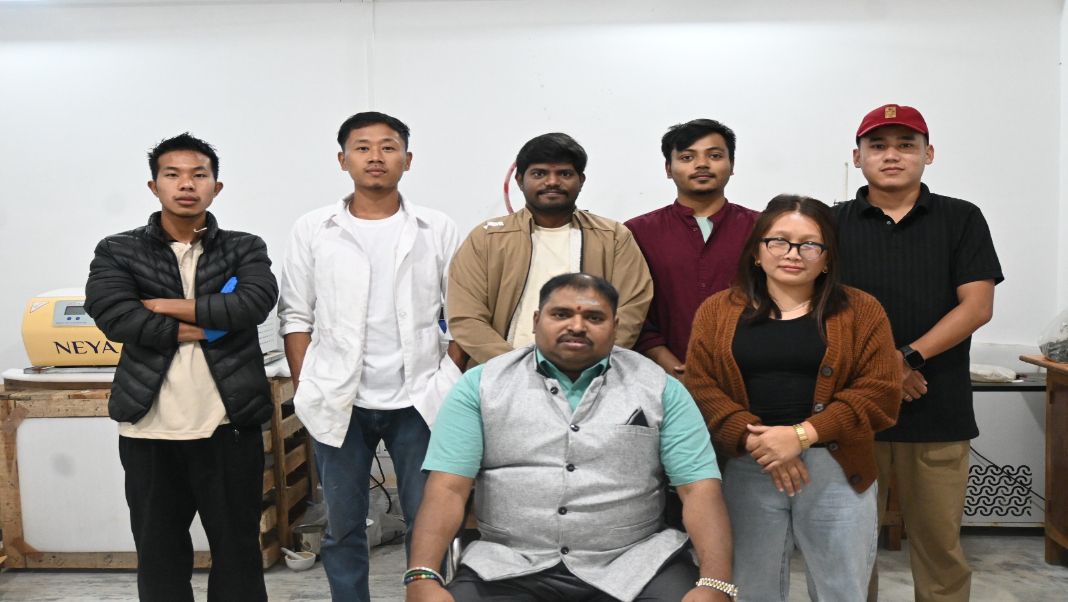

Guwahati, April 13: A multi-institutional research team led by Nagaland University has scientifically validated the anti-cancer potential of a traditional herbal formulation used by the Konyak tribe, offering new insight into indigenous medicinal knowledge.
The preliminary study—conducted in collaboration with Berhampur University and Saveetha Medical College—focuses on a five-plant polyherbal remedy long used by Konyak healers. Researchers found that its bioactive compounds can effectively target VEGFR2, a protein crucial for the formation of blood vessels that sustain tumour growth.

Despite the widespread use of traditional medicine across indigenous communities, the study notes that scientific efforts to decode how such remedies work remain limited. By combining ethnobotanical knowledge with modern analytical tools, the researchers sought to bridge this gap.
Using techniques such as GC-MS analysis and molecular simulations, the team identified several compounds with strong anti-cancer potential. These compounds demonstrated performance comparable to existing drugs, while also suggesting lower toxicity and improved safety profiles.
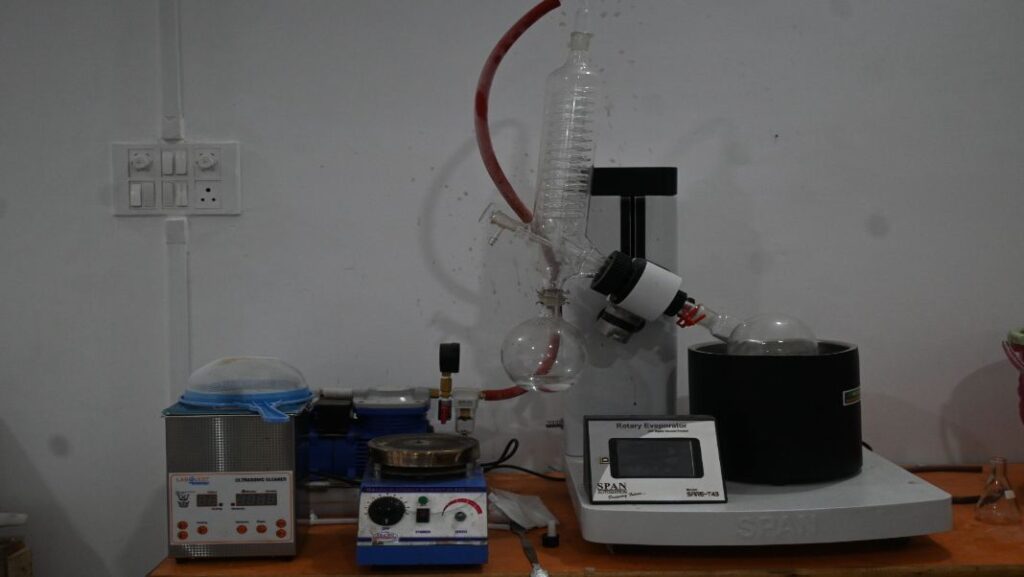
The findings, published in the peer-reviewed Microchemical Journal, were co-authored by Longnyu M. Konyak, Giridharan Bupesh, Parthasarathy Sudharsan, Nokenketla Jamir, and Sidhartha Saikia from Nagaland University, along with collaborators from partner institutions.
Nagaland University Vice Chancellor Prof. Jagadish K. Patnaik lauded the study, stating that integrating indigenous knowledge with advanced molecular simulations has led to the identification of promising therapeutic compounds. He noted that the research reflects the university’s commitment to impactful science rooted in local traditions while contributing to global innovation.

Highlighting the novelty of the work, Dr. G. Bupesh, Assistant Professor at the Department of Forestry, said this is the first time a specific Konyak five-plant formulation has been analysed using advanced computational methods. “We identified compounds with strong anti-cancer potential that perform on par with existing drugs, while indicating lower toxicity,” he said.
Further analysis revealed that the compounds exhibit stable molecular interactions and selectively target VEGFR2 over similar proteins—an important factor that could help minimise side effects in future therapies. The study also found favourable pharmacokinetic properties among the compounds, strengthening their potential for drug development.

While the results are based on computational models, the researchers emphasised the need for further laboratory and clinical validation, particularly in relation to colon cancer.
The study not only reinforces the scientific value of indigenous knowledge systems but also points to new, cost-effective pathways for natural drug discovery—highlighting how traditional practices can inform the future of modern medicine.
Also Read: The Nieva Effect: Inside the tactical evolution powering India’s 16-medal haul
Also Watch
Find latest news from every corner of Northeast India at hubnetwork.in, your online source for breaking news, video coverage.
Also, Follow us on
Twitter-twitter.com/nemediahub
Youtube channel- www.youtube.com/@NortheastMediaHub2020
Instagram- www.instagram.com/ne_media_hub
Download our app from playstore – Northeast Media Hub