


ROOPAK GOSWAMI
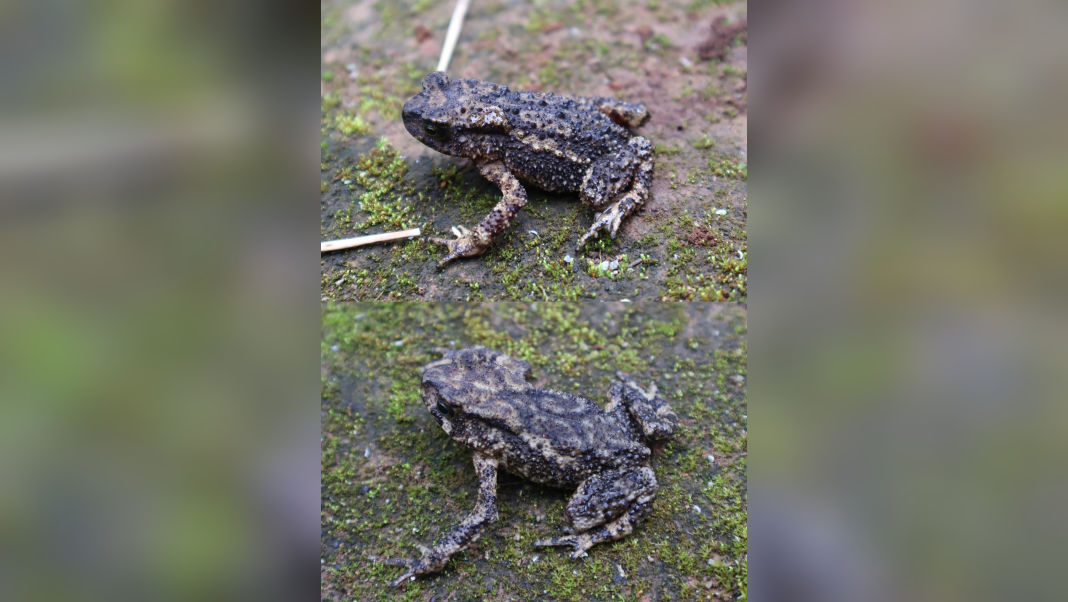
SHILLONG, May 27: In Khasi culture, the “Dhara” or Jainsem is more than traditional attire — it is a symbol of identity, heritage and an enduring bond with the hills and forests of Meghalaya. Now, that cultural emblem has inspired the name of a newly discovered toad species from the misty montane landscapes of the Khasi Hills.
Scientists have named the newly identified amphibian Duttaphrynus dhara after the traditional Khasi female garment, commonly woven from Muga silk and draped elegantly over both shoulders to the ankles. Characterised by intricate horizontal and vertical border patterns with fringes along the lower margin, the Dhara remains deeply woven into Khasi cultural identity and tradition.
“The name is proposed in recognition of the cultural heritage of the Khasi community of Meghalaya, whose traditions and way of life remain closely connected to the forests and landscapes of the region,” the researchers wrote, adding that the name honours “the cultural legacy, stewardship of nature, and enduring relationship between people and biodiversity in the Khasi Hills.”

The species was discovered in Mawphlang in Meghalaya’s East Khasi Hills district at an elevation of around 1,854 metres and formally described in the international journal Taprobanica by researchers Holiness Warjri, Madhurima Das, A.A. Thasun Amarasinghe and Jayaditya Purkayastha.
The discovery was made through an integrative taxonomic study combining DNA sequencing, morphometric analysis and external morphology by researchers from Assam Don Bosco University, conservation organisation Help Earth, and international collaborators.
“This is a discovery that reflects both the extraordinary amphibian diversity of Meghalaya and the ecological importance of the Khasi Hills. Naming this species after the traditional Khasi attire ‘Dhara’ is our tribute to the cultural heritage of the Khasi people and their close relationship with nature. We hope this discovery will encourage greater awareness, scientific exploration and conservation of the fragile montane ecosystems of Northeast India, where many species still remain undocumented,” the research team said.
Researchers found that the Khasi Hills population forms a “well-supported monophyletic lineage” within the Asian toad genus Duttaphrynus, clearly separated from its closest known relatives, Duttaphrynus stuarti and Duttaphrynus chandai.

Genetic analysis revealed a mitochondrial divergence of 4.4–6.7% from related species — levels typically associated with distinct species among Asian bufonids.
The newly described toad is relatively small, with adult males measuring around 40–42 mm in body length. It is distinguished by the absence of cranial ridges, moderate toe webbing, distinctive finger proportions and a body covered with pointed keratinised warts.
Scientists say the discovery adds to growing evidence that amphibian diversity in South and Southeast Asia remains vastly underestimated, especially in poorly explored mountain ecosystems.
The researchers described the Khasi Hills plateau as an especially important centre of montane biodiversity within the Indo-Burma biodiversity hotspot — one of the world’s richest yet most threatened ecological regions.
According to the study, the region’s high-elevation plateaus, dissected valleys and ecological isolation function like “sky islands”, allowing amphibian populations to evolve separately over long periods and generate high levels of endemism.
“The discovery of D. dhara further underscores the importance of montane habitats in driving amphibian diversification in northeastern India,” the researchers noted.
The scientists warned that such elevational ecosystems are also highly vulnerable to climate change and habitat transformation.
“Rising temperatures may force species to shift to higher elevations where suitable habitat may be limited or absent,” the study cautioned.
Researchers encountered the new species in fallow agricultural fields adjoining montane forests during evening field surveys. Unlike the widespread Asian common toad (Duttaphrynus melanostictus), which thrives around villages and urban settlements, Duttaphrynus dhara appeared to prefer semi-natural forest-edge habitats with relatively low human disturbance.
The study suggests this ecological separation may help closely related toad species coexist within the same landscape while occupying different habitat niches.
At present, Duttaphrynus dhara is known only from its type locality in Mawphlang. Scientists say additional surveys across the Khasi Hills and neighbouring plateau systems are urgently needed to determine the species’ full distribution, ecology and conservation status.
Also Read: Meghalaya emerges as Northeast’s geological hotspot in landmark study
Also Watch
Find latest news from every corner of Northeast India at hubnetwork.in, your online source for breaking news, video coverage.
Also, Follow us on
Twitter-twitter.com/nemediahub
Youtube channel- www.youtube.com/@NortheastMediaHub2020
Instagram- www.instagram.com/ne_media_hub
Download our app from playstore – Northeast Media Hub